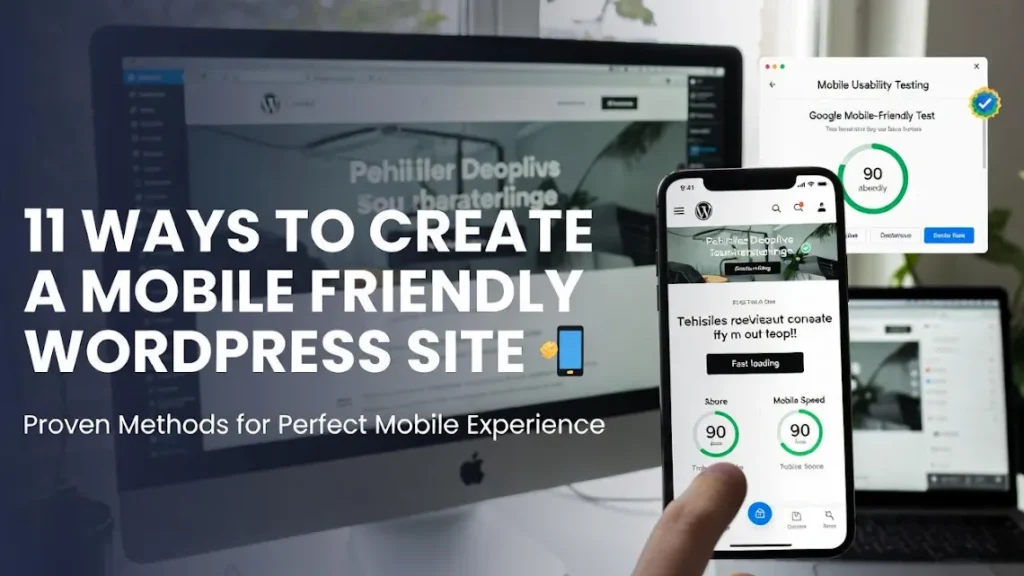
With over 60% of web traffic coming from mobile devices, having a mobile friendly WordPress site is no longer optional—it’s essential for user experience, SEO rankings, and conversions. Google prioritizes mobile-first indexing, meaning slow or poorly designed mobile sites risk lower visibility and higher bounce rates. At Cope Business, we’ve optimized countless WordPress sites for mobile performance through our technical SEO audit services, achieving faster load times and better Core Web Vitals scores. This guide shares 11 proven, actionable ways to make your site fully mobile-responsive and user-friendly.
Whether you’re starting fresh or improving an existing site, these steps will help you deliver a seamless experience across phones, tablets, and desktops.
1. Choose a Responsive Theme
The foundation of mobile-friendliness starts with your theme.
- Select themes labeled “responsive” or “mobile-friendly”.
- Top recommendations: Astra, GeneratePress, Kadence, Neve—all lightweight and fully responsive out of the box.
- Test any theme using Google’s Mobile-Friendly Test tool.
A responsive theme automatically adjusts layout, images, and navigation for any screen size—no extra work needed.
2. Use a Mobile-First Design Approach
Design with smaller screens in mind first.
- Prioritize content hierarchy: Important elements (logo, menu, CTA) at the top.
- Use larger tap targets (buttons at least 48px).
- Avoid hover-dependent elements—mobile users can’t hover.
Modern block themes and page builders like SeedProd support mobile previews during editing.
3. Enable AMP (Accelerated Mobile Pages) If Needed
AMP creates stripped-down, lightning-fast versions of pages for mobile.
- Install the official AMP plugin.
- Validate pages and submit to Google for the AMP cache.
Note: AMP is optiona as Core Web Vitals have reduced its necessity, but it’s still useful for content-heavy sites.
4. Optimize Images for Mobile
Images often cause the biggest mobile slowdowns.
- Use responsive images (WordPress adds srcset automatically).
- Compress with plugins like ShortPixel or Smush.
- Serve next-gen formats (WebP) and lazy-load below-the-fold images.
- Add proper alt text for accessibility and SEO.
This directly improves Largest Contentful Paint (LCP).
5. Implement Proper Viewport Configuration
Ensure your site scales correctly on mobile.
Add this meta tag to your theme’s header (most modern themes include it):
HTML
<meta name="viewport" content="width=device-width, initial-scale=1">Without it, mobile browsers zoom out, making text tiny and unusable.
6. Use Mobile-Friendly Navigation
Simplify menus for touch devices.
- Switch to hamburger menus on mobile.
- Avoid multi-level dropdowns that are hard to tap.
- Plugins like Max Mega Menu or Responsive Menu help create touch-friendly navigation.
7. Install a Caching and Optimization Plugin
Speed is crucial for mobile users on slower connections.
- WP Rocket (premium): Full-page caching, minification, lazy loading, CDN integration.
- Free alternatives: LiteSpeed Cache or W3 Total Cache.
These reduce server load and deliver faster pages.
Pair with our WordPress speed optimization services for maximum gains.
8. Remove or Replace Flash and Heavy Elements
Flash is obsolete and doesn’t work on most mobile devices.
- Replace with HTML5 video/audio.
- Avoid pop-ups that cover the entire screen (Google penalizes intrusive interstitials).
- Minimize heavy scripts and fonts.
9. Test Thoroughly on Real Devices
Don’t rely only on desktop emulators.
- Use Google’s Mobile-Friendly Test and PageSpeed Insights.
- Test on actual phones/tablets (or services like BrowserStack).
- Check touch interactions, form fields, and readability.
Fix issues like sideways scrolling or tiny text immediately.
10. Enable Touch-Friendly Forms and Buttons
Make interactions easy.
- Use larger form fields and buttons.
- Add touch icons for “add to home screen”.
- Plugins like WPForms create mobile-optimized forms automatically.
11. Monitor and Improve Core Web Vitals
Google’s mobile ranking factors focus on these metrics:
- Largest Contentful Paint (LCP): <2.5s
- Cumulative Layout Shift (CLS): <0.1
- Interaction to Next Paint (INP): <200ms
Use PageSpeed Insights and Google Search Console’s Core Web Vitals report to track and fix issues.
Final Thoughts
A mobile-friendly WordPress site isn’t just about looking good on phones—it’s about delivering fast, frustration-free experiences that keep visitors engaged and improve your search rankings.
Start with a responsive theme and optimization plugin, then test and refine. Most improvements are quick wins with big impact.
Need help making your site fully mobile-optimized or fixing Core Web Vitals issues? Contact Cope Business for a free technical SEO audit—we’ll analyze your mobile performance and provide actionable recommendations.