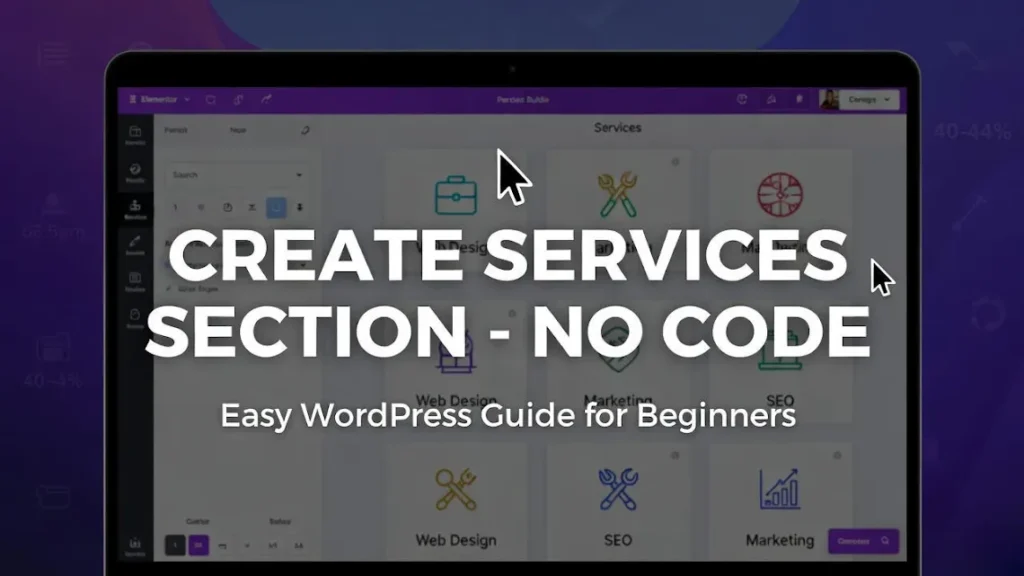
A well-designed services section on your homepage or dedicated page is essential for business websites. It clearly communicates what you offer, builds trust, and guides visitors toward taking action—like contacting you or booking a consultation. In 2026, WordPress makes this incredibly easy with the block editor, page builders, and specialized plugins—no coding required. At Cope Business, we frequently create or optimize services sections for clients during our technical SEO audit services, ensuring they load fast, look great on mobile, and convert visitors effectively.
On this page
ToggleThis guide covers multiple beginner-friendly methods so you can choose the one that fits your site best.
Why Add a Services Section to Your WordPress Site?
- Highlights your core offerings at a glance.
- Improves user experience and navigation.
- Boosts SEO with relevant keywords and internal linking.
- Increases conversions by directing visitors to the right service.
Place it prominently on your homepage, below the hero section, or create a dedicated “Services” page.
Method 1: Using the Default WordPress Block Editor (Gutenberg)
The built-in editor is powerful enough for most needs.
Steps
- Edit your homepage or create a new page (Pages > Add New).
- Add a Columns block (choose 2–4 columns depending on services).
- In each column, add:
- An Image block for an icon or photo.
- A Heading block for the service title.
- A Paragraph block for description.
- A Buttons block for “Learn More” or “Get Started”.
- Style with block settings: adjust colors, spacing, and alignment.
- For icons, use free libraries like Font Awesome via the Icons block or upload SVGs.
Pro Tip: Use the Group block to style entire service cards with background, border, and hover effects.
This method is lightweight and fast-loading—ideal for performance.
Method 2: Using a Page Builder Plugin (Most Flexible)
Page builders give drag-and-drop professional designs.
Recommended: SeedProd (Best for Landing Pages)
- Install SeedProd (free lite or Pro).
- Create a new page or edit existing with SeedProd builder.
- Drag “Icon Box”, “Service Box”, or “Feature List” widgets.
- Customize icons, titles, descriptions, buttons, and animations.
- Add hover effects, shadows, or pricing tables for premium services.
Alternatives: Elementor (free with service widgets) or Beaver Builder.
Benefits: Pre-made templates, advanced styling, and mobile previews.
Method 3: Using Dedicated Services Plugins
For feature-rich sections with icons, pricing, and testimonials.
Top Plugins
- Services Showcase or Business Services plugins (free).
- Gutentor or Qi Blocks (free block collections with service grids).
Steps:
- Install the plugin.
- Add the services block/shortcode to your page.
- Configure each service with title, description, icon/image, and link.
These often include grid layouts, filters, and carousel options.
Method 4: Using Your Theme’s Built-in Options
Many modern themes include service sections.
- Astra + Starter Templates: Import ready-made service pages.
- Kadence Blocks: Advanced service grids with icons and overlays.
- GeneratePress + GenerateBlocks: Lightweight service cards.
Check Appearance > Customize or theme documentation for built-in sections.
Best Practices for an Effective Services Section
- Keep It Simple: 3–6 services maximum to avoid overwhelming visitors.
- Use Clear Headings: Benefit-focused titles (e.g., “Technical SEO Audits” instead of generic).
- Add Strong CTAs: Buttons like “Get a Free Audit” or “View Pricing”.
- Include Icons/Images: Visuals make it scannable.
- Make It Mobile-Friendly: Test responsiveness—use column stacking on small screens.
- Optimize for Speed: Compress images and avoid heavy animations (see our speed optimization guide).
- SEO Tips: Use descriptive headings (H2/H3), alt text, and internal links to service detail pages.
Bonus: Example Layout Ideas
- Grid Style: 3 columns with icon, title, description, button.
- Card Style: Shadowed cards with hover effects.
- Icon List: Vertical list with icons on the left.
- With Pricing: Add pricing tiers below each service.
Final Thoughts
Creating a services section in WordPress is quick and doesn’t require coding—start with the block editor for simplicity or a page builder for advanced design. The key is clarity, visual appeal, and strong calls-to-action that reflect your brand.
A professional services section can significantly improve visitor engagement and conversions.
Need help designing or optimizing your services page for better performance and SEO? Contact Cope Business for a free technical consultation—we’ll review your site and provide tailored recommendations.