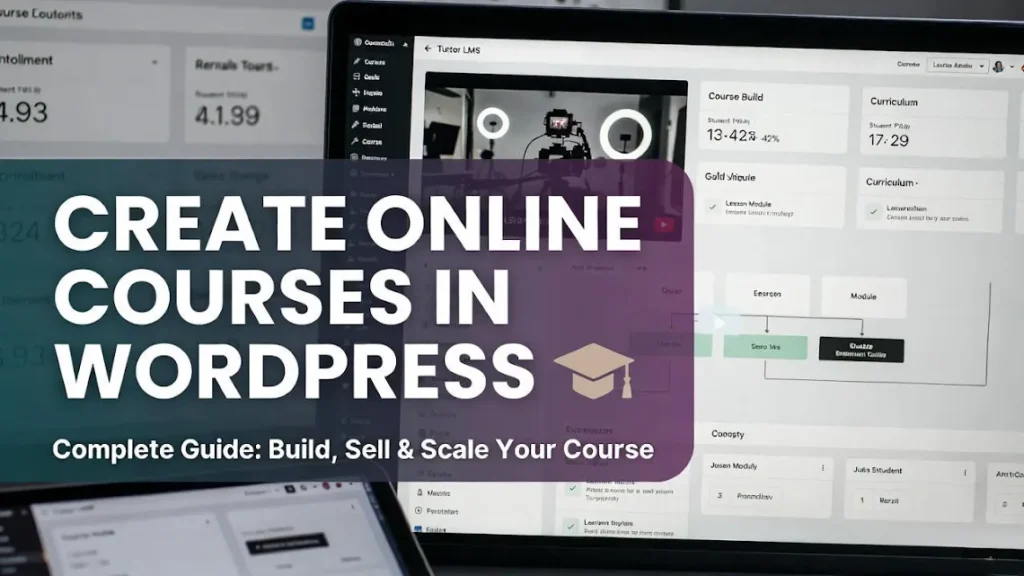
The online education market continues to grow rapidly, making it an ideal time to launch your own online course in wordpress. WordPress, combined with powerful LMS (Learning Management System) plugins, gives you full control over content, design, pricing, and student experience—without expensive third-party platforms that take hefty commissions. At Cope Business, we’ve helped numerous clients build profitable course sites through our technical SEO audit services, optimizing them for search visibility and performance. This step-by-step guide shows you exactly how to create, launch, and sell a professional online course using WordPress.
On this page
ToggleWhether you’re an expert sharing knowledge or a business adding training products, this approach is flexible, cost-effective, and scalable.
Why Use WordPress for Online Courses?
- Full ownership of your content and student data.
- No platform fees or revenue cuts (unlike Teachable or Udemy).
- Complete customization of design and branding.
- Powerful SEO capabilities to attract organic traffic.
- Integration with payment gateways, email marketing, and analytics.
Step 1: Set Up Your WordPress Site
If you don’t have a site yet:
- Choose reliable hosting (SiteGround or Hostinger recommended for performance).
- Install WordPress (one-click from most hosts).
- Select a clean, fast theme like Astra or Kadence.
- Install essential plugins: All in One SEO for optimization, WPForms for contacts.
Full setup details in our WordPress installation guide.
Step 2: Choose the Best LMS Plugin for Your Course
The LMS plugin is the core of your course platform.
Top Recommendations
- LearnDash (Best Overall)
- Drag-and-drop course builder, drip content, quizzes, certificates, assignments.
- Advanced features: Focus mode, group management, pro panel reporting.
- Pricing: ~$199/year (single site).
- LifterLMS (Best Free + Premium Balance)
- Robust free core with drag-and-drop builder, quizzes, drip content.
- Premium add-ons for payments, memberships, advanced quizzes.
- Pricing: Free core; add-ons ~$120–$360/year.
- Tutor LMS (Best Free Option)
- Completely free with course builder, quizzes, certificates, frontend dashboard.
- Pro version adds WooCommerce integration, content drip, advanced analytics.
- Pricing: Free; Pro ~$149/year.
- MasterStudy LMS (Best for Design Flexibility)
- Beautiful frontend course pages, live streaming support, Zoom integration.
- Pricing: Free; Pro ~$54/year.
Our Recommendation: Start with LifterLMS (great free features) or LearnDash (most professional and scalable).
Step 3: Create Your Course Structure
Plan before building.
- Outline modules and lessons.
- Decide on drip schedule (release content gradually).
- Prepare multimedia: videos (host on Vimeo/YouTube for bandwidth), PDFs, quizzes.
- Use the LMS builder to create:
- Course → Modules → Lessons → Topics/Quizzes.
Add engaging elements: video embeds, downloadable resources, discussion forums.
Step 4: Set Up Payments and Monetization
Sell your course easily.
Options
- One-Time Purchase: Use WooCommerce (free) with your LMS.
- Subscriptions/Memberships: LifterLMS or MemberPress for recurring access.
- Payment Gateways: Stripe, PayPal (built-in with most LMS plugins).
Steps:
- Install WooCommerce if needed.
- Connect Stripe/PayPal in WooCommerce > Settings > Payments.
- Create your course as a product and link it to the LMS content.
Step 5: Add Student Engagement Features
Keep learners motivated.
- Progress tracking and completion certificates.
- Quizzes with automated grading.
- Discussion areas or private messaging.
- Gamification: Points, badges, leaderboards (available in LearnDash/LifterLMS Pro).
Step 6: Design Professional Course Pages
Make your course visually appealing.
- Use your theme’s customizer or a page builder (Elementor/SeedProd).
- Create dedicated landing pages with clear benefits, curriculum outline, testimonials, and pricing.
- Add trust signals: Instructor bio, student reviews, money-back guarantee.
Step 7: Launch, Market, and Optimize
Pre-Launch Checklist
- Test enrollment and payment flow.
- Enable SSL/HTTPS for security.
- Optimize pages for SEO (titles, meta descriptions, schema via All in One SEO).
- Set up email notifications for new enrollments.
Marketing Tips
- Build an email list with OptinMonster.
- Offer a free mini-course or lead magnet.
- Promote on social media and relevant communities.
- Use content marketing (blog posts related to your course topic).
Ongoing Optimization
- Monitor student feedback and completion rates.
- Update content regularly.
- Improve speed with caching and image optimization (see our speed guide).
Final Thoughts
Creating an online course in WordPress gives you complete control and higher profits compared to third-party platforms. Start simple, launch quickly, and iterate based on student feedback.
The key to success: Deliver real value and provide excellent support.
Ready to build your course site or need help with setup, SEO, or performance? Contact Cope Business for a free technical consultation—we’ll guide you through every step.