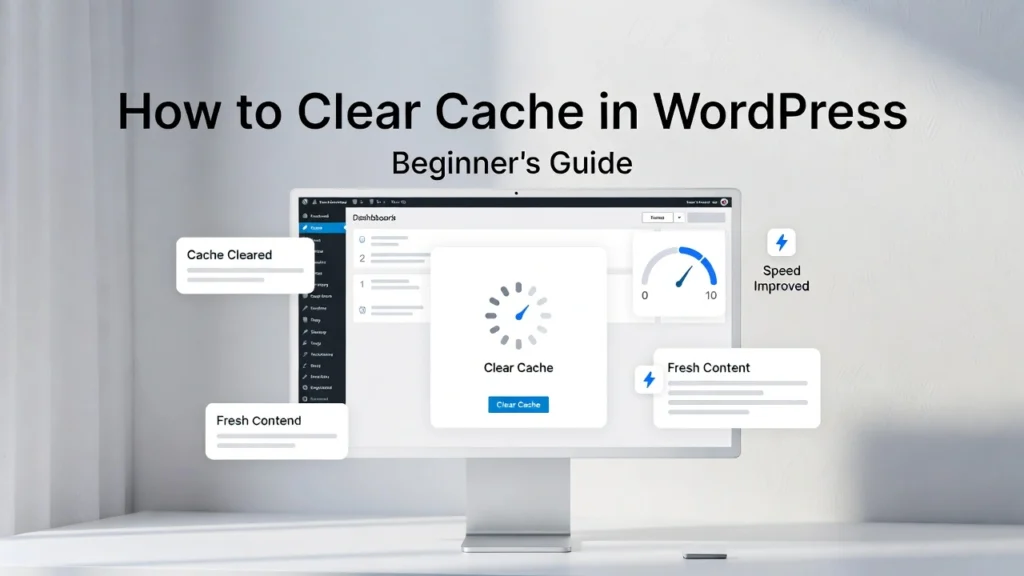
Caching is essential for speeding up your WordPress site, but it can sometimes cause issues like outdated content, failed updates, or invisible changes. Clearing your cache refreshes these stored files, ensuring your site displays the latest version. In 2026, with Core Web Vitals and mobile performance critical for SEO, knowing how to manage cache properly prevents downtime and maintains optimal rankings. At Cope Business, we handle cache clearing and troubleshooting during our technical SEO audit services and WordPress speed optimization services, helping clients resolve issues quickly and keep sites running smoothly.
This beginner’s guide explains why cache matters, when to clear it, and step-by-step methods for different cache types.
Why Clear Cache in WordPress?
Caching stores temporary copies of your site’s files to load faster for repeat visitors. However, cached versions can conflict with updates, leading to:
- Outdated content or styles after changes
- Failed plugin/theme updates
- Invisible edits in the editor
- Higher bounce rates from stale pages
Clearing cache forces a refresh, resolving these while maintaining speed benefits.
Common cache types: Browser cache (user-side), page cache (plugin/hosting), object cache (database), CDN cache (global).
When Should You Clear Your Cache?
- After updating plugins, themes, or WordPress core
- When making CSS/JS changes
- If your site looks different in incognito vs normal mode
- During troubleshooting (e.g., white screen errors)
- Before performance testing
Pro tip: Clear cache proactively after major changes to avoid surprises.
Method 1: Clear Browser Cache
This fixes user-side issues.
Steps for Chrome/Firefox/Edge
- Press Ctrl + Shift + Delete (Cmd + Shift + Delete on Mac).
- Select “Cached images and files”.
- Set time range to “All time”.
- Click “Clear data”.
- Hard refresh your site: Ctrl + F5 (Cmd + Shift + R on Mac).
For mobile: Go to browser settings > Privacy > Clear cache.
Method 2: Clear WordPress Plugin Cache
If using a caching plugin.
For WP Rocket
- Go to WP Rocket > Dashboard.
- Click “Clear Cache”.
For WP Super Cache
- Go to Settings > WP Super Cache.
- Click “Delete Cache”.
For W3 Total Cache
- Go to Performance > Dashboard.
- Click “empty all caches”.
Other plugins like LiteSpeed Cache have similar “Purge All” buttons.
Method 3: Clear Server/Hosting Cache
Many hosts have built-in caching.
For SiteGround/Bluehost
- Log into hosting panel (cPanel or custom).
- Find “Caching” or “Performance” section.
- Click “Purge Cache” or “Flush Cache”.
For Cloudflare: Log in > Caching > Purge Everything.
Method 4: Clear OPCache (Advanced)
If PHP-level cache is the issue.
- Add to wp-config.php:
define('WP_CACHE', false); temporarily.- Or ask your host to clear OPcache.
Best Practices After Clearing Cache
- Test your site: Check key pages on multiple devices.
- Re-enable caching: Don’t leave it off — speed is crucial.
- Automate: Some plugins auto-clear on updates.
- Monitor: Use GTmetrix/PageSpeed Insights to verify improvements.
- SEO Tip: Clearing cache doesn’t affect rankings directly but ensures fresh content for crawlers.
Regular cache management keeps your site fast and up-to-date.
Facing persistent cache issues or need a full speed audit? Contact Cope Business for a free technical SEO consultation — we’ll diagnose problems and optimize your caching setup for peak performance.