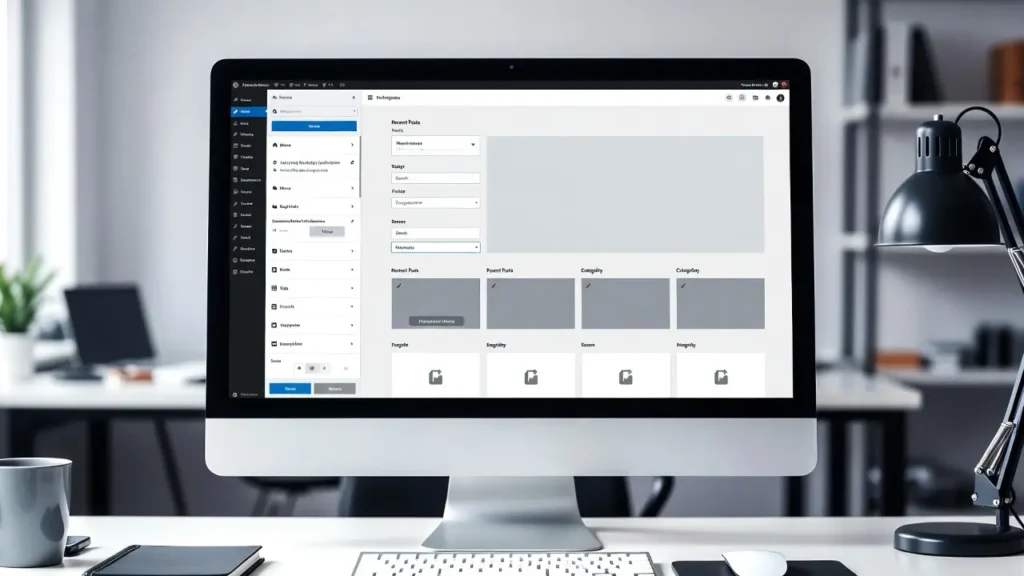
By default, WordPress uses the same sidebar across most pages — but dynamic sidebars let you display different widgets or content depending on the current page, post type, category, tag, user role, or even custom conditions. This creates a more relevant, personalized experience (e.g., service-specific sidebars on service pages, related posts on blog articles, or login widgets for members only). In 2026, with block themes and full-site editing becoming standard, dynamic sidebars remain one of the most powerful ways to improve navigation, engagement, and conversions without cluttering every page.
At Cope Business, we implement dynamic sidebars for clients during our technical SEO audit services to enhance user experience, reduce bounce rates, and strengthen internal linking — all of which help SEO performance.
This guide covers three practical methods to create dynamic sidebars in WordPress — using plugins (easiest), code (flexible), and page builders (visual).
Why Create Dynamic Sidebars in WordPress?
- Better User Experience — Show relevant widgets only where they matter
- Higher Engagement — Targeted CTAs, related content, or offers increase clicks
- Improved Conversions — Display specific forms, testimonials, or products per page
- SEO Benefits — Stronger internal linking, lower bounce rates, better time-on-site
- Cleaner Design — Avoid cluttered sidebars on pages that don’t need them
Dynamic sidebars turn generic layouts into smart, context-aware ones.
Method 1: Using a Plugin (Easiest & Most Recommended)
Plugins give you visual control, conditional rules, and no coding.
Recommended Plugin: Widget Options (Free/Pro) or Content Aware Sidebars
Widget Options is the simplest and most popular for dynamic control.
Steps
- Install Widget Options (free) from Plugins > Add New.
- Activate → Go to Appearance > Widgets.
- Add your desired widgets (text, recent posts, custom HTML, etc.) to any sidebar.
- In each widget’s settings (bottom of widget panel):
- Visibility tab → Set rules:
- Show on specific pages/posts
- Show/hide on categories, tags, post types
- Show only to logged-in users, roles, or devices
- Hide on mobile/desktop
- Visibility tab → Set rules:
- Save → Widgets now appear conditionally.
- For multiple sidebars: Use Custom Sidebars (free) or Content Aware Sidebars (free/pro) to create entirely new sidebars per condition.
Pro Version (~$39/year): Adds advanced logic, custom sidebars, device detection.
Pros: Visual, reversible, no code, very flexible.
Cons: Adds one lightweight plugin.
Method 2: Using Custom Code (Lightweight – Full Control)
For developers or sites that prefer no extra plugins.
Steps
- Use a child theme or WPCode (free plugin).
- Add this code to functions.php or WPCode snippet (run everywhere):
PHPfunction cope_dynamic_sidebar_content() { if ( is_page('services') ) { // Show on specific page dynamic_sidebar('services-sidebar'); // Create this sidebar in Appearance > Widgets } elseif ( is_single() && in_category('seo') ) { // Show on SEO category posts dynamic_sidebar('seo-sidebar'); } elseif ( is_user_logged_in() ) { // Show only to logged-in users dynamic_sidebar('member-sidebar'); } else { // Default sidebar dynamic_sidebar('main-sidebar'); } } // Replace default sidebar call in sidebar.php or template // add_action('wp', 'cope_dynamic_sidebar_content');- Create new sidebars in Appearance > Widgets (use Custom Sidebars plugin for easier creation).
- Replace default sidebar calls in your theme (sidebar.php or template files) with:
PHP<?php cope_dynamic_sidebar_content(); ?>Pros: No plugin bloat, precise conditions.
Cons: Requires child theme/template edits; test carefully.
Method 3: Using Page Builders (Visual & No-Code)
For block themes or page-builder users.
Using SeedProd or Elementor
- Install SeedProd (Pro) or Elementor Pro.
- Create or edit a page/template → Use Theme Builder (Elementor) or Page Builder (SeedProd).
- Add Sidebar widget/block → Set visibility conditions:
- Show on specific pages, post types, categories, user roles
- Add different widgets per condition (e.g., testimonials on service pages)
- Save & Publish — dynamic sidebar appears based on rules.
Pros: Drag-and-drop, beautiful layouts, no code.
Cons: Requires Pro version for advanced conditions.
Best Practices for Dynamic Sidebars
- Keep it Relevant — Don’t overload with too many widgets
- Mobile Optimization — Hide or collapse sidebars on mobile (use CSS or plugin)
- Performance — Use lightweight widgets; enable caching (WP Rocket)
- SEO — Add internal links in dynamic sidebars for better crawl paths
- Test Conditions — Preview on different pages/roles/devices
- Fallback — Always have a default sidebar for unhandled cases
Dynamic sidebars make your site smarter and more user-friendly.
Final Thoughts
Creating dynamic sidebars in WordPress is a game-changer for relevance and engagement. Use Widget Options for the easiest visual control or code for maximum flexibility — both let you show the right content to the right visitor.
Personalized sidebars = better UX = higher conversions.
Need help creating dynamic sidebars, optimizing your site structure, or improving SEO? Contact Cope Business for a free technical SEO consultation — we’ll review your site and implement custom, high-performing sidebars tailored to your goals.