In today’s competitive dental landscape, orthodontists can’t rely solely on word-of-mouth referrals to grow their practices. With more people turning to search engines to find local services, SEO for orthodontists has become one of the most powerful tools for attracting new patients.
This guide will walk you through everything you need to know about orthodontist SEO—from foundational strategies to advanced tactics—to help your practice rank higher on Google, increase website traffic, and convert more visitors into loyal patients.
What Is Orthodontist SEO?
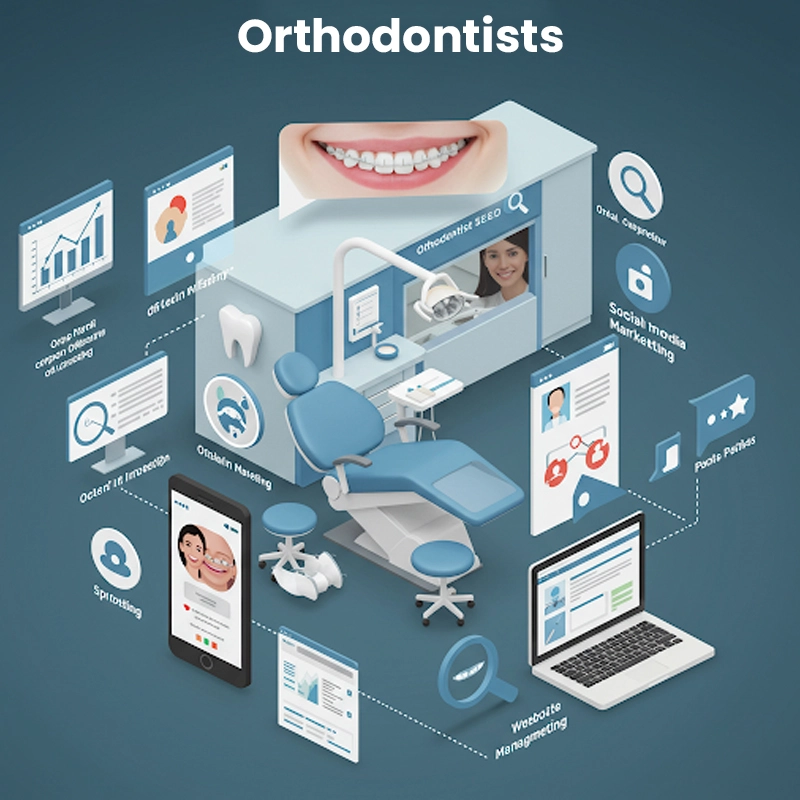
Orthodontist SEO (Search Engine Optimization) refers to the strategies and practices that help your orthodontic website rank higher in search engine results for relevant keywords such as “braces near me” or “best orthodontist in [your city].”The better your visibility in search engines like Google, the more likely potential patients will find your services when they’re actively looking for them. SEO is not just about rankings; it’s about getting the right people to your website and helping them take the next step.
Why SEO for Orthodontists Matters for Your Practice
Let’s face it—most people turn to Google first when they’re looking for a new orthodontist. Whether they’re searching for braces, Invisalign, or general orthodontic care, your potential patients are online, and if you’re not visible, you’re missing out on a lot of opportunities.
Here’s why SEO for orthodontists is essential for your practice:
1. Increase Website Traffic
SEO drives more visitors to your website by helping you appear in relevant search results. When your practice ranks higher on Google, more people are likely to click on your site and explore your services. This leads to an increase in website traffic, which directly translates into more potential patients finding you.
2. Reach the Right People
With targeted SEO strategies, you can reach people who are actively looking for orthodontic services. By optimizing for local search terms and relevant keywords, you ensure that your practice is seen by the people who are most likely to convert into patients. This not only brings traffic but brings the right kind of traffic.
3. Cost-Effective Marketing
Compared to traditional advertising, SEO is a more affordable long-term strategy. Once you’ve optimized your website and started ranking, you don’t have to keep paying for ads. Unlike paid ads, SEO is an investment that continues to bring results over time, helping you save money while attracting more patients.
What can orthodontists do to boost their website rankings?
If you want more patients to find your practice online, boosting your website rankings is key. By focusing on the right strategies, you can make sure your practice stands out when people search for orthodontic services. Here are some simple, yet powerful steps to help improve your online visibility and attract more local patients.
1. Conduct Local Keyword Research for Your Practice
Effective orthodontist SEO begins with understanding the search intent of potential patients. Start by listing the services you offer and identifying how patients might search for them.
Examples of High-Value Keywords:
- “Orthodontist near me”
- “Braces for teens [city]”
- “Invisalign orthodontist in [city]”
- “Affordable braces [city]”
- “Best orthodontist for adults”
Tips:
- Use tools like Google Keyword Planner, Ubersuggest, or SEMrush to find high-volume, low-competition keywords.
- Focus on long-tail keywords—they convert better and are easier to rank for.
- Don’t ignore related search queries and semantic keywords.
2. Optimize Your Website with On-Page SEO
Each page of your website should be optimized to rank for specific keywords. With SEO for Orthodontists, search engines need to understand what your pages are about, and on-page SEO ensures that.
Key On-Page SEO Elements:
- Title Tag: Include your primary keyword at the beginning.
- Meta Description: Write a compelling summary that includes your keyword.
- Headers (H1, H2, H3): Structure content logically and use keywords naturally.
- URL Structure: Keep it clean and keyword-focused (e.g., /invisalign-treatment-los-angeles).
- Internal Linking: Link related pages to guide users and help search engines understand your site structure.
- Image Optimization: Use descriptive filenames and alt text with keywords.
- Content Quality: Aim for at least 500-1000 words on each key service page.
Example Page Title: “Top-Rated Orthodontist in Miami | Affordable Braces & Invisalign”
3. Local SEO
Since most orthodontist patients are local, local SEO for Orthodontists is the most critical piece of the puzzle. Ranking for local search terms ensures that people in your area can find your practice.
How to Improve Local SEO:
- Google Business Profile (GBP): Claim and optimize your profile. Add correct business info, services, office hours, photos, and regular posts.
- NAP Consistency: Ensure your Name, Address, and Phone number are consistent across your website and directories.
- Local Directories: Get listed in platforms like Yelp, Healthgrades, Zocdoc, and dental-specific directories.
- Location Pages: If you have multiple offices, create unique pages for each location with localized content.
- Schema Markup: Add LocalBusiness schema to your site to improve search visibility.
Bonus Tip: Encourage satisfied patients to leave 5-star Google reviews. These boost your credibility and ranking in local packs.
4. Create Informative and Engaging Blogs
Content marketing builds trust and attracts organic traffic. Blogs, FAQs, and videos help educate potential patients while boosting your SEO.
Content Ideas for Orthodontists:
- “Braces vs. Invisalign: What’s Right for You?”
- “What to Expect During Your First Orthodontic Visit”
- “How Much Do Braces Cost in [City]?”
- “Do I Need Braces as an Adult?”
- “Tips for Taking Care of Your Braces at Home”
Tips:
- Aim for a mix of short and long-form content.
- Use your focus keyword 4-6 times naturally.
- Add value by answering real patient questions.
- Incorporate visuals and videos for more engagement.
5. Mobile Optimization: Meet Patients Where They Are
Most users search for orthodontists on mobile. If your website isn’t mobile-friendly, you’re missing out—and potentially hurting your SEO rankings.
Mobile Optimization Checklist:
- Responsive design that works on all devices
- Fast page load times (under 3 seconds)
- Click-to-call buttons for quick contact
- Easy-to-use navigation and appointment forms
- Mobile-friendly fonts and buttons
A mobile-optimized website isn’t just a bonus—it’s a necessity in 2024 and beyond.
6. Technical SEO
Even if your content is amazing, technical issues can prevent Google from indexing your site properly. Technical SEO for Orthodontists ensures that your website performs well and remains crawlable.
Key Technical SEO Elements:
- XML Sitemap: Helps search engines crawl your site efficiently.
- Robots.txt: Controls what pages search engines can access.
- HTTPS: Secure your site with an SSL certificate.
- 404 Error Pages: Monitor and fix broken links.
- Page Speed: Use tools like Google PageSpeed Insights to identify performance bottlenecks.
- Core Web Vitals: Improve user experience by enhancing loading speed, interactivity, and visual stability.
7. Link Building: Boost Your Domain Authority
Backlinks (links from other websites to yours) are a strong signal of authority and trust. They help search engines see your website as a credible source.
Link-Building Tips for Orthodontists:
- Guest Posts: Write articles for local health or lifestyle blogs.
- Local Partnerships: Collaborate with schools, pediatricians, and local events for backlinks.
- Press Releases: Announce new locations, technologies, or patient success stories.
- Sponsor Events: Community involvement often leads to mentions and links from reputable local sites.
- Testimonials: Offer testimonials to vendors or local businesses and ask for a backlink in return.
8. Track Results and Optimize Continuously
SEO isn’t a “set it and forget it” strategy. You need to monitor progress and tweak your tactics regularly to stay ahead of competitors. SEO for Orthodontists is an ongoing process that demands regular attention.
Tools to Use:
- Google Analytics: Understand traffic sources and behavior.
- Google Search Console: Monitor keyword rankings and site health.
- Rank Tracking Tools: Use tools like SERPWatcher or Ahrefs to track keyword performance.
- Heatmaps & Session Recording Tools: Tools like Hotjar show how visitors engage with your site.
Measure what matters—like how many website visitors turn into appointment bookings.
Latest SEO Trends for Orthodontists
Here are the key SEO trends orthodontists should be aware of to stay competitive:
- AI in Search Rankings: Search engines, like Google, are becoming more reliant on AI and machine learning to understand search intent. Focus on creating high-quality, user-centered content to ensure you meet these evolving expectations.
- Voice Search Optimization: As voice search continues to grow, it’s important to optimize for longer, more conversational keywords. People tend to speak in full sentences when using voice search, so adjusting your content accordingly can improve your visibility.
- Core Web Vitals: Google now prioritizes user experience, including page load speed and interactivity. Optimizing your website for these factors ensures a smooth browsing experience, which can improve your rankings.
- EAT (Expertise, Authoritativeness, Trustworthiness): Building trust with both search engines and potential patients is crucial. Highlight your credentials, share your expertise, and consistently provide accurate, high-quality information.
- Video SEO: Videos are becoming increasingly popular in SEO. According to video marketing statistics, users are more likely to engage with video content than text alone. Optimizing your videos with proper titles, descriptions, and tags can help you engage users and improve search rankings—especially when showcasing procedures or patient testimonials.
Staying on top of these trends will help your orthodontic practice remain visible and competitive in an ever-changing digital landscape.
Conclusion
In today’s digital world, a strong online presence is essential for growing your orthodontic practice. Traditional referrals aren’t enough—SEO helps you reach the right patients by improving visibility, building trust, and driving consistent traffic.
Remember, SEO is a long-term investment. Focus on valuable content, local optimization, and user experience to stay ahead. Whether starting fresh or refining your strategy, now is the time to make SEO a key part of your marketing plan—your future patients are already searching.