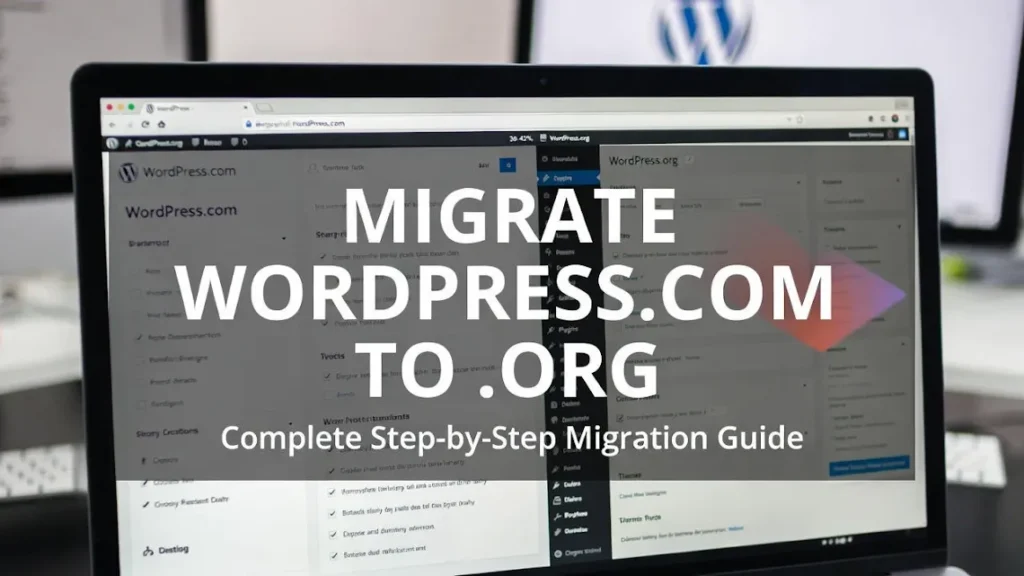
Migrate WordPress.com to WordPress.org unlocks full control, unlimited customization, better SEO potential, and freedom from platform restrictions—perfect for growing your blog into a professional site. Done correctly, this migration preserves your content, rankings, and audience with minimal downtime. At Cope Business, we’ve assisted numerous clients with seamless migrations during our technical SEO audit services, ensuring no SEO loss and quick recovery. This 2026-updated guide outlines the complete process, including tools, tips, and warnings to avoid common pitfalls.
On this page
ToggleWhether you’re outgrowing WordPress.com’s limitations or seeking more features, follow these steps carefully. For hands-on help or a full site transfer, our team can handle it—contact us for a free consultation.
Why Move from WordPress.com to WordPress.org?
WordPress.com offers easy setup but restricts plugins, themes, monetization, and custom code on lower plans. WordPress.org (self-hosted) provides:
- Unlimited plugins/themes for advanced functionality.
- Full monetization options without revenue sharing.
- Better SEO control and scalability.
- Complete ownership of your data.
Note: This guide assumes you’re on a free or paid WordPress.com plan. For comparisons, see our WordPress.com vs WordPress.org guide.
Step 1: Export Your Content from WordPress.com
Start by downloading everything from your old site.
- Log into your WordPress.com dashboard and switch to the classic WP Admin view.
- Go to Tools > Export.
- Select “All content” and click “Download Export File”.
- Save the XML file (contains posts, pages, comments, images, etc.) and unzip if needed.
For large sites, the export may split into multiple files—import them sequentially later.
Tip: If your site has a blogroll (links), export the OPML file by visiting http://yourblog.wordpress.com/wp-links-opml.php in your browser.
Step 2: Set Up Your New WordPress.org Site
Choose reliable hosting and install WordPress.org.
Recommended Hosting for 2026
- SiteGround or Bluehost: WordPress-optimized with one-click install, free domain, and excellent support—plans start at ~$3–$7/month.
- For setup details, follow our how to install WordPress guide.
- Sign up for hosting and point your domain (or a new one) to the server.
- Install WordPress via the host’s dashboard—it’s automatic and takes minutes.
Warning: If using a custom domain on WordPress.com, update nameservers to your new host after migration to avoid downtime.
Step 3: Import Content to Your New Site
Transfer your exported data.
- In your new WordPress.org admin, go to Tools > Import.
- Install and run the “WordPress” importer.
- Upload the XML file from Step 1.
- Check “Download and import file attachments” to pull in images (may take time for large sites).
- Assign content to an existing user (e.g., your admin account).
For oversized XML files (>2MB), split them using a free WXR splitter tool or increase your host’s upload limit.
Images Note: If images remain hosted on WordPress.com (URLs like files.wordpress.com), use the Import External Images plugin to migrate them locally.
For blogroll links: Install the Link Manager and OPML Importer plugins, then import your OPML file under Tools > Import > Blogroll.
Step 4: Migrate Subscribers and Set Your Old Site to Private
Preserve your audience.
- Install Jetpack on both sites.
- Contact WordPress.com support to transfer subscribers (they’ll handle it for free).
- Optionally, set your old WordPress.com site to private in Settings > Privacy to direct traffic to the new one.
Step 5: Set Up Redirects to Preserve SEO and Traffic
Redirects ensure visitors and search engines find your new site.
- If on a free WordPress.com subdomain (e.g., yourblog.wordpress.com): Use WordPress.com’s paid “Site Redirect” feature (~$13/year) for 301 redirects to your new domain.
- For custom domains on WordPress.com: Change DNS/nameservers to your new host—no additional redirects needed, as SEO benefits transfer automatically.
SEO Tip: Update any internal links or hardcoded URLs pointing to the old domain using our update URLs guide. Keep redirects active for at least 2 years to maintain rankings.
If changing domains, notify Google via Search Console’s Change of Address tool (see our migration checklist).
Warning: Without redirects, you’ll lose traffic and SEO juice—don’t skip this!
Step 6: Post-Migration Checks and Optimization
Verify everything works.
- Test all links, images, and forms on the new site.
- Reinstall your theme (themes don’t transfer; download and upload manually).
- Add essential plugins like All in One SEO for sitemaps/schema, WPForms for contacts, and UpdraftPlus for backups.
- Enable HTTPS on your new host for security and SEO (free via Let’s Encrypt—see our SSL guide).
- Submit your new sitemap to Google Search Console and monitor for errors.
- Backup your new site immediately.
For large sites or complex transfers, use plugins like Duplicator for a full clone.
Common Issues:
- Front page missing: Recheck theme customizations.
- Import timeouts: Re-run the importer—it resumes.
- Refunds: Cancel WordPress.com plans/domains within 30–48 days if needed.
- Domain transfers: Wait 60 days (ICANN rule) before full transfer; use nameservers meantime.
Final Tips for a Smooth Migration
- Backup everything before starting.
- Test on a staging site if possible.
- No downtime if redirects are set properly.
- For hands-off help, use our migration services to avoid risks.
Migrating unlocks endless possibilities—enjoy the freedom of WordPress.org! If you encounter issues or need optimization post-move, contact Cope Business for a free technical SEO consultation.