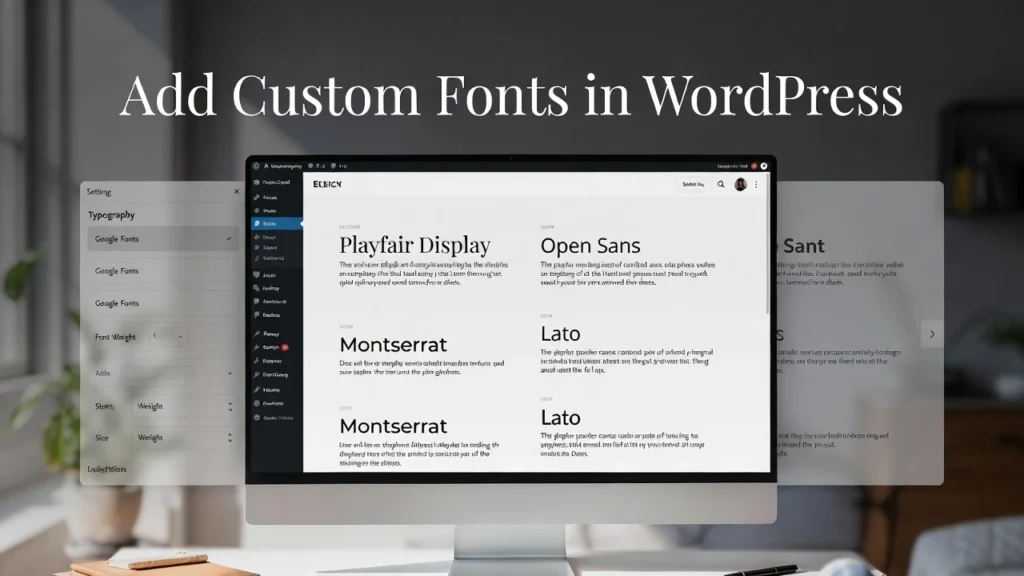
Typography plays a huge role in your website’s branding, readability, and user experience. While most WordPress themes come with a limited selection of fonts, adding custom fonts in wordpress lets you create a unique and professional look that stands out. with Google’s Core Web Vitals still heavily influencing rankings, choosing performant fonts and loading them correctly is essential to avoid layout shifts and slow page loads. At Cope Business, we optimize custom fonts for clients during our technical SEO audit services to ensure fast loading, perfect rendering, and improved accessibility.
This guide covers the three most popular and reliable methods to add custom fonts in WordPress — no advanced coding required.
Why Add Custom Fonts to WordPress?
- Brand Consistency — Match your logo and marketing materials perfectly.
- Improved Readability — Better fonts increase time on page and reduce bounce rates.
- Professional Look — Stand out from sites using default system fonts.
- SEO & Performance — Properly loaded custom fonts won’t hurt Core Web Vitals (CLS, LCP).
- Accessibility — High-quality fonts with proper contrast improve user experience.
Method 1: Using a Plugin (Easiest & Recommended)
Plugins handle everything automatically — including performance optimization.
Best Plugin: Easy Google Fonts (Free)
This lightweight plugin lets you add and assign Google Fonts without code.
Steps
- Install and activate Easy Google Fonts from Plugins > Add New.
- Go to Appearance > Typography.
- Click Add New Google Font.
- Search and select your desired fonts (e.g., Poppins, Inter, Roboto).
- Choose font weights and styles.
- Assign fonts to elements:
- Body text
- Headings (H1–H6)
- Navigation
- Sidebar/Widgets
- Preview live changes and save.
Alternative Plugins:
- Custom Fonts — Upload your own .ttf/.woff files (great for premium or custom fonts).
- Use Any Font — Simple upload and use.
- Font Awesome — For icons (not body fonts).
Pros: No code, live preview, mobile-responsive, fast loading. Cons: Limited to Google Fonts (use Custom Fonts plugin for self-hosted).
Method 2: Using Google Fonts Directly (No Plugin – Lightweight)
Perfect for minimal sites or when you want maximum control.
Steps
- Go to Google Fonts (fonts.google.com).
- Select your fonts and weights.
- Copy the <link> embed code (or @import code).
- Add it to WordPress:
- Use Insert Headers and Footers plugin → paste into Header section.
- Or add to child theme’s header.php or Appearance > Customize > Additional CSS with @import.
- Apply fonts via CSS:
CSSbody { font-family: 'Poppins', sans-serif; } h1, h2, h3 { font-family: 'Inter', sans-serif; }- Add this in Appearance > Customize > Additional CSS.
Tip: Use the “preconnect” hint for faster loading:
HTML
<link rel="preconnect" href="https://fonts.gstatic.com" crossorigin>Method 3: Self-Hosting Custom Fonts (Best for Performance & Privacy)
Host fonts on your server to avoid external requests (better privacy, faster load).
Steps
- Download font files (.woff2 format preferred) from Google Fonts or your provider.
- Upload fonts to your child theme (e.g., /wp-content/themes/your-child-theme/fonts/).
- Add @font-face in Additional CSS:
CSS@font-face { font-family: 'CustomFont'; src: url('fonts/CustomFont.woff2') format('woff2'); font-weight: normal; font-style: normal; font-display: swap; /* Prevents FOUT */ } body { font-family: 'CustomFont', sans-serif; }- Use font-display: swap; to avoid invisible text while loading.
Pros: Faster, no external requests, GDPR-friendly. Cons: Slightly more setup, larger initial download.
Best Practices for Custom Fonts
- Use font-display: swap — Prevents text from being invisible during load.
- Limit Font Weights & Styles — 2–3 weights max to reduce file size.
- Convert to .woff2 — Smallest modern format.
- Preload Critical Fonts — Add <link rel=”preload”> for above-the-fold text.
- Test Performance — Use PageSpeed Insights to check font loading impact.
- Mobile Optimization — Ensure fonts are legible on small screens.
- Accessibility — Maintain good contrast ratios.
Custom fonts can make your site look premium — when loaded correctly.
Final Thoughts
Adding custom fonts to WordPress is a quick way to elevate your site’s design and branding. Use Easy Google Fonts for simplicity, or self-host for maximum performance and privacy.
Beautiful typography improves readability, trust, and conversions.
Need help adding custom fonts, optimizing load times, or improving overall site performance? Contact Cope Business for a free technical SEO consultation — we’ll make your typography fast, beautiful, and SEO-friendly.