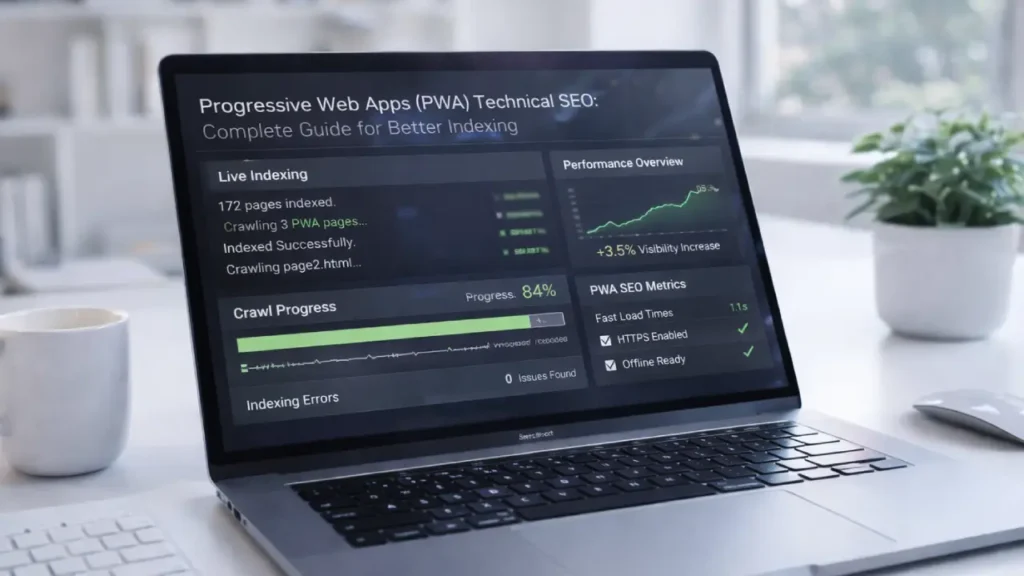
PWA Technical SEO is critical for ensuring Progressive Web Apps rank properly in search engines while delivering a fast, app-like experience. While PWAs improve performance, offline access, and engagement, they often introduce technical SEO challenges due to heavy JavaScript usage, service workers, and dynamic rendering.
Without proper optimization, search engines may struggle to crawl, render, and index your PWA content efficiently. In this comprehensive guide, you’ll learn how to implement smart technical strategies that make your PWA both user-friendly and search-engine friendly.
Why PWA Technical SEO Requires Special Attention
Progressive Web Apps rely on:
- Client-side rendering (CSR)
- Service workers
- JavaScript frameworks
- Dynamic routing
Although Google can render JavaScript, relying purely on CSR can delay indexing and waste crawl budget. That’s why proper technical setup is essential.
If you’re improving rendering performance, you may also benefit from reading:
Boost Performance and SEO with Server Side Rendering
Implement Server-Side Rendering (SSR)
One of the most powerful improvements you can make is implementing Server-Side Rendering (SSR).
- Search engines receive fully rendered HTML
- Indexing becomes faster
- Crawl efficiency improves
- Performance scores increase
Popular frameworks supporting SSR:
- Next.js
- Nuxt.js
- Angular Universal
Optimize Service Worker Configuration
Service workers are essential for offline functionality but can create SEO problems if misconfigured.
Common issues:
- Cached outdated content
- Serving offline pages to crawlers
- Blocking fresh HTML updates
Best practices:
- Use “network-first” caching strategy for HTML
- Avoid aggressive caching of important pages
- Regularly update cache versions
- Test rendering in Google Search Console
Learn more here:
Fixing Mixed Content Errors That Affect SEO
Create Clean and Crawlable URLs
PWAs often use dynamic routing. Avoid:
- Hash-based URLs (#)
- Random parameter duplication
- Multiple URL versions for the same content
Best practices:
- Use descriptive, static URLs
- Implement canonical tags
- Maintain consistent trailing slash rules
- Set proper 301 redirects
For deeper structure optimization:
Optimizing URL Structure for Scalability and Crawl Efficiency
Improve Core Web Vitals
1. Largest Contentful Paint (LCP)
- Optimize hero images
- Preload important resources
2. Interaction to Next Paint (INP)
- Reduce JavaScript execution time
- Split large bundles
3. Cumulative Layout Shift (CLS)
- Set image dimensions
- Avoid layout shifts from dynamic content
Strong Core Web Vitals directly influence rankings and user experience.
Ensure Proper Indexing Signals
- No accidental noindex tags
- Robots.txt allows JS and CSS files
- XML sitemap includes important URLs only
- Canonical tags are accurate
Structured Data for PWAs
Structured data helps search engines understand your content clearly.
- Article schema
- Product schema (for ecommerce)
- FAQ schema
- Breadcrumb schema
Ensure JSON-LD loads in rendered HTML and matches visible content.
Avoid Infinite Scroll SEO Problems
- Implement paginated URLs
- Use pushState to update URLs
- Ensure each section has a unique URL
- Provide internal links to deeper content
Manage Crawl Budget Efficiently
- Block unnecessary parameters
- Avoid duplicate URL variations
- Consolidate similar content
- Remove thin pages
Secure and Clean HTTPS Setup
- No mixed content warnings
- Valid SSL certificate
- HTTP to HTTPS redirect
- HSTS implementation
Final Thoughts
PWA Technical SEO is not optional—it’s essential. Progressive Web Apps offer incredible speed and engagement, but without proper optimization, they may struggle to rank.
By implementing server-side rendering, clean URL structures, structured data, crawl budget control, and performance optimization, you ensure your PWA performs at its highest potential in search engines.
Technical SEO should be integrated into development from day one—not added later as a fix.
Need Professional Help?
If you want expert support: Contact Cope Business.