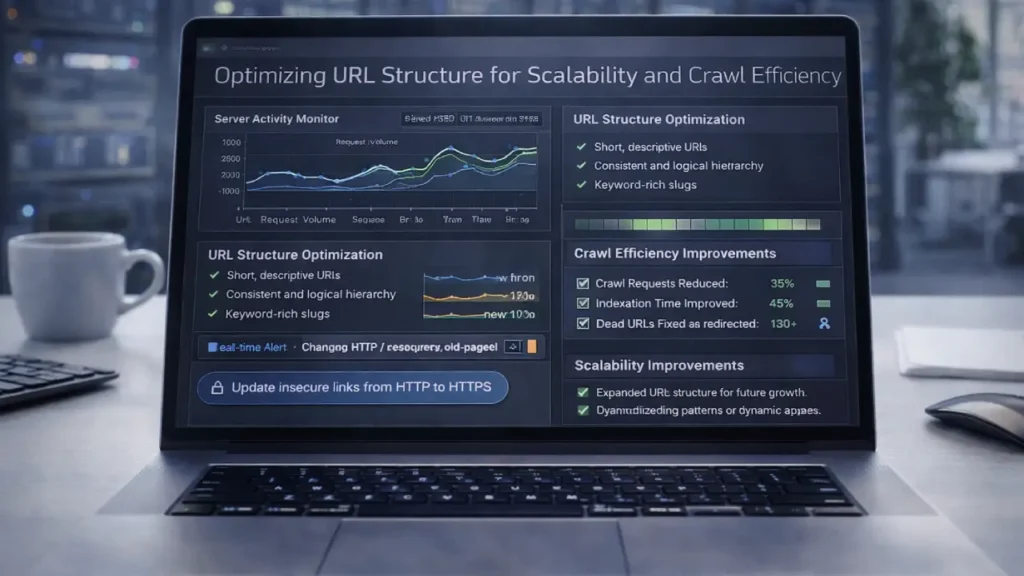
A well-structured URL is more than just a web address — it’s a powerful technical SEO asset. As websites grow, poor URL architecture can lead to crawl inefficiencies, duplicate content issues, and ranking dilution. Optimizing your URL structure ensures search engines can crawl, understand, and index your website efficiently while supporting long-term scalability.
In this guide, we’ll explore how to design SEO-friendly URLs that improve crawl efficiency, enhance user experience, and scale effectively as your website expands.
Why URL Structure Matters for SEO
Search engines rely on URLs to understand page hierarchy and relationships. A clear, logical URL structure:
- Improves crawl efficiency
- Distributes link equity properly
- Enhances user experience
- Supports content scalability
- Reduces duplicate content risks
When URLs are messy, overly dynamic, or inconsistent, search engines waste crawl budget analyzing unnecessary parameters and duplicate variations.
Key Principles of an SEO-Friendly URL Structure
1. Keep URLs Short and Descriptive
Short URLs are easier to read, share, and crawl. Avoid unnecessary words, dates, and parameters.
❌ Poor Example:
example.com/blog/category/2026/02/seo-tips-for-business-growth-guide✅ Optimized Example:
example.com/seo-business-growthUse your focus keyword naturally within the URL while keeping it concise.
2. Maintain a Logical Hierarchy
A scalable website requires a clear content hierarchy. For example:
example.com/services/technical-seo/example.com/blog/technical-seo/url-optimizationThis structure helps search engines understand parent-child relationships between pages.
If you’re working on improving crawl paths and rendering efficiency, read:
👉 Optimizing Critical Rendering Path for Faster Page Loads
3. Avoid Dynamic Parameters When Possible
URLs with excessive parameters can create crawl traps:
example.com/products?id=123&ref=abc&utm_source=xyzInstead, use static URLs:
example.com/products/seo-audit-tool/Dynamic URLs can be managed with canonical tags and proper parameter handling, but static structures are generally better for SEO and scalability.
4. Use Hyphens, Not Underscores
Search engines treat hyphens as word separators.
Use: technical-seo-guide
Avoid: technical_seo_guide
5. Keep URLs Lowercase
Uppercase URLs can create duplicate versions of the same page. Always standardize URLs to lowercase and implement proper redirects.
URL Structure and Crawl Budget Optimization
Large websites must manage crawl budget efficiently. Poor URL structures can:
- Create infinite filter combinations
- Generate duplicate category pages
- Waste crawl resources
For example, faceted navigation can create thousands of crawlable URLs if not managed correctly. Learn how to handle this here:
👉 Faceted Navigation SEO & Duplicate Content Fix
To improve crawl efficiency:
- Use canonical tags correctly
- Block unnecessary parameters via robots.txt
- Configure URL parameters in Google Search Console
- Avoid unnecessary pagination duplication
Designing URLs for Scalability
1. Plan Category Architecture in Advance
For example:
/blog/technical-seo/
/blog/on-page-seo/
/blog/local-seo/
Avoid placing content directly under the root if you plan to add categories later.
2. Avoid Changing URLs Frequently
Frequent URL changes require redirects, which:
- Slow page load time
- Risk link equity loss
- Increase technical complexity
If changes are necessary, implement proper 301 redirects and update internal links accordingly.
3. Standardize Trailing Slashes
Choose one format and stay consistent:
- example.com/blog/
- OR example.com/blog
Inconsistent formatting can cause duplicate content issues.
Common URL Structure Mistakes
- Using auto-generated numeric URLs
- Including dates unnecessarily in blog URLs
- Creating multiple category paths to the same content
- Allowing HTTP and HTTPS versions to coexist
If you’re still dealing with protocol inconsistencies, read:
👉 Fixing Mixed Content Errors That Affect SEO
Best Practices Checklist
- Use short, keyword-focused URLs
- Maintain logical hierarchy
- Avoid unnecessary parameters
- Implement canonical tags
- Use 301 redirects properly
- Standardize lowercase and trailing slash rules
- Monitor crawl stats in Google Search Console
Final Thoughts
Optimizing URL structure is a foundational technical SEO strategy that directly impacts crawl efficiency, scalability, and ranking performance. A clean, logical, and scalable URL architecture helps search engines understand your site, distribute authority effectively, and crawl content without wasting resources.
As your website grows, maintaining a structured URL framework prevents future SEO complications and supports long-term organic growth.
Need Professional Help?
If you want expert assistance designing a scalable URL structure and improving crawl efficiency: Contact Cope Business