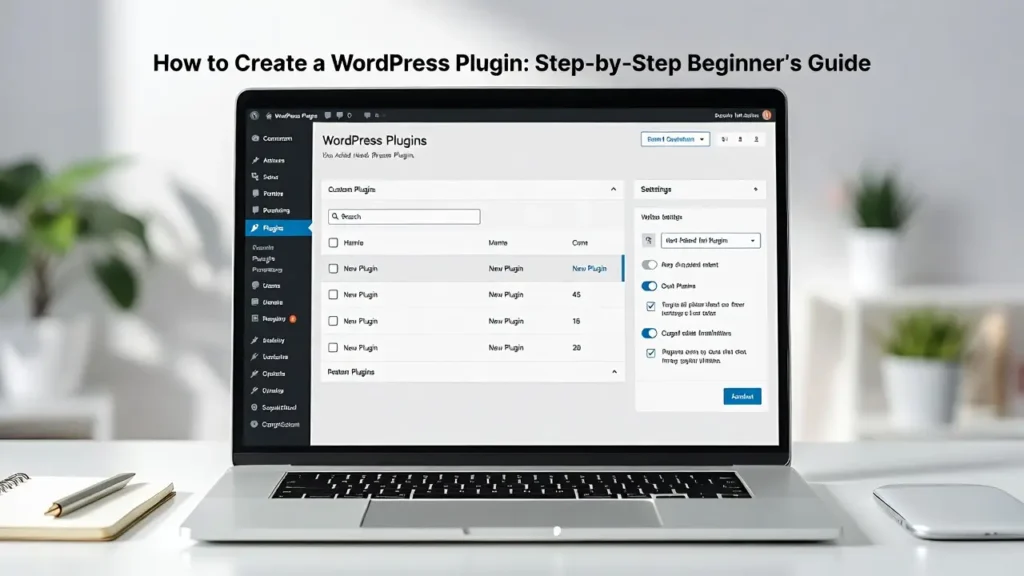
Creating your own WordPress plugin is one of the most rewarding skills you can learn — whether you want to add a small custom feature, solve a problem for your site, share a tool with the community, or even sell premium plugins. With the block editor (Gutenberg), full-site editing, and REST API now mature, building plugins is easier and more powerful than ever.
At Cope Business, we regularly develop custom plugins for clients as part of our technical SEO audit services and custom WordPress solutions — from simple shortcodes to advanced integrations. This beginner-friendly guide walks you through creating your first WordPress plugin step by step — no prior plugin development experience required.
Why Create Your Own WordPress Plugin?
- Solve specific problems that no existing plugin handles perfectly
- Add unique features to your site without bloat
- Share or sell your work on WordPress.org or marketplaces
- Learn WordPress development deeply (hooks, filters, actions, blocks)
- Future-proof your customizations (plugins survive theme changes)
Prerequisites (What You Need)
- A local or staging WordPress site (use LocalWP, DevKinsta, or XAMPP)
- Basic understanding of PHP (we’ll explain everything)
- A code editor (VS Code, Sublime Text, or Notepad++)
- FTP access or direct file access to wp-content/plugins
Always test on a non-live site!
Step 1: Create the Plugin Folder & Main File
- Go to your WordPress installation folder → wp-content/plugins
- Create a new folder: cope-first-plugin (use lowercase, no spaces, hyphens ok)
- Inside the folder, create a file: cope-first-plugin.php
Step 2: Add the Plugin Header (Required)
Open cope-first-plugin.php and paste this at the very top:
PHP
<?php
/**
 * Plugin Name:       Cope First Plugin
 * Plugin URI:        https://www.copebusiness.com
 * Description:       My very first custom WordPress plugin – created with Cope Business guide
 * Version:           1.0.0
 * Requires at least: 6.0
 * Requires PHP:      8.0
 * Author:            Cope Business
 * Author URI:        https://www.copebusiness.com
 * License:           GPL-2.0-or-later
 * License URI:       https://www.gnu.org/licenses/gpl-2.0.html
 * Text Domain:       cope-first-plugin
 */
This header tells WordPress it’s a plugin — without it, the plugin won’t appear in the dashboard.
Step 3: Add Your First Simple Feature (Hello World Example)
Let’s add a shortcode [cope_hello] that outputs “Hello from Cope Business!”
Add this code below the header:
PHP
// Prevent direct access
if ( ! defined( 'ABSPATH' ) ) {
    exit;
}

// Register shortcode
function cope_hello_shortcode() {
    return '<p style="color: #0073aa; font-weight: bold;">Hello from Cope Business! 🚀</p>';
}
add_shortcode( 'cope_hello', 'cope_hello_shortcode' );
Save the file → Go to Plugins → Activate “Cope First Plugin”.
Now, anywhere in a post or page, type [cope_hello] — you’ll see the message!
Step 4: Add More Useful Features (Real-World Examples)
Example 1: Custom Admin Notice
PHP
// Show welcome notice in admin dashboard
function cope_welcome_notice() {
    ?>
    <div class="notice notice-success is-dismissible">
        <p>Thank you for using Cope First Plugin! Need help? <a href="https://www.copebusiness.com/contact">Contact us</a>.</p>
    </div>
    <?php
}
add_action( 'admin_notices', 'cope_welcome_notice' );
Example 2: Enqueue Custom CSS & JS
PHP
function cope_enqueue_assets() {
    wp_enqueue_style( 'cope-custom-style', plugin_dir_url( __FILE__ ) . 'assets/style.css' );
    wp_enqueue_script( 'cope-custom-script', plugin_dir_url( __FILE__ ) . 'assets/script.js', array('jquery'), '1.0', true );
}
add_action( 'wp_enqueue_scripts', 'cope_enqueue_assets' );
Create folders /assets/ and add style.css and script.js.
Example 3: Add a Settings Page
PHP
// Add settings page under Settings menu
function cope_add_settings_page() {
    add_options_page(
        'Cope Plugin Settings',
        'Cope Settings',
        'manage_options',
        'cope-settings',
        'cope_settings_page_callback'
    );
}
add_action( 'admin_menu', 'cope_add_settings_page' );

function cope_settings_page_callback() {
    ?>
    <div class="wrap">
        <h1>Cope Plugin Settings</h1>
        <form method="post" action="options.php">
            <?php
            settings_fields( 'cope_settings_group' );
            do_settings_sections( 'cope-settings' );
            submit_button();
            ?>
        </form>
    </div>
    <?php
}
(Expand with register_setting() and add_settings_field() for real options.)
Step 5: Test, Secure & Publish
- Test: Check on multiple devices, browsers, and user roles.
- Security: Always sanitize/escape outputs (esc_html, esc_url, etc.).
- Version Control: Use Git for changes.
- Distribute: Zip the folder → upload to WordPress.org (free) or sell on your site/CodeCanyon.
Best Practices for WordPress Plugins
- Use unique prefixes (e.g., cope_ or your initials) to avoid conflicts
- Follow WordPress Coding Standards
- Add proper licensing (GPLv2 or later)
- Include uninstall.php for cleanup
- Document your code with comments
- Test with Query Monitor plugin for performance
Final Thoughts
Creating your first WordPress plugin is easier than most people think — start small with shortcodes or admin notices, then build more advanced features. Once you understand actions, filters, and blocks, the possibilities are endless.
Plugins are how you truly make WordPress your own.
Want help creating a custom plugin, optimizing your site, or turning an idea into a premium product? Contact Cope Business for a free consultation — we’ll guide you from concept to launch with clean, secure, and performant code.