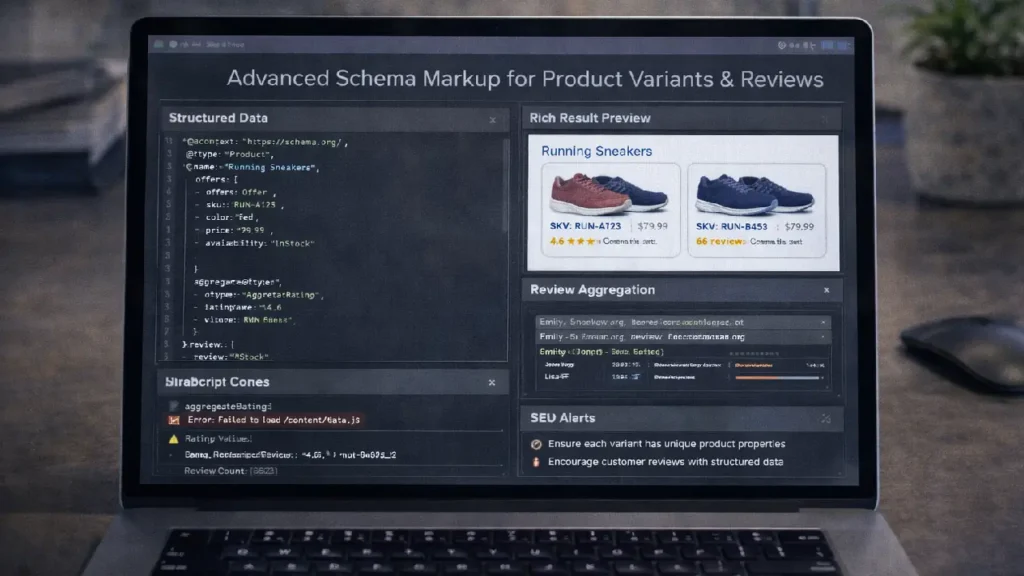
Schema markup plays a critical role in modern technical SEO, especially for ecommerce websites. As search engines evolve, simply marking up a single product page is no longer enough. Today, businesses must implement advanced structured data for product variants and customer reviews to stand out in rich results and drive higher click-through rates (CTR).
Product variants — such as size, color, material, or storage capacity — create complexity in how search engines interpret product relationships. Add reviews into the mix, and improper schema implementation can lead to indexing confusion, duplicate listings, or lost rich snippets.
This guide explains how to implement advanced schema markup for product variants and reviews to maximize visibility and performance.
Why Schema Markup Matters for Ecommerce SEO
Structured data helps search engines understand product information beyond plain text. When implemented correctly, it enables:
- Rich product snippets in SERPs
- Star ratings and review counts
- Price, availability, and discount display
- Variant-level indexing improvements
Without schema, search engines rely solely on page content, which may reduce eligibility for enhanced search features.
For foundational implementation, see:
Structured Data Implementation Guide for Developers
Understanding Product Variant Schema
Product variants refer to different versions of the same core product. Examples include:
- T-shirt (Red, Blue, Black)
- iPhone (128GB, 256GB, 512GB)
- Shoes (Size variations)
Instead of treating each variant as an unrelated product, schema markup allows you to define their relationship.
Key Schema Types Used
- Product – Main product entity
- Offer – Pricing and availability
- AggregateOffer – Price range across variants
- Review – Individual reviews
- AggregateRating – Overall rating summary
Recommended Variant Schema Structure
1. Parent Product Entity
Define the main product as the parent entity:
- Product name
- Brand
- Description
- SKU (if shared)
- Images
This acts as the canonical representation in structured data.
2. Variant-Level Offers
Each variant should have its own Offer schema containing:
- Price
- Currency
- Availability
- SKU
- URL
This helps Google display accurate variant pricing in search results.
3. Use AggregateOffer for Price Ranges
If multiple variants exist, use AggregateOffer to show:
- Lowest price
- Highest price
- Offer count
This improves eligibility for price range rich snippets.
Implementing Review Schema for Variants
Reviews influence both rankings and conversions. Proper markup ensures star ratings appear in SERPs.
Review Schema Best Practices
- Attach reviews to the parent product when shared
- Use variant-level reviews only if unique
- Include reviewer name and date
- Provide reviewBody and ratingValue
AggregateRating Implementation
AggregateRating summarizes all reviews:
- ratingValue (average rating)
- reviewCount (total reviews)
This is what generates star ratings in Google results.
Avoiding Common Variant Schema Mistakes
- Marking each variant as a separate unrelated product
- Duplicate review markup across variants
- Fake or self-written reviews
- Mismatched price vs on-page content
Handling URL & Canonicalization for Variants
Variant URLs often create duplication issues, such as:
/product/shoes?color=black&size=9
Use:
- Canonical tags pointing to the main product page
- Parameter handling in Google Search Console
- Clean variant URLs where possible
For deeper parameter handling strategies, read:
How to Handle URL Parameters Without Wrecking Your SEO
Testing and Validating Schema Markup
After implementation, validation is critical.
Use These Tools:
- Google Rich Results Test
- Schema Markup Validator
- Search Console Enhancements Report
These tools help detect:
- Missing fields
- Invalid properties
- Review spam flags
Advanced Enhancements for Product Schema
To further enhance visibility, consider adding:
- Pros and Cons schema
- ShippingDetails
- ReturnPolicy
- Product videos
- FAQ schema on product pages
Combining multiple schema types increases SERP real estate and CTR.
Performance & Rendering Considerations
If your ecommerce site uses JavaScript frameworks, ensure schema is rendered properly.
- Prefer server-side rendering for schema
- Avoid injecting structured data late via JS
- Test rendered HTML for schema visibility
Reference:
How Google Renders JavaScript Pages: SEO Best Practices
Final Thoughts
Advanced schema markup for product variants and reviews is essential for modern ecommerce SEO. Proper implementation helps search engines understand variant relationships, display accurate pricing, and showcase authentic customer reviews.
By structuring parent products, variant offers, and aggregated reviews correctly, you improve rich result eligibility, boost CTR, and drive more qualified traffic.
Ignoring variant schema not only limits visibility but can also create duplication and indexing inefficiencies.
Need Help Implementing Advanced Schema?
If you want expert assistance implementing product schema, variant markup, or review structured data: Contact Cope Business