In today’s fast-paced digital world, staying ahead of the curve is essential for businesses aiming to grow their online presence. With ever-changing search engine algorithms and a constantly evolving digital landscape, traditional SEO tactics are no longer enough. Enter AI—the game-changer that’s transforming how we approach SEO and digital strategy.
In this blog, we’ll dive into how combining AI and SEO can supercharge your marketing efforts, helping you improve search rankings, engage with customers in smarter ways, and ultimately drive more traffic to your site. Ready? Let’s get started!
What Exactly Are AI and SEO?
At first glance, AI (Artificial Intelligence) and SEO (Search Engine Optimization) might seem like two separate worlds. But when brought together, they create a powerful synergy that can drastically improve your digital strategy. Let’s break it down:
- SEO is the process of optimizing your website so that it ranks higher in search engine results, helping you reach more people who are actively searching for products, services, or information related to your business.
- AI, on the other hand, involves creating systems and algorithms that can analyze data, learn from it, and even make predictions or decisions based on that information. In SEO, AI helps automate processes, provide insights, and make data-driven decisions that save time and improve results.
Together, AI empowers SEO professionals to make smarter, faster, and more effective decisions, ultimately driving traffic and improving rankings. Let’s look at how AI is revolutionizing SEO.
How AI is Revolutionizing SEO
AI is fundamentally changing the SEO landscape. Let’s break down the key ways it’s reshaping the industry:
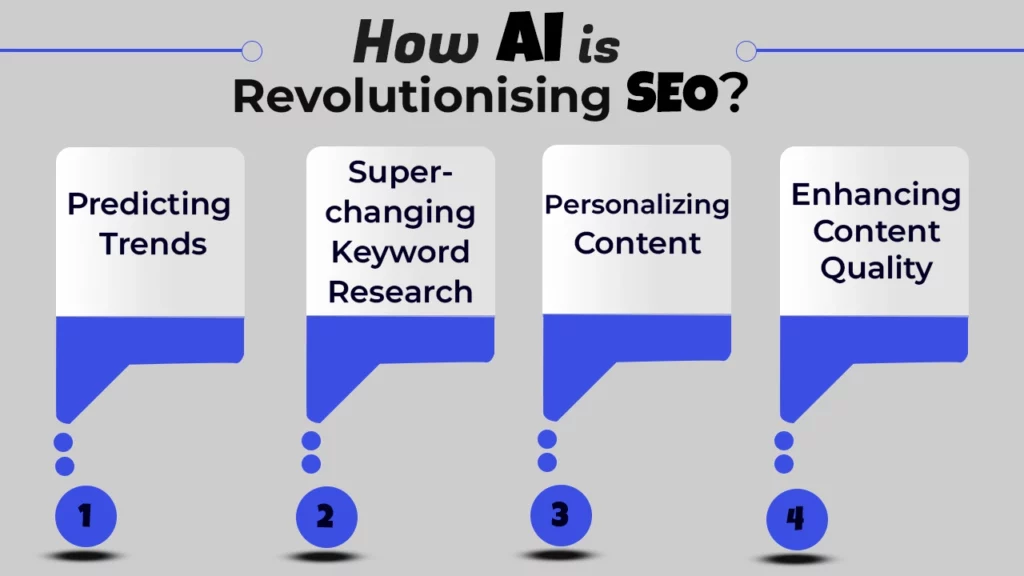
Predicting Trends
AI tools analyze millions of search queries, social media conversations, and consumer behaviors to forecast trends before they even become popular. For example, AI can predict which keywords will gain traction, helping you stay ahead of the competition by targeting the right topics early on. This predictive power gives you the edge to shape your content strategy and create pieces that answer questions users haven’t even asked yet.
Supercharging Keyword Research
Traditional keyword research often misses the mark in terms of user intent. SEO and AI work hand-in-hand to uncover high-potential keywords. AI tools go beyond just search volume and analyze competitors’ content, surfacing the most relevant and high-converting search terms. This means you can focus on keywords that not only drive traffic but also engage users and lead to conversions.
Personalizing Content
AI allows businesses to tailor their content to individual users. By analyzing behavioral data, AI tools can help you understand what your audience is searching for, what content they engage with, and how they prefer to consume information. This means you can create hyper-relevant content that speaks directly to their needs, improving user experience and increasing engagement.
Enhancing Content Quality
Google’s focus on E-A-T (Expertise, Authoritativeness, Trustworthiness) in ranking signals makes content quality more important than ever. AI can help assess whether your content aligns with these principles by analyzing readability, factual accuracy, and even the depth of coverage on a topic. AI can ensure your content is of the highest standard, providing value and meeting Google’s expectations.
The SEO Tasks AI Can Automate (And Why You Should Care)
SEO can be a time-consuming, tedious task. But AI is here to automate and streamline processes, freeing up your time for strategic planning and creative endeavors. Here’s how:
Technical SEO Audits
Technical SEO audits typically involve scanning websites for issues like broken links, slow page load times, or crawl errors. With technical SEO and AI tools, this process becomes faster and more efficient. AI-powered tools like Screaming Frog and Sitebulb can crawl your website and automatically flag issues, suggesting optimizations based on SEO best practices. This helps ensure your site is always in top shape, reducing the risk of penalties from search engines.
Content Optimization
Optimizing content for SEO requires constant updates to stay in line with search engine algorithm changes. AI tools like Surfer SEO or Copy.ai can analyze your content and suggest real-time improvements—whether it’s tweaking meta descriptions, title tags, or keyword usage—ensuring your content stays fresh and optimized for every update.
Performance Monitoring
AI can continuously track key performance metrics such as bounce rates, click-through rates (CTR), and conversion rates, offering real-time insights into how your content is performing. With Google Analytics and Moz, AI is able to flag areas for improvement instantly, helping you stay agile and responsive in your SEO efforts.
Link Building
AI tools are also revolutionizing the way businesses acquire backlinks. Instead of manually reaching out to websites for link-building opportunities, AI tools can help identify relevant high-authority sites, even automating the outreach process in a more personalized and efficient manner.
The Power of AI-Powered SEO Tools
AI-powered SEO tools are transforming how businesses approach their SEO strategies. Here are some of the most impactful tools you can leverage:
Content Creation Tools
AI writing assistants like Jarvis and Frase help you generate SEO-optimized content. These tools provide keyword recommendations, optimize for readability, and ensure your content meets Google’s ranking criteria. They allow you to produce high-quality blog posts, product descriptions, and social media content at scale, all while saving time and effort.
Keyword Research Tools
Tools like SEMrush, Ahrefs, and Ubersuggest leverage AI to provide deeper insights into keyword trends, search volume, and competition. These tools help marketers identify long-tail keywords, semantic keywords, and even voice search queries, giving businesses a comprehensive view of their keyword landscape. AI and the future of SEO lie in these tools, helping businesses stay ahead by targeting the most effective keywords for their niche.
Performance Analytics Tools
AI-powered analytics platforms like Moz and Google Analytics offer advanced insights into how your site is performing. These tools track real-time data, including visitor behavior and engagement, and provide actionable recommendations for improving site performance and SEO efforts.
Voice Search Optimization
As voice search continues to grow, optimizing for it becomes critical. AI-powered tools help you optimize content for conversational queries by analyzing search patterns, intent, and long-tail keywords used in voice searches. This is essential for staying ahead of this rapidly growing trend.
How AI and SEO Work Together to Enhance Your Digital Strategy
When combined, AI and SEO create a digital powerhouse. Here’s how they work together to elevate your strategy:
Boost Rankings
By leveraging AI for smarter keyword research, content creation, and optimization, your website becomes more likely to rank higher in search engine results. AI helps you target the most effective keywords and create content that directly answers user queries, improving your chances of being featured in position zero (featured snippets).
Enhance User Experience (UX)
AI allows you to optimize not just for search engines but also for users. Personalizing content based on user behavior and preferences increases engagement, reduces bounce rates, and boosts conversions. AI tools can also help optimize website layout and navigation, ensuring users find what they need quickly.
Automate SEO Tasks
AI handles repetitive tasks like content optimization, technical audits, and performance monitoring, giving you more time to focus on strategic decision-making. By automating routine tasks, you improve efficiency and keep your SEO strategy on track.
The Future of AI and SEO: What’s Next?
AI’s role in SEO is just beginning. Here’s what to expect in the near future:
Voice Search Optimization
As more users rely on voice assistants, voice search is expected to continue growing. AI and the future of SEO will play a crucial role in optimizing content for voice queries, which are often more conversational. Focusing on natural language, long-tail keywords, and structured data will be key to staying ahead.
Smarter Search Engines
Search engines are becoming increasingly sophisticated with AI, better understanding user intent, context, and even emotions. This shift means businesses must focus on creating high-quality, relevant content that addresses user intent comprehensively, rather than simply targeting specific keywords.
Predictive SEO
Predictive analytics will continue to play a larger role in SEO. AI tools will forecast future trends, allowing marketers to adjust their strategies proactively. This includes anticipating changes in search algorithms, content trends, and user behavior, ensuring your SEO efforts are always a step ahead.
Visual Search
AI-powered tools like Google Lens are making visual search a major trend. With more users searching by images, optimizing visual content and implementing AI-driven image recognition strategies will be crucial in the future.
Final Thoughts
AI and SEO are the dynamic duo that will define the future of digital marketing. By integrating AI into your SEO strategy, you’ll not only stay ahead of your competition but also improve rankings, increase user engagement, and automate time-consuming tasks.
The key takeaway? Don’t wait for AI to take over the industry—start using it today to make smarter, data-driven decisions and position your business for success in the evolving digital landscape.
FAQs
What is the role of AI in SEO?
AI helps automate SEO tasks, improve keyword research, predict trends, personalize content, and optimize for better rankings, making SEO strategies more efficient and effective.
How does AI help in keyword research?
AI analyzes large amounts of data to identify high-converting keywords, considering user intent and competitor strategies, ensuring you target the most effective terms.
What are the benefits of combining AI and SEO?
Combining AI and SEO boosts rankings, enhances user experience, automates tasks, and improves content personalization, making digital marketing more powerful and efficient.
How is AI transforming digital marketing strategies?
AI allows businesses to predict trends, personalize content, automate SEO tasks, and analyze performance, making digital marketing strategies more data-driven and proactive.
How does AI impact voice search optimization?
AI helps optimize content for voice search by focusing on natural language, long-tail keywords, and conversational queries, which are crucial for voice-activated devices.