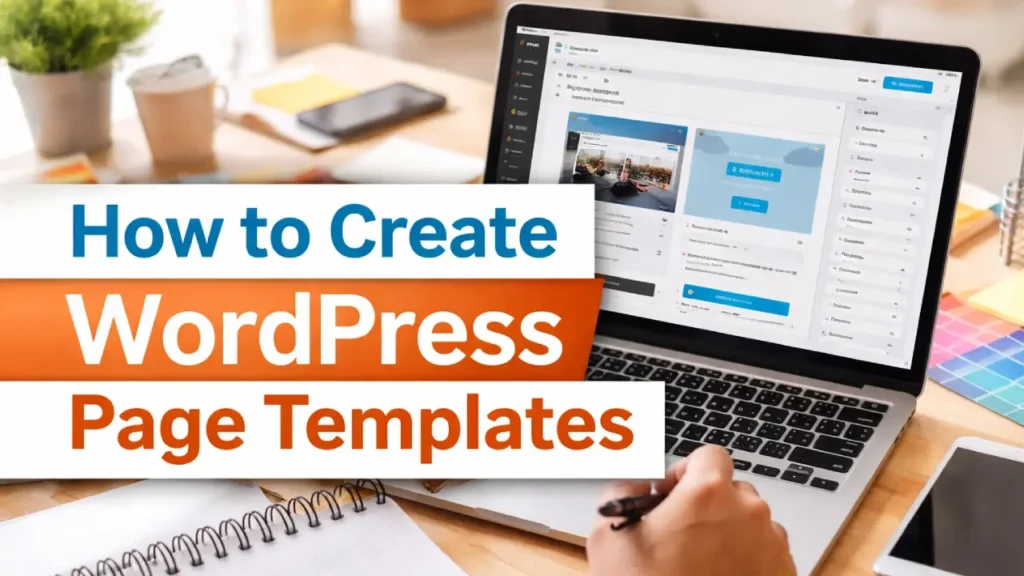
Wenn Sie zuerst mit WordPress beginnen, erkennen Sie schnell, dass jede Seite auf Ihrer Website folgt dem gleichen Template-Design. Während diese Konsistenz gut für Branding ist, gibt es Zeiten, wenn Sie eine bestimmte Seite brauchen, um völlig anders aussehen. Vielleicht möchten Sie, dass Ihre Landing-Seite heraussteht, oder vielleicht brauchen Sie eine Verkaufsseite ohne Seitenleisten. Dies ist, wo das Wissen, wie man WordPress-Seiten-Templates erstellen wird essentiell.
Die Erstellung von WordPress-Seitenvorlagen ist eine der mächtigsten Anpassungsfunktionen, die WordPress-Benutzern zur Verfügung stehen. Ob Sie eine vollbreite Landing-Seite erstellen möchten, die Sidebar von einer bestimmten Seite entfernen oder ein völlig einzigartiges Layout für Ihre Dienste-Seite entwerfen möchten, können WordPress-Seiten-Vorlagen Ihnen alles tun, ohne den Rest Ihrer Website zu beeinflussen.
In diesem umfassenden Leitfaden gehen wir Sie durch alles, was Sie über die Erstellung von WordPress-Seitenvorlagen wissen müssen. Wir werden verschiedene Methoden erforschen, vom einfachsten Drag-and-Drop-Ansatz bis hin zu fortschrittlicheren Codierungstechniken. Sobald Sie diesen Leitfaden zu lesen, werden Sie verstehen, was WordPress-Seite Vorlagen sind, warum sie wichtig sind, und wie Sie sie mit Methoden erstellen, die Ihren Fähigkeiten entsprechen.
Was sind WordPress-Seiten-Vorlagen?
Eine WordPress-Seitenvorlage ist eine benutzerdefinierte Layout-Datei, die Sie auf einzelne Seiten oder Gruppen von Seiten auf Ihrer Website bewerben können. Denken Sie daran, dass es ein Blaudruck ist, der bestimmt, wie eine bestimmte Seite aussieht und funktioniert. Im Gegensatz zu Ihrem Gesamtthema, das das Aussehen Ihrer gesamten Website kontrolliert, gibt Ihnen eine WordPress-Seitenvorlage die Kontrolle über einzelne Seiten.
When you create WordPress page templates, you are essentially telling WordPress: „For this specific page, I want a different layout than the one you normally use.“ This page template will determine elements like whether the page has a sidebar, where the header and footer appear, and what custom elements or sections the page displays.
WordPress-Seite Vorlagen sind unglaublich nützlich, weil sie verschiedene Seiten auf Ihrer Website zu haben völlig verschiedene Designs. Zum Beispiel könnte Ihre Blog-Archiv-Seite ein Zwei-Säulen-Layout mit einer Seitenleiste haben, während Ihre Homepage ein vollbreites Design mit benutzerdefinierten Abschnitten sein könnte. Ihre Kontaktseite könnte ein anderes Farbschema ganz haben. All dies ist möglich, wenn Sie WordPress-Seite Vorlagen erstellen.
Die Schönheit der WordPress-Seite Vorlagen ist, dass sie keine anderen Seiten auf Ihrer Website beeinflussen. Wenn Sie eine WordPress-Seitenvorlage anpassen und auf eine Seite anwenden, verwenden alle anderen Seiten weiterhin ihre regelmäßigen Vorlagen. Diese Isolation bedeutet, dass Sie mit einzelnen Seitenvorlagen kühn und kreativ sein können, ohne sich Sorgen um das Abbrechen Ihrer gesamten Website zu machen.
Warum sollten Sie WordPress-Seite Vorlagen erstellen?
Die Bedeutung der Erstellung von WordPress-Seiten-Vorlagen wird Ihnen helfen, Situationen zu erkennen, wo sie nützlich für Ihre Website sind. Hier sind die wichtigsten Gründe, warum Sie lernen sollten, wie Sie WordPress-Seite Vorlagen erstellen.
Bessere Conversion-Raten
Landing pages and sales pages often need unique designs to convert visitors into customers. When you create WordPress page templates specifically for these high-value pages, you can remove distractions like sidebars and design them purely for conversion. Studies show that pages designed specifically for conversion perform better than generic layouts.
Unique Brand Presentation
Different sections of your website may need different visual treatments. Your portfolio page should look different from your blog. Your team page should have its own unique layout. By learning how to create WordPress page templates, you can give each section of your site a custom design that perfectly matches its purpose.
Verbesserte Benutzererfahrung
When you create WordPress page templates tailored to specific page purposes, you enhance the user experience. Visitors to your landing page should see a clean, focused design. Visitors to your blog should see a layout optimized for reading. Creating WordPress page templates for these different purposes makes your website more user-friendly overall.
Professionelle Erscheinung
Custom WordPress page templates make your website look more professional and intentional. Generic templates make it obvious that you are using WordPress with a standard theme. But when you create WordPress page templates with unique designs, your website looks like it was custom-built for your specific business needs.
Flexibility Without Coding
Modern methods for creating WordPress page templates do not require advanced coding knowledge. Page builders and the WordPress block editor make it easy for anyone to create WordPress page templates without touching a single line of code.
Method 1: Create WordPress Page Templates Using the Block Editor
If you are using a modern WordPress theme with block editing capabilities, this is the easiest way to create WordPress page templates. This method requires no coding and gives you a visual preview of your page as you design it.
Step 1: Access the Site Editor
To start creating WordPress page templates using the block editor, log into your WordPress dashboard and go to Appearance menu. Look for an option called Editor. Click on it to open the Site Editor. The Site Editor is where you can manage all templates on your site, including any new WordPress page templates you want to create.
Step 2: Navigate to Templates Section
In the Site Editor, look at the left sidebar. You should see options for different elements you can edit. Click on the Templates option. This will show you all the existing templates available on your site. Now you are ready to create a new WordPress page template by clicking the Add Template button at the top right of the screen.
Step 3: Choose Your Template Purpose
WordPress will ask you what type of template you want to create. When you create WordPress page templates, you can choose from several options including Pages, Front Page, Category Archives, Author Archives, or Custom Template. For a general custom template that you can apply to any page, select Custom Template. If you want to create WordPress page templates for a specific purpose, select that option instead.
Step 4: Name Your WordPress Page Template
WordPress will ask you to give your page template a name. This name is only visible to you in the WordPress admin area. Choose a descriptive name that tells you what the template is for. For example, if you are creating WordPress page templates for landing pages, name it Landing Page Template. If you are creating WordPress page templates without a sidebar, name it Full Width Template.
Step 5: Design Your WordPress Page Template
After naming your template, the block editor opens and you can start designing. The key to creating WordPress page templates is to remember that this is the structure, not the content. You should include elements that will appear on every page using this template, such as headers, footers, and sidebars. However, you should leave space for page-specific content that will be different on each page using your template.
To design your WordPress page template, you add blocks from the block inserter on the left. You can add headings, paragraphs, images, buttons, and many other elements. The crucial element when you create WordPress page templates is to include a Content block. This special block tells WordPress where to insert the unique content for each page that uses your template.
Schritt 6: Veröffentlichen Sie Ihre WordPress-Seite Vorlage
Sobald Sie die Gestaltung beenden, klicken Sie auf die Schaltfläche Veröffentlichen. Ihre neue WordPress-Seitenvorlage ist jetzt für den Gebrauch verfügbar. Wenn Sie nun eine neue Seite erstellen oder eine bestehende Seite in WordPress bearbeiten, können Sie diese benutzerdefinierte Vorlage aus der Seite Attributes Abschnitt auf der rechten Seite des Editors auswählen.
Methode 2: Erstellen von WordPress-Seiten-Vorlagen mit Elementor
Elementor ist ein beliebtes Page Builder Plugin, das es unglaublich einfach macht, WordPress-Seitenvorlagen ohne Codierung zu erstellen. Viele WordPress-Nutzer bevorzugen diese Methode, weil es mehr Design Flexibilität als der grundlegende Block-Editor bietet.
Elementor installieren und aktivieren
Zuerst müssen Sie das Elementor Plugin installieren. Gehen Sie zu Plugins in Ihrem WordPress-Dashboard, klicken Sie auf Neu hinzufügen, Suche nach Elementor, und klicken Sie auf Jetzt installieren. Klicken Sie nach der Installation auf Aktivieren. Die kostenlose Version von Elementor ist leistungsstark genug, um hervorragende WordPress-Seitenvorlagen zu erstellen.
Zugang zur Vorlagenerstellung
Sobald Elementor aktiviert ist, gehen Sie zu Vorlagen im linken Menü. Wenn Sie diese Option nicht sehen, kann Elementor auf Ihrem Thema anders konfiguriert werden. In diesem Fall suchen Sie Elementor im Hauptmenü. Klicken Sie auf Vorlagen und dann Neu hinzufügen, um WordPress-Seitenvorlagen mit Elementor erstellen.
Wählen Sie die Vorlage
Wenn Sie WordPress-Seitenvorlagen mit Elementor erstellen, wählen Sie, welche Art von Vorlage Sie erstellen. Elementor bietet Optionen für Seitenvorlagen, Abschnittsvorlagen und Landing Page Templates. Für die meisten Anwendungen, wählen Sie Seite Vorlage. Dies ist die flexibelste Option, wenn Sie WordPress-Seitenvorlagen erstellen möchten.
Design Your Template in Elementor
Elementor opens its visual editor where you can build your WordPress page templates by dragging and dropping elements. The left sidebar shows a library of widgets you can add to your template. Simply drag elements like headings, text blocks, images, buttons, and more onto your page to design your WordPress page templates exactly how you want them.
One advantage of using Elementor to create WordPress page templates is that you see in real-time what your page will look like. There is no guessing about how elements will appear. This visual approach makes it easy to create WordPress page templates that look professional, even if you have no design experience.
Publish and Use Your Template
After designing your WordPress page templates in Elementor, click Publish. Now you can create a new page and select this Elementor template to apply it. Elementor makes managing WordPress page templates simple and intuitive.
Method 3: Create WordPress Page Templates Using Code (PHP)
This method requires more technical knowledge but gives you the most control when you create WordPress page templates. If you are comfortable with PHP and HTML, creating WordPress page templates manually offers maximum flexibility.
Understanding the Basics
Every WordPress page template file must start with a specific comment block that tells WordPress this is a template. The comment looks like this: This comment tells WordPress that this file is a template and what name to display for it in the WordPress admin area. When you create WordPress page templates this way, the template name you specify here is what users see when they are selecting templates for a page.
Getting a Starting Point
Rather than writing an entire WordPress page template from scratch, WordPress recommends copying an existing page.php file from your theme. This file contains all the necessary code to display pages on your site. When you create WordPress page templates by copying page.php, you start with a solid foundation and can modify it to suit your needs.
Steps to Create WordPress Page Templates via Code
First, use FTP or your file manager to access your WordPress files. Navigate to /wp-content/themes/your-theme-name/. Download the page.php file to your computer and open it in a text editor. At the very top of the file, add the template name comment mentioned above.
Next, modify the code as needed for your custom template. If you want to create WordPress page templates without a sidebar, remove the sidebar code. If you want to create WordPress page templates with a different layout, restructure the HTML. Save your file with a new name, such as template-landing.php. Do not use page- as a prefix in the filename, as WordPress treats those differently.
Now upload your new file back to the /wp-content/themes/your-theme-name/ directory via FTP. Your WordPress page templates should now appear in the template dropdown when you edit a page.
Using a Child Theme
When you create WordPress page templates using code, always use a child theme instead of modifying your parent theme directly. A child theme is a custom theme that inherits from your parent theme but allows you to make changes without losing them during theme updates. This is crucial because if your parent theme updates, any WordPress page templates you add directly to it will be lost.
Method 4: Create WordPress Page Templates Using Page Builder Plugins
Beyond Elementor, several other page builder plugins make it easy to create WordPress page templates. These include Divi, Beaver Builder, and SeedProd. Each offers its own approach to creating WordPress page templates.
Divi Page Builder
Divi includes a Theme Builder that lets you create WordPress page templates visually. Go to Divi in your dashboard menu and select Theme Builder. Click Add New Template to create WordPress page templates. Choose the type of template you are creating and then build it using Divi is drag-and-drop interface.
Beaver Builder
Beaver Builder is another popular option for creating WordPress page templates. It offers a similar drag-and-drop experience to Elementor. To create WordPress page templates with Beaver Builder, go to Templates in the main menu and click Add New. Design your template using Beaver’s tools and publish.
Der Präsident
SeedProd specializes in landing pages but can also be used to create WordPress page templates. It is particularly useful if you want to create WordPress page templates for landing pages and lead capture. The interface is intuitive and designed specifically for creating conversion-focused designs.
How to Apply WordPress Page Templates to Your Pages
Once you create WordPress page templates, you need to know how to use them. The process is straightforward. When you create a new page or edit an existing page in WordPress, look on the right side of the editor for the Page Attributes section.
In the Page Attributes box, you will see a dropdown menu labeled Template. This is where you select the WordPress page templates you have created. Simply click the dropdown, find your template in the list, and select it. Then click Publish or Update to apply your WordPress page templates to that page.
You can apply the same WordPress page templates to multiple pages. This is useful if you have created WordPress page templates for a specific purpose, like a standard landing page layout. Just select the template from the dropdown on any page where you want to use it.
Best Practices When You Create WordPress Page Templates
Keep Templates Reusable
When you create WordPress page templates, think about how other pages might use them in the future. Avoid adding too much specific content or styling that only makes sense for one page. The best WordPress page templates are ones that can be reused across multiple pages.
Maintain Consistent Styling
Even though you create WordPress page templates to look different from other pages, they should still feel like part of the same website. Make sure your templates use the same color scheme, fonts, and overall design language as the rest of your site.
Test Responsiveness
When you create WordPress page templates, always test them on mobile devices. Your WordPress page templates must look good and function properly on smartphones and tablets. Test in different browsers and on different screen sizes.
Document Your Templates
If you create WordPress page templates that others on your team will use, document what each template is for and when to use it. This prevents confusion and ensures your WordPress page templates are used effectively.
Optimize for Performance
When you create WordPress page templates, be mindful of performance. Avoid adding too many heavy elements like large images or complex animations. WordPress page templates should enhance functionality without slowing down your site.
Common Issues When Creating WordPress Page Templates
Template Not Appearing in Dropdown
If you create WordPress page templates but do not see them in the dropdown menu, the issue might be with your theme. Make sure your theme supports custom templates. Some older themes do not recognize WordPress page templates created this way. If your theme does not support them, you may need to use a page builder plugin instead.
Template Not Displaying Correctly
Sometimes when you create WordPress page templates and apply them to a page, the page does not display properly. This is often because the template is missing a Content block or the equivalent code that tells WordPress where to display the page content. Make sure your WordPress page templates include code or blocks to display content.
Styling Conflicts
If you create WordPress page templates using code and notice styling issues, there may be conflicts with your theme CSS. Use your browser’s developer tools to inspect elements and find the source of the conflict. You may need to add custom CSS to fix issues with your WordPress page templates.
Leistungsfragen
If pages using your WordPress page templates load slowly, the template might include too many heavy elements. Review your WordPress page templates and remove unnecessary scripts, images, or other elements. Optimize images and consider lazy-loading techniques.
Advanced Tips for WordPress Page Templates
Create a Template Library
If you regularly create WordPress page templates, consider building a library of reusable templates. You might create WordPress page templates for landing pages, service pages, team pages, testimonial pages, and more. Having a library of WordPress page templates saves time when building new pages.
Use Custom Fields with Templates
Combine WordPress page templates with plugins like Advanced Custom Fields to create even more powerful custom layouts. You can create WordPress page templates that use custom fields for specific data, making your templates more flexible and dynamic.
Create Template Variations
You do not have to settle for one version of each type of template. Create multiple variations of WordPress page templates for the same purpose. For example, you might create three different landing page templates, each with a different layout or focus. This gives you options when building pages.
Conclusion: Master WordPress Page Templates
Learning how to create WordPress page templates is one of the most valuable skills for any WordPress user. Whether you want to design unique landing pages, remove sidebars for specific content, or create completely custom layouts, WordPress page templates give you the flexibility to do it all.
The methods we covered in this guide range from simple drag-and-drop approaches to more technical coding methods. Start with the method that matches your comfort level and skill set. The block editor is best for beginners, Elementor offers great flexibility for intermediate users, and coding is for advanced developers who want maximum control.
Remember that the best WordPress page templates are ones that serve a specific purpose. Whether you are creating WordPress page templates for landing pages, sales pages, or unique content layouts, make sure each template you create solves a real design problem on your site.
If you need professional help creating WordPress page templates or customizing your WordPress site, we at Cope Business specialize in WordPress design and development. Visit our seite der dienstleistungen to learn more about how we can help. If you have questions or want to discuss your WordPress template needs, feel free to kontaktieren sie uns heute.
Start creating WordPress page templates today and take your website design to the next level. Your visitors will appreciate the unique and thoughtful designs that custom WordPress page templates make possible.
Häufig gestellte Fragen
A WordPress page template is a custom layout file that controls how a specific page looks and functions. It allows you to design unique layouts without affecting the overall website design.
Creating custom WordPress page templates helps you design pages for specific purposes like landing pages, sales pages, or portfolios, improving user experience and conversion rates.
Yes, you can create WordPress page templates without coding using the block editor or page builders like Elementor that offer drag-and-drop functionality.
You can assign a page template by editing a page, going to the Page Attributes section, selecting your desired template from the dropdown, and clicking Update or Publish.
A theme controls the overall design of your entire website, while a page template controls the layout of individual pages within that theme.
No, WordPress page templates only affect the pages they are applied to. Other pages continue using their default templates.
The best method depends on your skill level. Beginners should use the block editor, intermediate users can use Elementor, and advanced users can create templates using PHP code.
This usually happens due to missing template headers, incorrect file placement, or using a theme that does not support custom templates.
Yes, you can create multiple variations of WordPress page templates, such as different landing page designs, to test and optimize performance.
You can optimize templates by using clean code, fast-loading elements, mobile-friendly design, proper heading structure, and minimizing unnecessary scripts or images.