
In the world of SEO (Search Engine Optimization), keeping your website’s reputation strong is essential. One of the important metrics that webmasters and digital marketers monitor is the spam score—a measure of how likely a website is to be penalized by search engines due to low-quality or manipulative SEO tactics.
Knowing your spam score and understanding how to reduce the spam score of a website can help improve your search engine rankings and maintain credibility. In this guide, we’ll break down what spam score is, how it’s calculated, how to check spam score, and the best strategies to lower it effectively.
What is Spam Score in SEO?
Spam score estimates the likelihood of a website being flagged for spammy behavior. It ranges from 1 to 100, with higher numbers indicating a greater risk of being penalized.
Various factors influence spam score, including low domain authority, excessive use of exact-match anchor text, and an unnatural backlink profile. While Google doesn’t officially use spam score as a ranking factor, it’s still a useful tool for spotting and fixing potential SEO risks.
How to Check Spam Score
Checking your website’s spam score is the first step toward understanding potential risks. Several SEO tools can help you analyze spam score:
- Tools like Moz Pro – Feature spam score checkers. Type in your domain name, and you’ll get a brief report.
- Ahrefs Site Explorer – Enter your domain in Ahrefs and look for “Toxic Score” under the backlink profile.
- Google Search Console (Indirect Check) – Monitor manual actions under “Security & Manual Actions” in Google Search Console and check for sudden ranking drops, which may indicate spam issues.
By regularly checking spam scores, you can proactively fix issues before they lead to penalties.
How is Spam Score Calculated?
Spam score is determined based on specific red flags that are commonly found on penalized websites. Some of the main factors influencing spam score include:
- Low Domain Authority (DA): Websites with very low DA are more likely to have a high spam score.
- Excessive External Links: If a website links out excessively, especially to low-quality sites, it may be seen as spammy.
- Over-Optimized Anchor Text: Unnatural anchor text distribution can signal manipulative link-building.
- Thin or Duplicate Content: Lack of original, valuable content is another significant spam signal.
- High Ratio of DoFollow to NoFollow Links: A disproportionate amount of DoFollow links can appear suspicious.
- Excessive Subdomains: Having too many subdomains with low-quality content can trigger a higher spam score.
Understanding these factors can help webmasters take corrective actions and improve their website’s credibility.
Why is a High Spam Score Dangerous?
A high spam score can have multiple negative effects on a website, including:
- Lower Search Engine Rankings: Search engines may devalue your website if they suspect spammy practices.
- Manual Penalties: Websites with high spam scores may receive manual penalties from Google, impacting traffic and revenue.
- Loss of Credibility: Users are less likely to trust websites with a poor reputation, leading to decreased engagement and conversions.
- Deindexing: In severe cases, Google may completely remove a website from its index, making it invisible in search results.
Given these risks, it is crucial to adopt best practices to reduce spam score of a website and maintain a healthy online presence.
Best Practices to Lower Spam Score
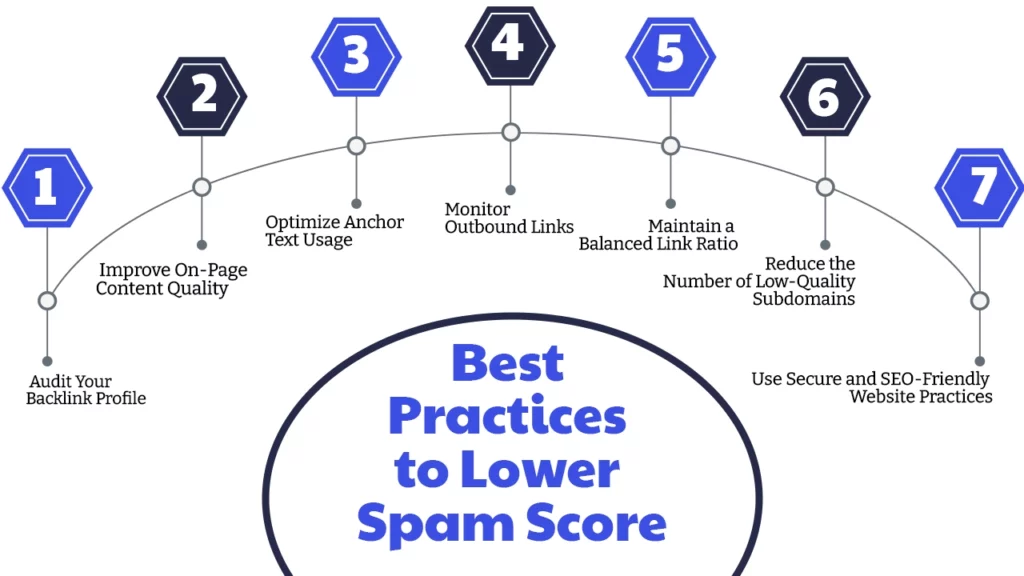
If your website has a high spam score, there are several steps you can take to lower it and improve your SEO performance. If you’re wondering how to reduce spam score of a website, follow these key strategies:
1. Audit Your Backlink Profile
Backlinks are one of the primary factors affecting spam score, making off-page SEO a crucial aspect of maintaining a healthy link profile. Conduct a thorough backlink audit using tools to identify low-quality or spammy links.
Steps to Reduce Toxic Backlinks:
- Disavow Harmful Links: Use Google’s Disavow Tool to remove unwanted links.
- Request Link Removal: Reach out to webmasters to remove spammy links pointing to your site.
- Avoid Buying Links: Paid links from low-quality sources can significantly increase spam score.
2. Improve On-Page Content Quality
Thin or duplicate content can contribute to a higher spam score. Focus on publishing high-quality, original content that provides value to users.
Tips for Better Content:
- Write Comprehensive Articles: Cover topics in-depth to establish authority.
- Use Unique and Engaging Media: Include images, infographics, and videos to enhance user experience.
- Avoid Keyword Stuffing: Use natural keyword placement to avoid appearing manipulative.
3. Optimize Anchor Text Usage
Over-optimized anchor text is a major spam signal. Instead of using exact-match keywords excessively, maintain a natural and diverse anchor text strategy.
Best Practices for Anchor Text:
- Use branded and generic anchor texts alongside keyword-rich variations.
- Avoid repetitive keyword stuffing in anchor text.
- Distribute anchor text variations evenly across different links.
4. Monitor Outbound Links
If your website excessively links to low-quality or irrelevant sites, your spam score may increase.
How to Manage Outbound Links Effectively:
- Link only to authoritative and relevant sources.
- Use no-follow attributes for non-trustworthy links.
- Regularly audit outbound links to ensure they add value to users.
5. Maintain a Balanced Link Ratio
A website’s link profile should have a healthy balance of DoFollow and NoFollow links.
How to Achieve a Healthy Link Ratio:
- Incorporate NoFollow links to maintain a natural backlink profile.
- Focus on earning organic links from reputable sources.
- Avoid excessive link exchanges and paid link-building schemes.
6. Reduce the Number of Low-Quality Subdomains
Having multiple low-quality subdomains can lead to a higher spam score. If your website relies on numerous subdomains, ensure they have unique, valuable content.
Ways to Optimize Subdomains:
- Consolidate similar subdomains into the main domain where possible.
- Improve the content quality of existing subdomains.
- Avoid creating subdomains solely for SEO manipulation.
7. Use Secure and SEO-Friendly Website Practices
Technical SEO and security factors can also impact your website’s spam score. Ensuring a secure and optimized site can help reduce risk.
Key Practices:
- Use HTTPS for website security.
- Optimize site speed and mobile-friendliness.
- Regularly update CMS, plugins, and themes to prevent vulnerabilities.
Conclusion
Understanding and managing your spam score is crucial for maintaining a trustworthy and authoritative online presence. By following best practices such as auditing backlinks, improving content quality, optimizing anchor text, and ensuring technical SEO health, you can significantly reduce the spam score of your website and improve your search rankings. Regular monitoring and proactive SEO maintenance will help keep your site safe from penalties and maintain strong credibility with search engines. Implement these strategies today to keep your website in the best shape possible!