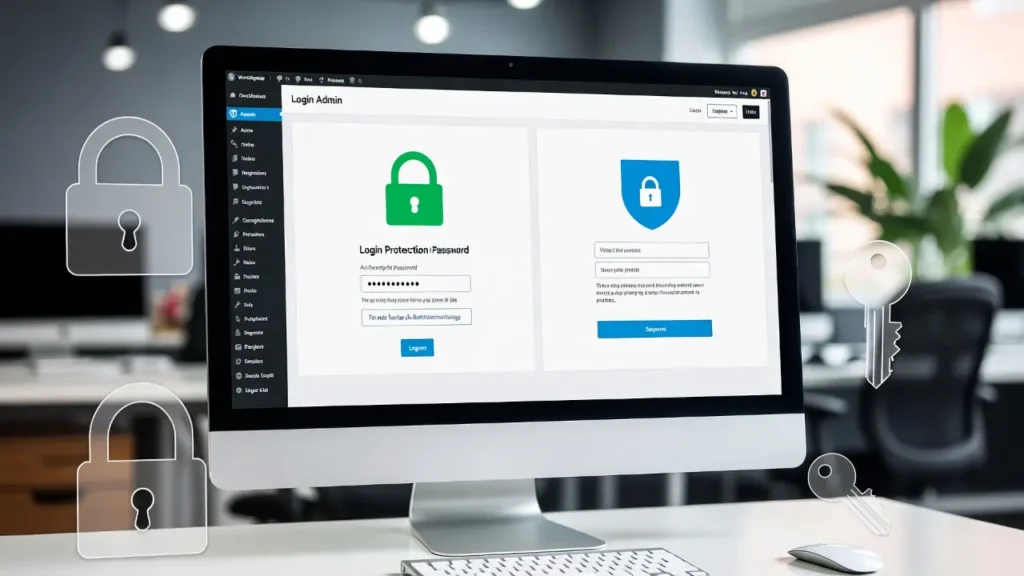
The WordPress admin area (/wp-admin) is the control center of your site — where you manage content, plugins, users, and settings. Unfortunately, it’s also the #1 target for hackers, brute-force attacks, and bots trying to gain unauthorized access. With automated AI-driven threats on the rise, securing /wp-admin without relying on plugins is a smart, lightweight approach that reduces bloat while maintaining strong protection.
At Cope Business, we harden the admin area for clients using plugin-free methods during our technical SEO audit services and security reviews — combining code tweaks, server configs, and best practices to block 90%+ of common attacks without slowing your site.
This guide covers why securing /wp-admin matters, and four effective, no-plugin methods to do it — from basic IP restrictions to advanced .htaccess rules. Always test on staging first and backup your site.
Why Secure the WordPress Admin Area?
- Block Brute-Force Attacks: Bots try thousands of logins per hour on /wp-admin
- Prevent Unauthorized Access: Limit to trusted IPs/devices
- Reduce Spam & Malware Risk: Hide or restrict the login page
- Improve Performance: Fewer bad requests = less server load
- SEO Protection: Hacks lead to blacklisting & ranking drops
- Compliance: Better data protection for GDPR/CCPA
Default WordPress is vulnerable — hardening /wp-admin cuts risks dramatically.
Method 1: Restrict Access by IP Address (Using .htaccess – Most Secure)
Limit /wp-admin to your IP only — blocks everyone else.
Steps (Apache Servers – Most Shared Hosting)
- Access .htaccess in root folder via FTP or hosting file manager (backup first!).
- Add this code:
text# Secure wp-admin by IP <IfModule mod_rewrite.c> RewriteEngine On RewriteCond %{REQUEST_URI} ^/wp-admin [NC] RewriteCond %{REMOTE_ADDR} !^YOUR_IP_ADDRESS$ RewriteRule ^ - [F,L] </IfModule>- Replace YOUR_IP_ADDRESS with your static IP (find at whatismyip.com — add multiple with OR: !^IP1$ !^IP2$).
- Save → Test: Access /wp-admin from your IP (works); from another (403 Forbidden).
For NGINX: Contact host or add to server config:
text
location ~* /wp-admin/ {
    allow YOUR_IP_ADDRESS;
    deny all;
}Pros: Extremely effective, no plugins.
Cons: Requires static IP (use VPN if dynamic); blocks team access (add their IPs).
Method 2: Hide or Rename the Login Page URL
Change /wp-login.php to something custom — bots can’t find it.
Steps (Using Code)
- Use a child theme or WPCode (free plugin).
- Add this to functions.php or WPCode snippet:
PHPfunction cope_rename_login_page() { $login_page = 'my-secret-login'; // Change this to your custom slug if ( strpos($_SERVER['REQUEST_URI'], 'wp-login.php') !== false && $_GET['action'] != 'logout' ) { wp_redirect( home_url( '/' . $login_page . '/' ) ); exit; } } add_action( 'init', 'cope_rename_login_page' ); function cope_custom_login_redirect() { return home_url( '/my-secret-login/' ); // Match above } add_filter( 'login_url', 'cope_custom_login_redirect' );- Save → Your new login URL is yoursite.com/my-secret-login/
- Test: Original /wp-login.php redirects; new URL works.
Pros: Hides from bots, no plugin.
Cons: Remember the new URL; tell team members.
Method 3: Require HTTP Basic Authentication for /wp-admin
Add a second password layer before WordPress login.
Steps
- In hosting panel (cPanel) → Security > Password Protect Directories → Protect /wp-admin/.
- Or add to /wp-admin/.htaccess (create if needed):
textAuthType Basic AuthName "Restricted Area" AuthUserFile /path/to/.htpasswd Require valid-user- Generate .htpasswd (use online generator) → Upload to secure location (above root).
- Save → Browser prompts for username/password before /wp-admin loads.
Pros: Extra security layer, no plugins.
Cons: Extra step for legit logins; not ideal for teams.
Method 4: Block XML-RPC & Disable Pingbacks (Code-Based)
XML-RPC is a common /wp-admin exploit vector.
Steps
- Add to functions.php or WPCode:
PHPadd_filter( 'xmlrpc_enabled', '__return_false' );- Disable pingbacks: Settings > Discussion → Uncheck “Allow link notifications from other blogs”.
Pros: Blocks common attacks, lightweight.
Cons: Disables remote posting if needed (e.g., mobile app).
Best Practices for Securing WordPress Admin Area
- Use 2FA — Even without plugins: Add to functions.php or use miniOrange 2FA (free).
- Limit Logins — See our guide.
- Hide WP Version — Add to functions.php: remove_action(‘wp_head’, ‘wp_generator’);
- Monitor Logins — See our guide.
- Backup Regularly — UpdraftPlus for automated backups.
- Test Changes — Use staging site; check /wp-admin loads for you.
Final Thoughts
Securing the WordPress admin area without plugins is possible and effective — start with IP restrictions and login URL changes for maximum protection. Layer these with strong passwords and monitoring for a solid defense.
A secure admin area keeps your entire site safe.
Need help securing your /wp-admin, conducting a full security audit, or optimizing performance? Contact Cope Business for a free technical SEO consultation — we’ll harden your site and implement custom protections tailored to your needs.