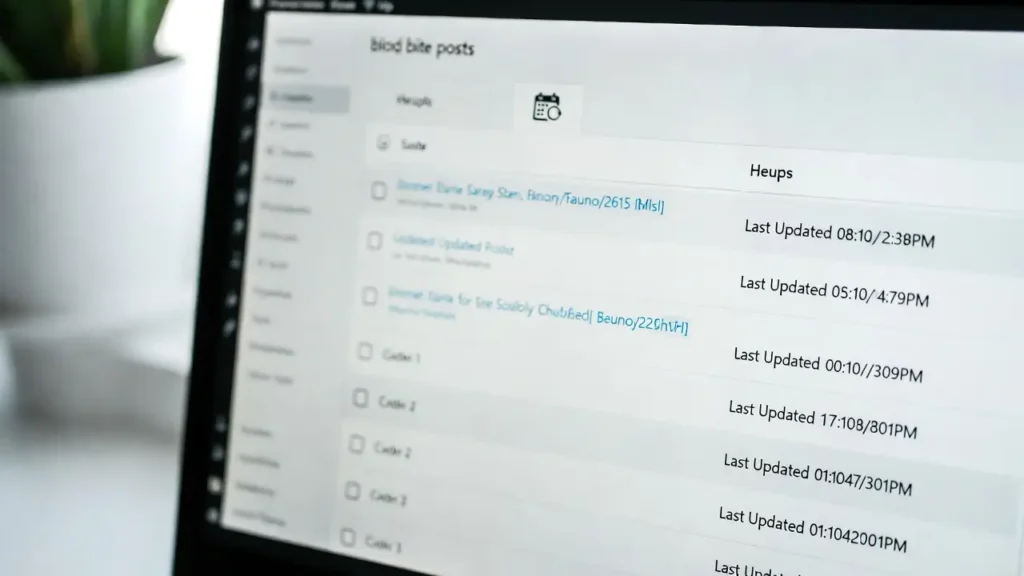
By default, WordPress shows your latest published posts on the homepage or blog page — but what about highlighting recently updated content? Displaying a list of last updated (or recently modified) posts is a great way to keep your site feeling fresh, encourage repeat visits, reduce bounce rates, and give search engines a stronger signal that your content is actively maintained. Google continues to reward sites that show ongoing value and freshness — making “last updated” lists a smart SEO and UX enhancement.
At Cope Business, we frequently add dynamic “recently updated” sections for clients during our technical SEO audit services to improve engagement and help evergreen content stay visible longer.
This beginner-friendly guide shows you three easy ways to display a list of last updated posts in WordPress — using shortcodes, widgets, and plugins.
Why Show Recently Updated Posts?
- Signals Freshness — Tells visitors and search engines your content is actively improved
- Increases Pageviews — Readers discover older but updated articles
- Improves SEO — Google favors sites with ongoing updates
- Reduces Bounce Rate — Keeps users exploring longer
- Great for Evergreen Content — Revives high-value posts that were recently revised
Perfect for blogs, news sites, tutorials, documentation, or any site with long-term content.
Method 1: Using a Shortcode (No Plugin – Built-in + Code)
This lightweight method uses a simple custom shortcode.
Steps
- Install WPCode (free) from Plugins > Add New (safest way to add code).
- Go to Code Snippets > Add Snippet → Create a new snippet titled “Recently Updated Posts Shortcode”.
- Set to run “Everywhere” or “Shortcode only”.
- Paste this code:
PHPfunction cope_recently_updated_posts_shortcode($atts) { $atts = shortcode_atts(array( 'number' => 5, 'show_date' => 'true', 'show_author' => 'false' ), $atts); $args = array( 'post_type' => 'post', 'posts_per_page' => $atts['number'], 'orderby' => 'modified', 'order' => 'DESC', 'post_status' => 'publish' ); $query = new WP_Query($args); if (!$query->have_posts()) { return '<p>No recently updated posts found.</p>'; } $output = '<ul class="recently-updated-posts">'; while ($query->have_posts()) { $query->the_post(); $output .= '<li>'; $output .= '<a href="' . get_permalink() . '">' . get_the_title() . '</a>'; if ($atts['show_date'] === 'true') { $output .= ' <small>(' . get_the_modified_date('M j, Y') . ')</small>'; } if ($atts['show_author'] === 'true') { $output .= ' by ' . get_the_author(); } $output .= '</li>'; } $output .= '</ul>'; wp_reset_postdata(); return $output; } add_shortcode('recently_updated', 'cope_recently_updated_posts_shortcode');- Save and activate the snippet.
- Use anywhere:
[recently_updated number="6" show_date="true" show_author="false"]Pros: Lightweight, no extra plugins, fully customizable.
Cons: Basic styling (add CSS to make it beautiful).
Method 2: Using a Plugin (Easiest Visual Method)
Plugins give you beautiful layouts, thumbnails, and more options.
Recommended Plugin: Recent Posts Widget Extended (Free)
- Install Recent Posts Widget Extended from Plugins > Add New.
- Go to Appearance > Widgets.
- Drag Recent Posts Extended to a sidebar or footer.
- In widget settings:
- Check Show modified date instead of published date
- Set number of posts
- Enable thumbnails, excerpts, author, date format
- Choose post types (posts, pages, custom)
- Save → Widget shows recently updated posts.
Alternative Plugin: Display Posts – Easy lists, grids, navigation (free) — use shortcode
[display-posts orderby="modified" order="DESC" posts_per_page="5"].Pros: Visual, thumbnails, categories, very customizable.
Cons: Adds one plugin (very lightweight).
Method 3: Add to a Dedicated “Recently Updated” Page (Advanced)
Create a full page showing updated content.
- Create new page: Pages > Add New → Title “Recently Updated”.
- Add shortcode from Method 1 or widget block from Method 2.
- Use page builder (SeedProd, Elementor) for beautiful layout.
- Add to menu: Appearance > Menus → Add page to navigation.
Best Practices for Recently Updated Lists
- Limit Number — 5–10 posts to avoid clutter
- Show Date Clearly — Helps users see freshness
- Add Thumbnails — Increases click-through
- SEO — Use descriptive headings; add schema if using plugin
- Performance — Cache the widget/shortcode output (WP Rocket handles this)
- Mobile — Ensure responsive layout (most plugins/themes do this)
Highlighting updated content keeps your site feeling active and valuable.
Final Thoughts
Displaying recently updated posts in WordPress is a simple yet powerful way to showcase fresh content, improve engagement, and signal to Google that your site is actively maintained. Use the custom shortcode for lightweight control or a plugin for visual beauty — both take minutes to set up.
Freshness is still a ranking factor — use it to your advantage.
Need help adding dynamic content sections, optimizing your blog for SEO, or improving overall site performance? Contact Cope Business for a free technical SEO consultation — we’ll review your site and implement tailored improvements to keep your content visible and valuable.