
In today’s fast-evolving digital landscape, cybersecurity businesses must do more than just offer exceptional services—they need to ensure potential clients can find them online. With the increasing frequency of cyber threats, the competition for attention is fierce. A strong Cyber Security SEO strategy can make all the difference. By leveraging effective SEO techniques, cybersecurity companies can enhance their online visibility, drive organic traffic, and attract high-quality leads.
In this guide, we’ll explore actionable SEO strategies to help cybersecurity businesses rank higher in search results and reach the right audience.
Why SEO Matters for Cybersecurity Businesses
With the rise of cyber threats, businesses and individuals are actively searching for reliable cybersecurity solutions. However, even the most reputable cybersecurity firms can struggle to reach their target audience without an effective SEO strategy. SEO helps improve your search engine ranking, ensuring that when potential clients search for cybersecurity services, they find your business first. Without a strategic SEO approach, your business may get lost in the noise.
Keyword Research: The Foundation of Cyber Security SEO

A solid SEO strategy starts with keyword research. Choosing the right keywords ensures your content aligns with what potential customers are searching for. Here’s how to get started:
- Use AI-Powered Keyword Tools: Platforms like SEMrush, Ahrefs, and Google Keyword Planner, along with other AI keyword research tools, can help you find high-traffic, low-competition keywords related to cybersecurity. For example, “cybersecurity services for small businesses” or “network security solutions” could bring targeted traffic.
- Target Long-Tail Keywords: Phrases like “best cybersecurity solutions for small businesses” or “how to protect websites from hackers” can bring in more qualified traffic and lead to higher conversion rates.
- Analyze Competitor Keywords: Researching what successful competitors rank for can reveal gaps in your own SEO strategy and uncover opportunities for targeted keywords. Tools like Ahrefs and SEMrush allow you to see what keywords your competitors are ranking for and help you find areas where you can compete.
Optimizing On-Page SEO for Cybersecurity Websites

Once you have a list of keywords, optimizing your website’s on-page elements is crucial. Focus on the following:
1. Crafting SEO-Friendly Titles and Meta Descriptions
Your title tag and meta description should include target keywords while maintaining a compelling, click-worthy format.
Example Title: “Cyber Security SEO: Proven Strategies to Boost Your Online Visibility”
Example Meta Description: “Learn how Cyber Security SEO can improve your search rankings, attract clients, and grow your business with expert strategies.”
2. Structuring Content with Headings
Using proper heading structures (H1, H2, H3) improves readability and SEO. Ensure the main heading (H1) includes your primary keyword, and use SEO-friendly terms in H2 and H3 subheadings.
3. Writing Keyword-Optimized Content
Use your primary keyword (e.g., “Cyber Security SEO”) at least 5-6 times throughout your blog, and sprinkle in related terms like “SEO cyber security” or “SEO for cybersecurity” 3-4 times naturally. Don’t overstuff keywords—focus on delivering value to your readers while keeping SEO in mind.
4. Image Optimization
Use descriptive file names and alt tags that include relevant keywords. Example: cyber-security-seo-strategy.png with an alt tag like “Cyber Security SEO strategy to improve rankings.”
Enhancing Website Performance with Technical SEO
Technical SEO ensures your site is crawlable and indexable by search engines, leading to better rankings and visibility. Key areas to focus on include:
1. Improving Website Speed
A fast-loading website enhances user experience and boosts rankings. Use Google PageSpeed Insights to optimize your site by:
- Compressing images
- Enabling browser caching
- Utilizing a Content Delivery Network (CDN)
2. Ensuring Mobile-Friendliness
Since Google prioritizes mobile-first indexing, ensure your website is responsive and loads seamlessly on all devices. A well-optimized mobile site is crucial for SEO cyber security success.
3. Implementing Secure HTTPS Encryption
An SSL certificate (HTTPS) is essential for cybersecurity businesses—it enhances trust and contributes to better search rankings. Websites handling security solutions must have strong encryption to align with SEO for cyber security best practices.
Content Marketing: A Powerful Tool for Cyber Security SEO
Creating valuable content not only educates your audience but also helps establish your cybersecurity business as an authority in your field. Here’s how to leverage content marketing:
Publish High-Quality Blog Posts
Regular blogging is a great way to drive organic traffic. Using AI content writing tools, you can generate topic ideas. Consider these example blog topics:
- “Top Cybersecurity Threats in 2025 and How to Stay Protected”
- “A Complete Guide to Small Business Cybersecurity”
Develop In-Depth Resources
Publishing whitepapers, case studies, and industry reports helps showcase your expertise while attracting backlinks from authoritative sites. Case studies detailing how your solutions helped clients mitigate cyber risks can be highly effective.
Leverage Video Content
Explainer videos, tutorials, and live webinars can enhance user engagement and increase dwell time on your website, both of which are important factors for SEO. Videos also allow you to address common cybersecurity concerns and showcase your expertise visually.
Common SEO Mistakes Cybersecurity Businesses Should Avoid
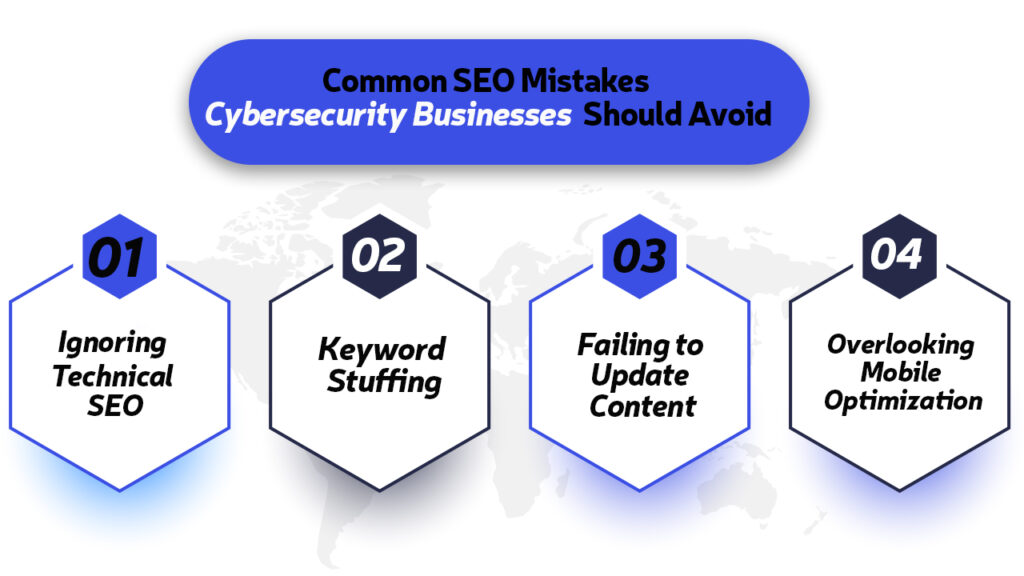
Even with the right strategies, certain mistakes can hinder your SEO efforts. Avoid these pitfalls:
- Ignoring Technical SEO: Issues like slow load speeds, broken links, and poor mobile optimization negatively impact rankings and overall SEO for cyber security performance.
- Keyword Stuffing: Overusing keywords in content, titles, and meta descriptions can lead to Google penalties.
- Failing to Update Content: Regularly refreshing your content with updated statistics and insights helps maintain relevance and boosts rankings.
- Overlooking Mobile Optimization: With many potential clients searching on mobile devices, a non-responsive site means lost opportunities.
Competitive Analysis: Learning from Industry Leaders
Studying competitors helps refine your Cyber Security SEO strategy. Steps to follow:
- Identify Top Competitors: Use SEMrush or Ahrefs to analyze competitor rankings and understand their strengths and weaknesses.
- Analyze Their Backlink Profile: Identify authoritative sites linking to your competitors, and pursue similar backlink opportunities.
- Examine Their Content Strategy: Look at blog topics, formats, and engagement levels to identify opportunities for improvement in your own content strategy.
- Assess Their UX & Technical SEO: Learn from how competitors structure their sites for better user experience and faster load times.
Building a Strong Backlink Profile
Backlinks are a crucial component of off-page SEO, helping cybersecurity businesses improve search rankings and credibility. Leveraging AI link building tools can streamline the process by identifying high-quality backlink opportunities. Here are some effective tactics:
- Guest Blogging Writing for established cybersecurity websites increases your credibility and referral traffic. Aim for authoritative sites that cater to your target audience.
- Digital PR & Media Outreach Getting featured in cybersecurity news sites or industry publications improves visibility and rankings, and helps build your brand’s reputation.
- Internal Linking Strategy Link related pages within your website to improve navigation and strengthen SEO. Internal links also allow you to guide visitors to important pages on your site, improving user experience.
Local SEO: Reaching Clients in Your Area
If your business serves specific locations, local SEO is crucial. Key steps include:
- Optimizing Google My Business (GMB) Ensure your GMB profile is up to date with accurate details, images, and client reviews. A complete and optimized GMB profile can greatly improve local search visibility.
- Using Location-Specific Keywords Phrases like “Cybersecurity services in [City]” help attract local clients. Local SEO efforts can significantly impact small businesses serving a specific area.
- Building Local Citations Get listed in relevant local directories, such as Yelp, as well as industry-specific platforms. These citations strengthen your credibility and contribute to better local SEO.
Measuring SEO Success: Key Metrics to Track
To ensure your Cyber Security SEO efforts are paying off, track progress using:
- Google Analytics: Monitors organic traffic, user behavior, and conversions, helping you understand how users interact with your site.
- Google Search Console: Provides insights into search rankings, click-through rates, and overall website health.
- SEMrush & Ahrefs: These tools offer in-depth analysis of backlinks, keyword rankings, and competitor performance.
Final Thoughts
A strong Cyber Security SEO strategy can significantly enhance your online presence, attract high-quality leads, and position your business as an industry leader. By focusing on keyword optimization, technical SEO, content marketing, and link building, cybersecurity businesses can stay ahead in search engine rankings. Remember, SEO is a long-term strategy—start optimizing today to secure long-term success in the competitive cybersecurity industry!