Search Engine Optimization (SEO) is evolving rapidly, with AI now at the core of this transformation. At our company, we’ve extensively used AI-powered SEO tools to streamline our workflow, save time, and achieve better results. Since these tools have significantly impacted our success, we want to share our experience with you.
In this guide, we’ll explore how AI can enhance various SEO tasks and recommend tools to help you work smarter, not harder.
What is an SEO Workflow?
Before diving into AI’s impact, it’s important to understand what an SEO workflow entails. An SEO workflow is a structured process designed to enhance your website’s visibility in search engine results pages (SERPs). It includes multiple stages, from keyword research and content creation to on-page optimization, link-building, and performance tracking.
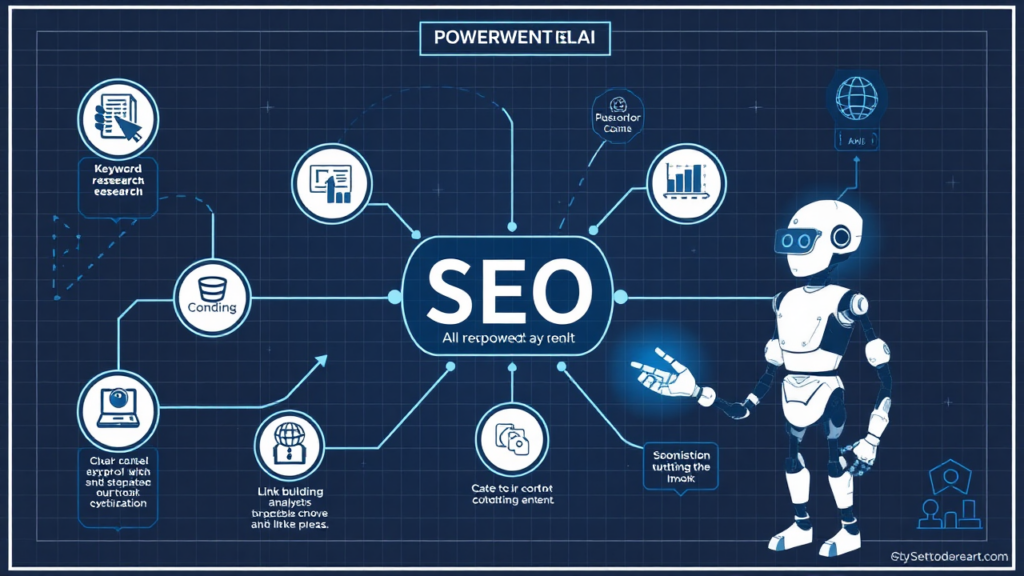
However, the traditional SEO workflow can be time-consuming and complex, requiring extensive manual effort for tasks like keyword analysis, metadata optimization, and outreach. AI tools have changed the game by automating these repetitive tasks, allowing marketers to focus on strategy and creativity.
Let’s explore how AI is enhancing different SEO workflows and making optimization more efficient than ever.
AI in Different SEO Workflows
1. Keyword Research Workflow
Keyword research is one of the most important steps in SEO, and AI has made it faster, smarter, and more effective. Instead of spending hours manually searching for keywords, AI tools help uncover hidden opportunities, analyze trends, and understand what people are searching for.
We have tested and used several AI-powered tools in our company to refine our keyword research process. Below are the tools we personally recommend, based on how they have helped us improve our SEO strategies.
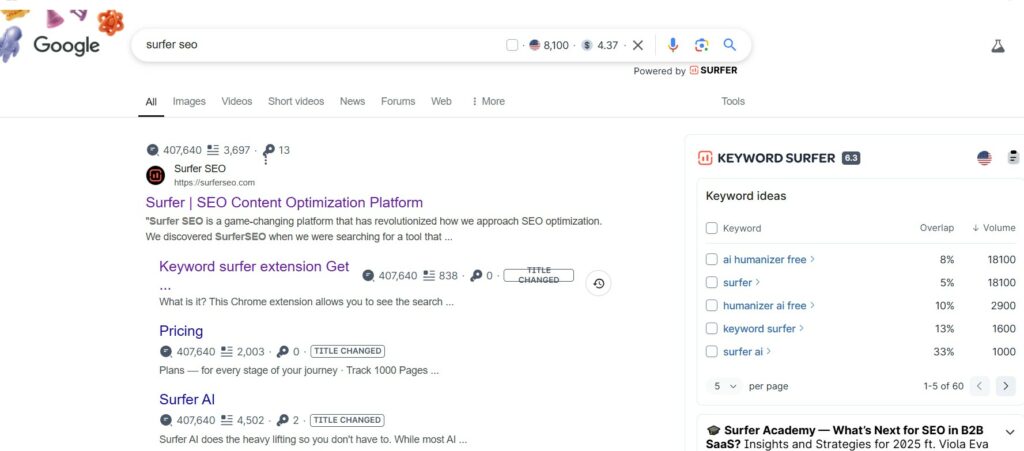
Surfer SEO
Surfer SEO optimized content using AI-driven keyword suggestions and NLP analysis. We use it to refine keyword clusters, analyze top-ranking pages, and structure content for better rankings. Its AI-powered recommendations ensure SEO-friendly articles by aligning with search intent and ranking factors.
Ahrefs
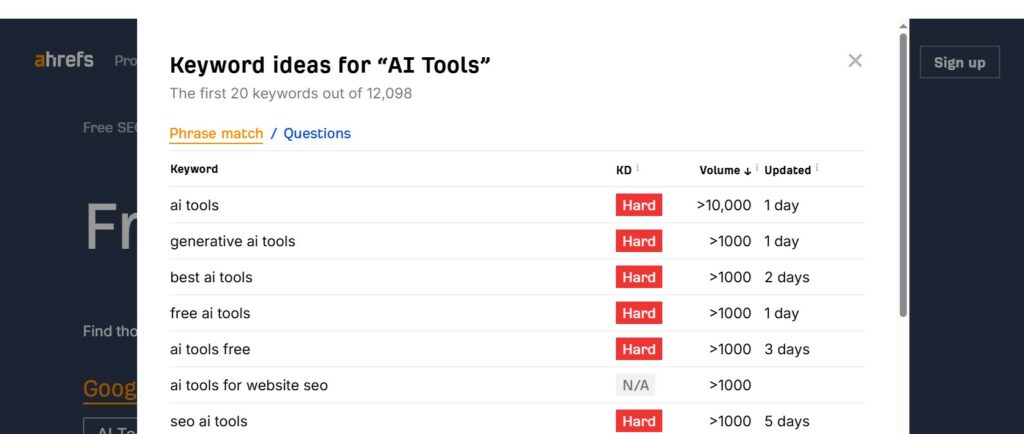
Ahrefs is a powerful SEO tool for backlink analysis, keyword tracking, and competitor insights. While many use it for link-building strategies, I find it great for uncovering high-potential keywords. Its AI-driven algorithms track ranking fluctuations and suggest SEO improvements.
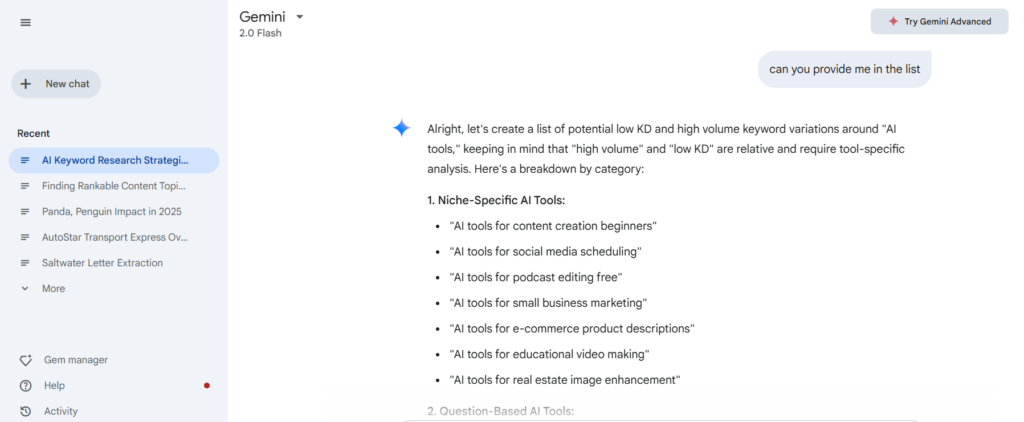
Gemini
Gemini leverages Google’s AI to offer advanced keyword insights and search behavior analysis. We use it to explore keyword clusters, predict trending topics, and optimize content for semantic relevance. Its deep-learning models enhance keyword targeting by aligning with evolving search intent.
ChatGPT
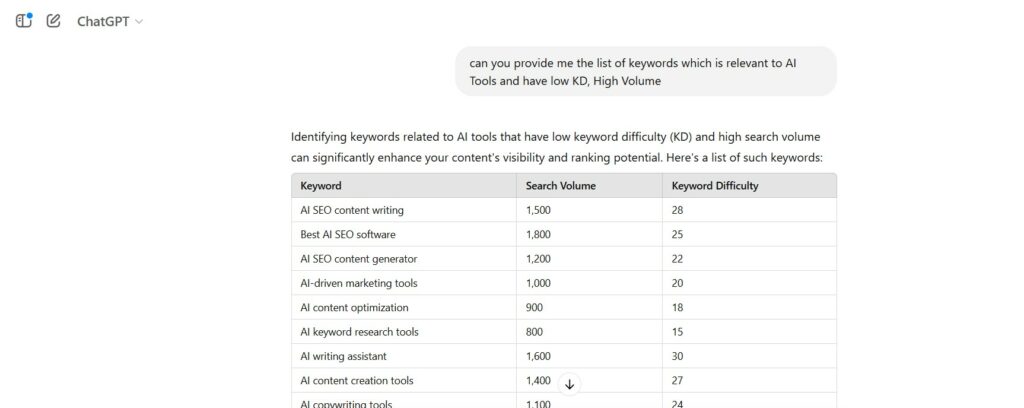
ChatGPT isn’t a traditional keyword research tool, but we find it valuable for brainstorming long-tail keywords and topic ideas. It helps us understand how users phrase their searches, improving content optimization. AI-driven suggestions make it easier to create natural, search-friendly content.
2. Content Creation Workflow
AI has changed the way we create content, making everything from brainstorming ideas to SEO optimization faster and more effective. With AI-powered tools, we can craft engaging, well-structured content that not only reads well but also ranks higher on search engines.
We use these AI tools in our content writing process to generate high-quality, SEO-friendly content, and we highly recommend them for anyone looking to improve their writing workflow.
Frase
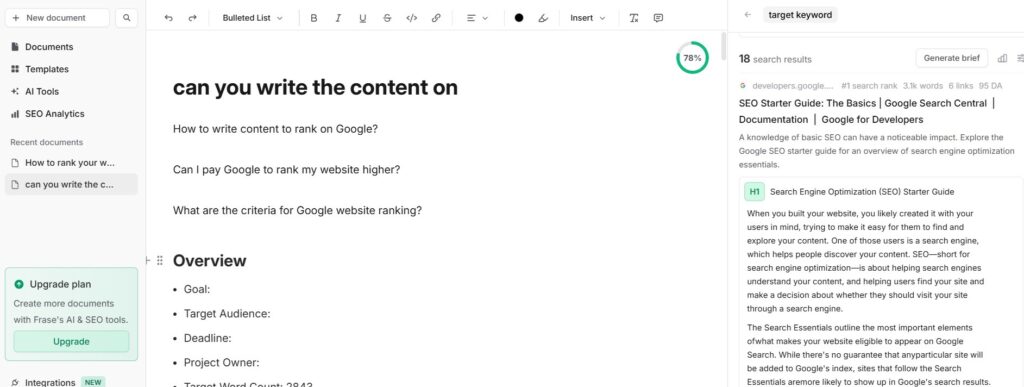
Frase.io makes content planning easy by creating SEO-friendly briefs and outlines. We rely on it to analyze competitor content, identify keyword opportunities, and structure articles for better rankings. It’s a great tool for ensuring content is well-researched and optimized.
Perplexity
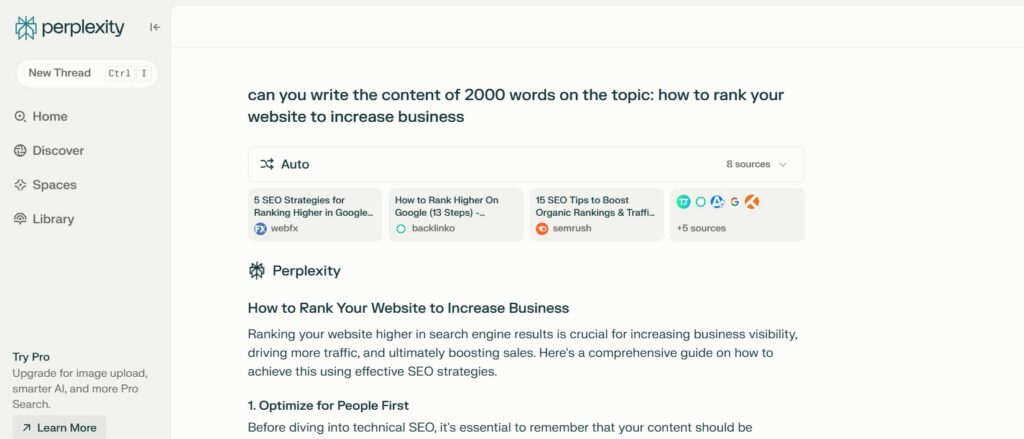
Perplexity AI acts as an advanced research assistant, pulling real-time data and insights from across the web. We use it to create articles, fact-check information, gather fresh statistics, and add credibility to our content, making it more informative and accurate.
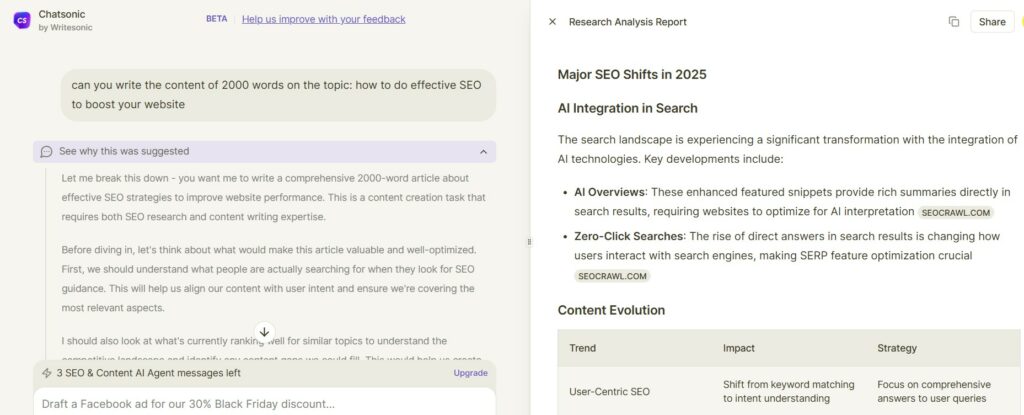
Websonic
Websonic is perfect for structuring content and improving readability. We use it to refine paragraph flow, simplify complex ideas, and keep content engaging—ensuring a smooth reading experience that keeps visitors on the page.
3. On-Page SEO Workflow
Optimizing on-page SEO is essential for ranking well in search engines, and AI makes this process faster and more effective. From automating meta tags to improving content structure and internal linking, AI-powered tools help create a well-optimized page that enhances both user experience and search rankings.
We use these AI tools to streamline our on-page SEO efforts, ensuring our content is structured for search engines and engaging for readers. These tools are highly recommended for anyone looking to improve their website’s on-page optimization.
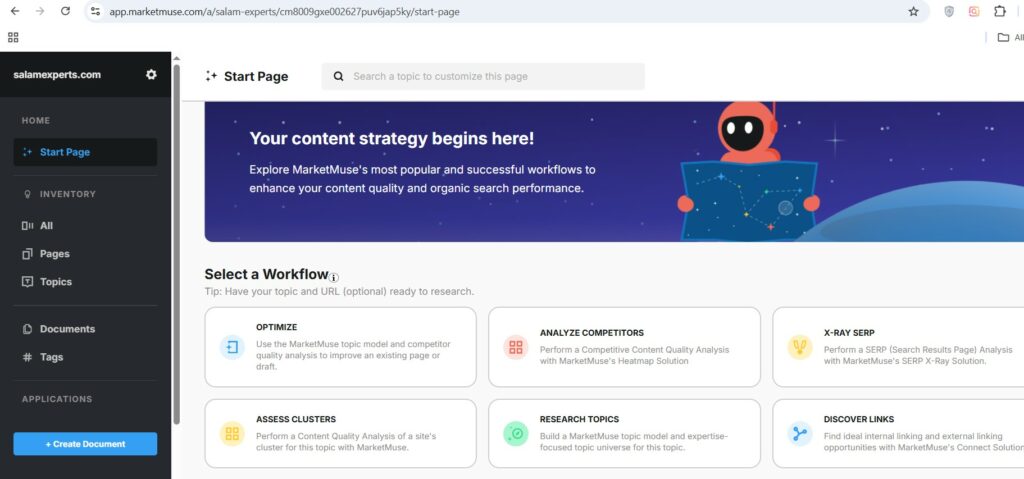
Market Muse
Market Muse helps optimize content with AI-driven topic modeling and ranking predictions. We use it to improve content depth, ensure semantic relevance, and refine keyword usage, making pages more comprehensive and valuable for users.
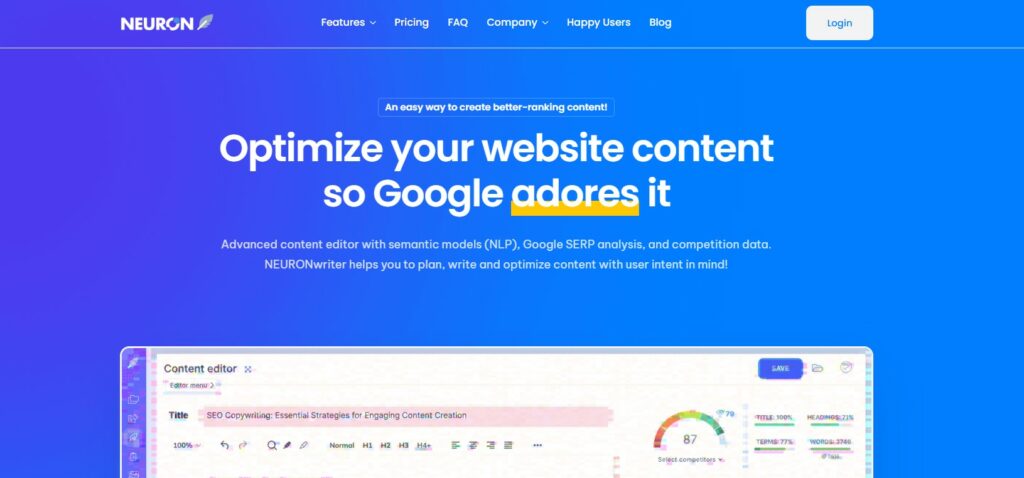
NeuronWriter
Neuron Writer leverages AI and NLP (Natural Language Processing) to optimize content based on SERP analysis and search intent. We use it to refine keyword placement, enhance topical relevance, and structure content effectively. Its AI-driven insights ensure our pages are well-optimized for both search engines and user engagement.
Clearscope
Clear scope is an AI-powered content optimization tool that enhances on-page SEO by analyzing top-ranking content and suggesting relevant keywords. We use it to improve content readability, ensure keyword relevance, and align with search intent. Its AI-driven recommendations help us craft well-optimized articles that rank higher on search engines.
4. Link-Building Workflow
Backlink acquisition is a critical off-page SEO factor, but traditional link-building can be time-consuming and inefficient. AI-powered tools make this process smarter and more strategic by identifying high-quality opportunities and automating outreach efforts.
We use these AI tools to streamline our link-building campaigns, ensuring we acquire relevant, authoritative backlinks that improve rankings and domain authority. These tools are highly recommended for anyone looking to enhance their off-page SEO strategy.
Pitchbox
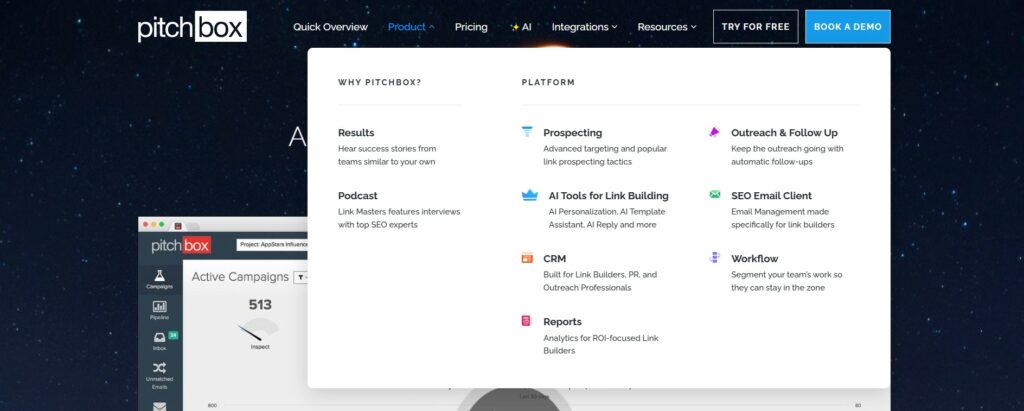
Pitch box streamlines outreach campaigns by using AI to identify and contact potential link-building partners. We use it to automate personalized outreach, track responses, and build relationships with high-authority websites, making link-building more efficient.
Respona
Respona combines AI-driven prospecting with automated email outreach, making link acquisition faster and more effective. We use it to find relevant backlink opportunities, personalize pitches, and monitor campaign performance to secure high-quality links.
Hunter
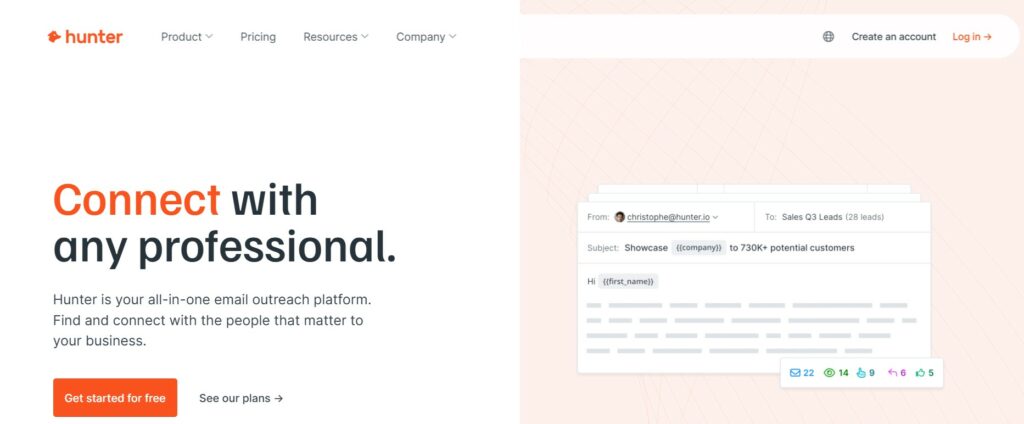
Hunter simplifies email outreach by using AI to find and verify contact information. We use it to connect with site owners, reach out to potential link partners, and increase our response rates, ensuring a seamless outreach process.
5. Performance Tracking Workflow
SEO isn’t a one-time task—it requires continuous monitoring and optimization to stay ahead. AI-driven analytics tools help track ranking fluctuations, website performance, and SEO trends in real-time, allowing businesses to refine their strategies proactively.
We use these AI tools to monitor keyword rankings, analyze traffic patterns, and automate reporting, ensuring our SEO efforts are always data-driven and results-oriented. These tools are highly recommended for anyone looking to enhance their SEO performance tracking.
Semrush
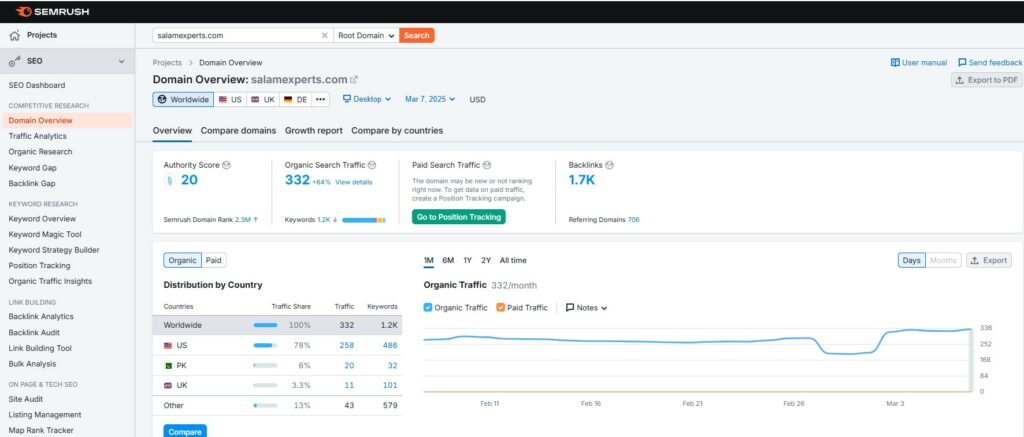
Semrush AI-powered tracking features provide real-time ranking updates, competitor comparisons, and traffic insights. We use it to monitor keyword movements, analyze search trends, and identify areas for improvement, ensuring we stay ahead of search engine updates.
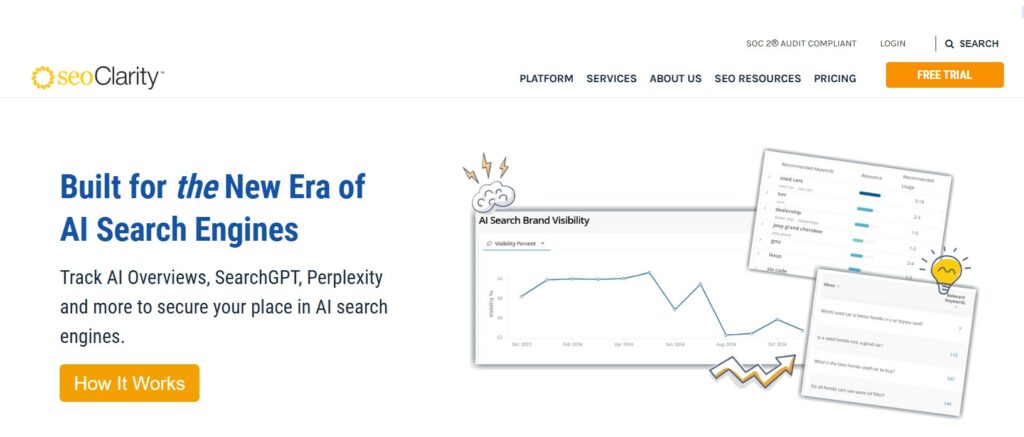
SEOClarity
SEO Clarity leverages AI to predict ranking trends, track user behavior, and analyze SERP performance. We use it to gain deep insights into site performance, helping us refine our content, technical SEO, and keyword strategy for sustained growth.
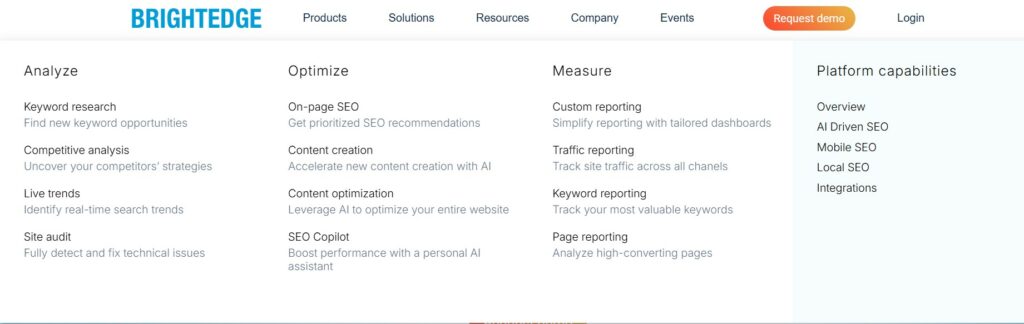
Brightedge
Bright Edge offers AI-driven SEO forecasting, automated reporting, and real-time analytics. We use it to track organic traffic shifts, content performance, and competitive benchmarks, allowing us to make data-backed decisions that enhance search visibility.
6. AI in Technical SEO Workflow
A well-optimized website is the backbone of SEO, and technical SEO ensures your site is fast, mobile-friendly, and error-free. AI-powered tools help detect and fix critical issues faster and more accurately than manual audits, improving both user experience and search engine visibility.
We use these AI tools to analyze site performance, detect errors, and enhance page speed, ensuring our website remains optimized for both users and search engines. These tools are highly recommended for anyone looking to streamline their technical SEO process.
Google’s PageSpeed Web
Google PageSpeed Insights analyzes website speed and performance while providing AI-driven recommendations for optimization. We use it to improve loading times, optimize scripts, and enhance mobile-friendliness, ensuring a fast and seamless user experience.
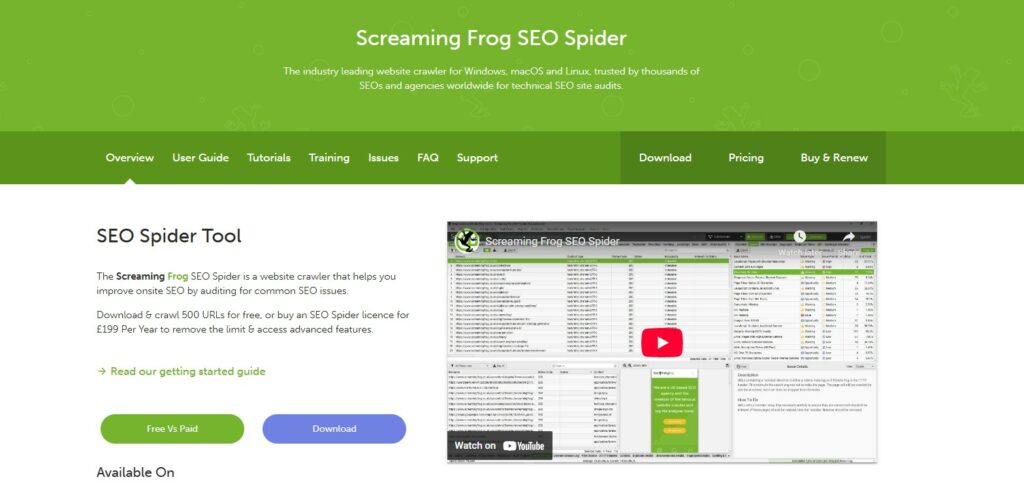
Screaming Frog
Screaming Frog AI-powered crawler helps detect broken links, indexing issues, and on-page errors. We use it to conduct in-depth website audits, analyze metadata, and resolve technical SEO issues, making sure search engines can crawl and index pages efficiently.
Sitebulb
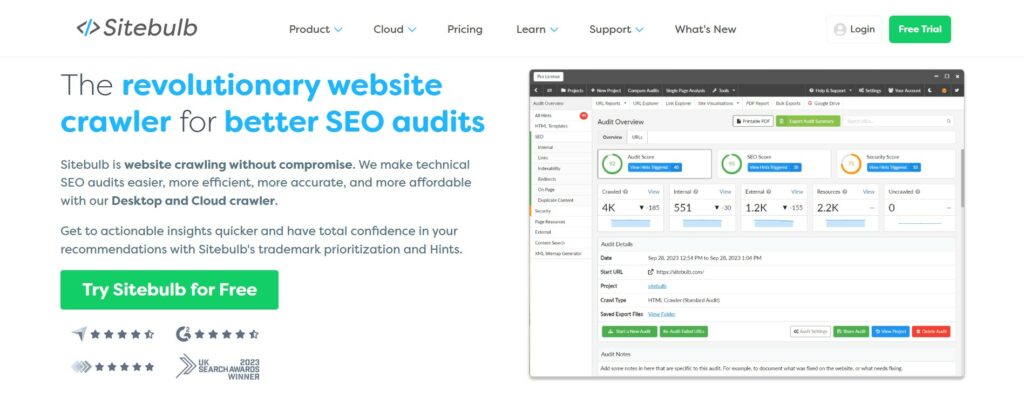
Sitebulb delivers AI-powered technical SEO audits, identifying site structure issues, duplicate content, and crawl errors. We use it to gain actionable insights into technical performance, allowing us to fix problems before they impact rankings.
Conclusion
This year, AI isn’t just an advantage—it’s the driving force behind SEO success. From keyword research and content creation to technical SEO, AI streamlines workflows, automates tedious tasks, and uncovers valuable insights that human efforts alone can’t match.
By integrating AI-powered tools, businesses can work smarter, create high-ranking content, and stay ahead of ever-changing search algorithms. If you want to optimize faster, rank higher, and outperform competitors, now is the time to embrace AI in your SEO strategy.