In the digital marketing world, tracking performance is crucial to achieving success. Two of the most commonly analyzed metrics are impressions vs clicks. But which one should you prioritize? Should you focus on maximizing visibility (impressions in marketing) or driving engagement (clicks)?
The answer depends on your campaign goals. This article will break down the key differences between impressions and clicks, explain when to prioritize each, and provide actionable strategies to optimize both for better marketing results.
1. Understanding Impressions vs Clicks
What Are Impressions?
Impressions refer to the number of times your ad, post, or webpage appears on a user’s screen. It doesn’t mean the user interacted with it—just that it was displayed.
Examples of Impressions:
- A Google search result appearing on a page (even if no one clicks on it).
- A social media ad shown in a user’s feed.
- A display ad appearing on a website.
- A YouTube video ad being played, even if skipped.
What Are Clicks?
Clicks occur when users actively engage with your content by clicking on an ad, a search result, or a social media post.
Examples of Clicks:
- Clicking on a Google Ad or organic search result.
- Clicking a Facebook or Instagram ad.
- Clicking a website banner to learn more.
- Clicking a link in an email marketing campaign.
What is a Conversion?
A conversion occurs when a user completes a desired action, such as signing up for a newsletter, making a purchase, or filling out a contact form. Clicks often lead to conversions, making them essential for performance-based campaigns.
2. Impressions vs Clicks: Understanding the Core Difference
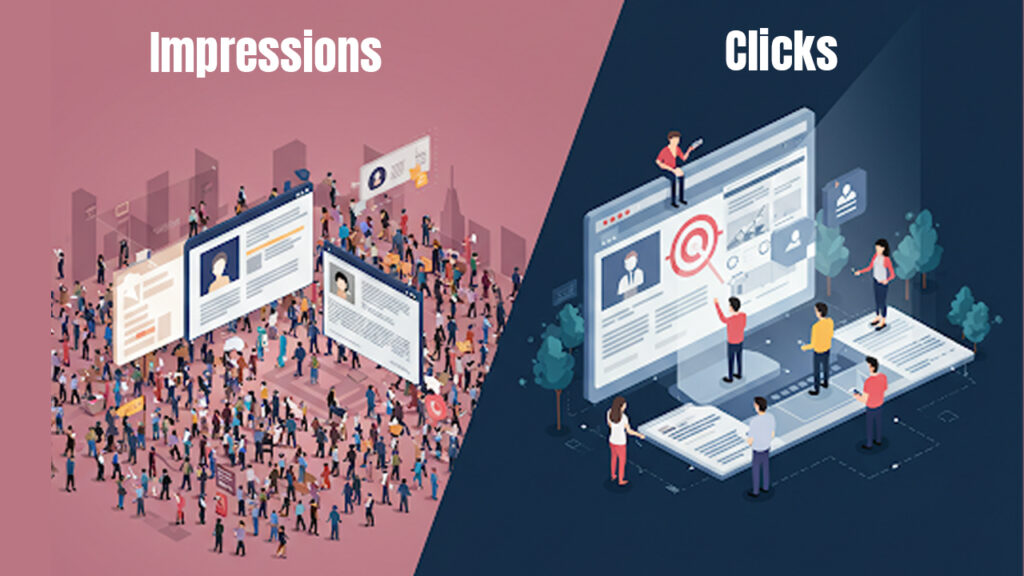
Think of impressions marketing as a billboard on a busy street—many people see it, but not everyone stops to take action. Clicks, on the other hand, are like someone walking into a store after seeing the billboard.
Both metrics serve different purposes:
- Impressions measure how many times your content appears on a screen. They build brand awareness and visibility.
- Clicks track engagement—how many people found your ad, post, or website compelling enough to take action.
A campaign with high impressions but low clicks could mean your content isn’t engaging enough. Meanwhile, high clicks but low impressions might indicate strong engagement but a limited audience reach. Striking the right balance between the two is key to maximizing marketing success.
3. When to Prioritize Impressions
Brand Awareness Campaigns
If your goal is to increase brand exposure, impressions are a key metric. The more users see your content, the more familiar they become with your brand.
Example: A new product launch campaign focuses on impressions to create visibility before optimizing for conversions.
SEO & Content Marketing
High impressions in Google Search Console mean your content is ranking well, but if clicks are low, you may need to optimize your title and meta description.
Social Media Marketing
Platforms like Facebook, Instagram, and LinkedIn count impressions when content appears in a user’s feed. A higher number of impressions can help increase organic reach.
Common Mistakes & How to Avoid Them:
- Focusing only on impressions without engagement strategies can waste marketing spend.
- Misinterpreting high impressions as success; without clicks, they may not be meaningful.
4. When to Focus on Clicks
Lead Generation & Sales Campaigns
If your objective is to drive website traffic or generate leads, clicks are the key metric.
Example: An e-commerce store running Facebook ads should track clicks to measure how many users visit the store.
PPC & Google Ads
Google Ads typically charge on a Cost-Per-Click (CPC) model. The more clicks you generate, the higher the chance of conversions.
SEO & Website Traffic
A high number of impressions but low clicks means your headlines and descriptions need improvement. Optimizing CTR can boost organic SEO traffic.
Common Mistakes & How to Fix Them:
- Lots of clicks but no conversions? Improve landing pages and ad targeting.
- Ignoring CTR in favor of impressions? Focus on optimizing ad copy and visuals.
5. How to Improve Both Impressions & Clicks
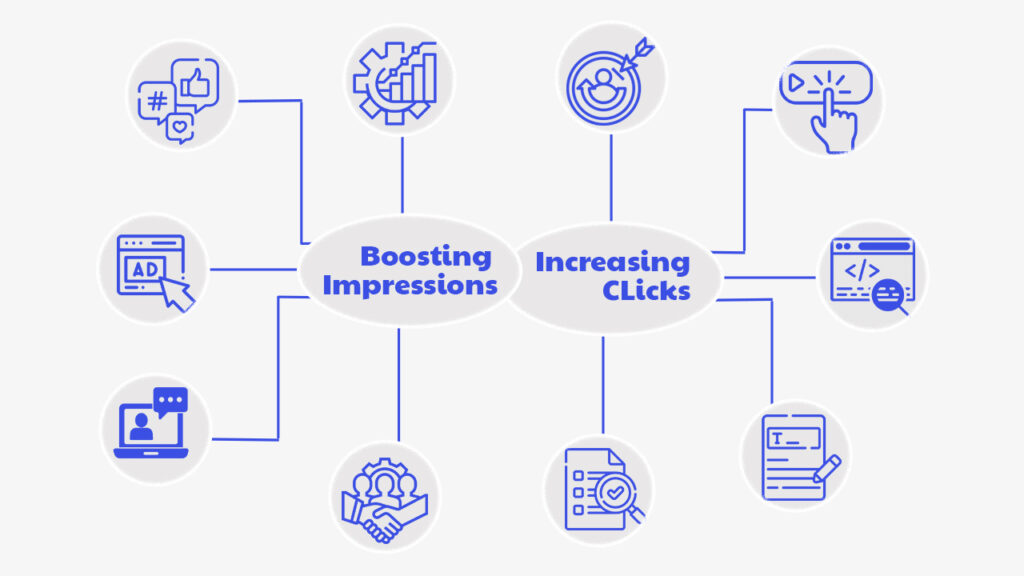
To grow your brand online, you need both impressions vs clicks. More impressions boost visibility, while higher clicks drive traffic and conversions. Here’s how to improve both:
Boosting Impressions
Want more people to see your content? Try these tactics:
- Optimize for SEO – Use relevant keywords, high-quality content, and backlinks to rank higher in search results.
- Expand social media reach – Share engaging content like videos, infographics, and polls to encourage interactions.
- Leverage paid ads – Use PPC, display ads, and social media ads to increase brand exposure.
- Stay active online – Post consistently on blogs, social media, and forums to keep your brand visible.
- Collaborate with influencers – Partnering with industry influencers can expand your reach quickly.
Increasing Clicks
Getting impressions is just the first step—here’s how to turn them into clicks:
- Write irresistible headlines – Use curiosity, urgency, or benefits to grab attention.
- A/B test for better CTR – Experiment with different headlines, images, and CTAs to see what works best.
- Optimize meta descriptions – Make search results compelling with clear, value-driven messaging.
- Use strong CTAs – Encourage action with direct, persuasive language like “Try Now” or “Get Started.”
- Run retargeting ads – Remind past visitors about your content to increase engagement.
By combining these strategies, you’ll not only increase impressions vs clicks but also encourage more meaningful interactions, leading to better marketing results.
Conclusion
The battle between impressions vs clicks isn’t about choosing one over the other but understanding when to prioritize each. Impressions marketing boosts brand awareness, while clicks drive traffic and conversions, making both essential for a successful marketing campaign.
To maximize your marketing performance, balance your focus between impressions and clicks based on your campaign goals. A well-rounded strategy that includes SEO, social media, paid ads, and conversion optimization will ensure you not only reach a larger audience but also drive meaningful engagement. By continuously analyzing and refining your approach, you can improve visibility, enhance user engagement, and maximize ROI for sustained business growth.
Frequently Asked Questions
Is a low CTR always bad?
Is impression the same as click?
Can high impressions hurt ad performance?
How can you track impressions and clicks?
- Google Analytics – Monitor website traffic, user behavior, and engagement.
- Google Search Console – Track SEO impressions and clicks in search results.
- Facebook Ads Manager – View ad performance on social media.
- Google Ads Dashboard – Analyze CPC, CTR, and conversion rates for PPC campaigns.