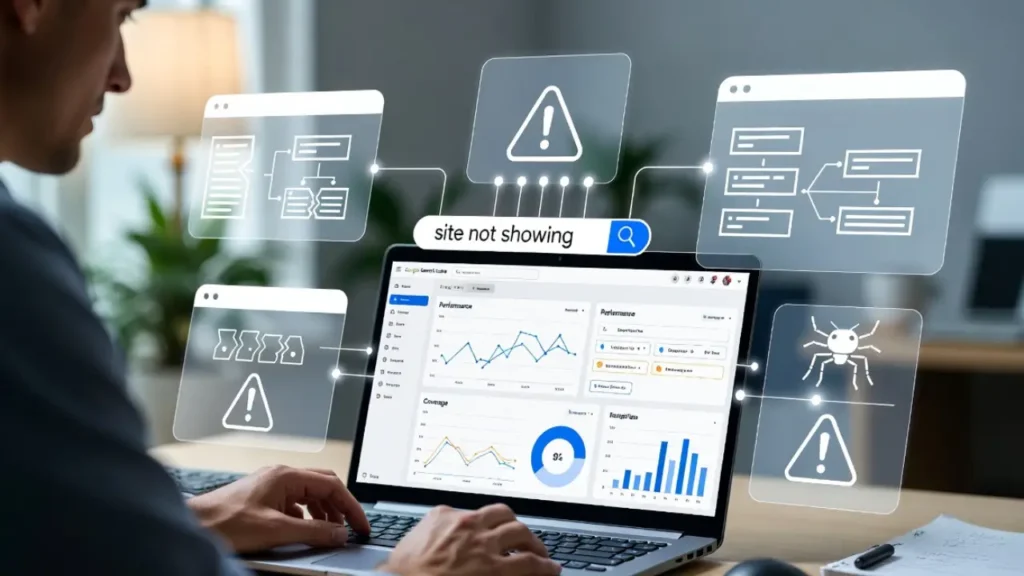
The good news is that this is a common issue and can be fixed with proper SEO and technical improvements.
In this guide, we will explain the main reasons why your website is not showing on Google and provide step-by-step solutions to fix it.
What Does It Mean When Your Website Is Not Showing on Google?
When your website is not showing on Google, it means that your pages are either not indexed, poorly optimized,
blocked from crawling, or too new without proper SEO signals.
Until Google crawls and indexes your website, it will not appear in search results.
Your Website Is Not Indexed by Google
The most common reason is that your website is not indexed.
How to Check Indexing
Search this on Google:
site:yourdomain.com
If no results appear, your site is not indexed.
Fix
- Submit your website in Google Search Console
- Request indexing for important pages
- Submit XML sitemap
Robots.txt is Blocking Google
Sometimes your website accidentally blocks search engines using robots.txt.
Disallow: /
Fix
- Check robots.txt file
- Remove blocking rules
- Allow Googlebot access
No Sitemap Submitted
A sitemap helps Google understand your website structure.
Fix
- Generate XML sitemap using SEO plugins (Yoast / RankMath)
- Submit it to Google Search Console
Your Website is Too New
New websites take time to appear on Google (3–30 days).
Fix
- Build backlinks
- Share on social media
- Publish content regularly
Poor SEO Optimization
Common SEO issues include:
- No meta titles or descriptions
- Missing keywords
- Thin content
- No internal linking
Fix
- Optimize pages with keywords
- Write 1000+ words content
- Use proper headings (H1, H2, H3)
No Internal Linking Structure
Internal links help Google discover pages faster and improve rankings.
Example internal links:
Fix
- Link related blog posts together
- Use keyword-based anchor text
- Build topic clusters
Low Quality or Duplicate Content
Fix
- Write unique content
- Avoid keyword stuffing
- Add real value for users
No Backlinks
Fix
- Guest posting
- Forum sharing
- High-quality backlink building
Technical SEO Problems
- Slow website speed
- Broken links
- Mobile issues
- Poor hosting
Fix
- Improve site speed
- Fix broken links
- Use responsive design
Step-by-Step Fix Checklist
- Submit site to Google Search Console
- Create and submit XML sitemap
- Fix robots.txt issues
- Improve internal linking
- Write SEO optimized content
- Build backlinks
- Fix technical SEO errors
Why Internal Linking is Important
Internal linking helps Google crawl your site faster and improves rankings of important pages.
Read more:
Internal Linking Strategy Guide
Need Help?
If you still face SEO or indexing issues, contact us here: