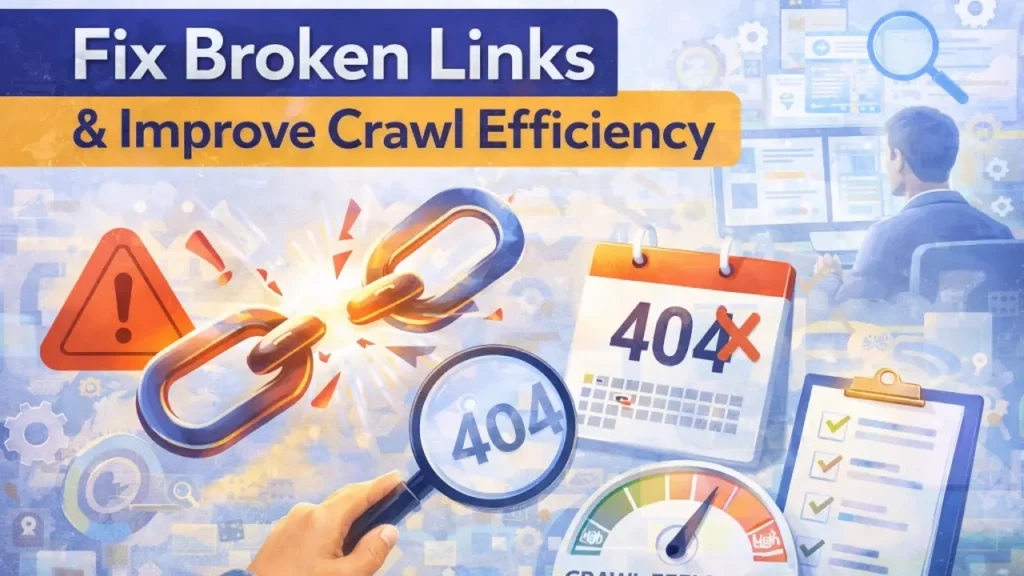
Broken links are one of the most overlooked technical SEO issues, yet they can seriously harm your website’s performance.
When users or search engines encounter broken links (404 errors), it creates a poor experience and wastes crawl budget.
In this guide, you’ll learn how to fix broken links and improve crawl efficiency to boost your website’s rankings and overall SEO health.
What Are Broken Links?
Broken links are URLs that no longer exist or return an error when accessed.
- 404 (Page Not Found) errors
- Deleted pages
- Incorrect URLs
- Moved content without redirects
Broken link = link that doesn’t work
Why Broken Links Are Bad for SEO
Poor User Experience
Visitors clicking on dead links may leave your site immediately.
Wasted Crawl Budget
Search engines waste time crawling non-existent pages.
Lower Rankings
Too many broken links signal poor site quality.
Loss of Link Equity
Backlinks pointing to broken pages lose value.
To improve overall SEO performance, check our
Technical SEO Services.
What Is Crawl Efficiency?
Crawl efficiency refers to how effectively search engine bots crawl and index your website.
- Important pages are crawled faster
- No crawl budget is wasted
- Better indexing and rankings
Common Causes of Broken Links
1. Deleted Pages
Removing pages without proper redirects causes broken links.
2. URL Structure Changes
Changing URLs without updating internal links leads to errors.
3. Typos in URLs
Incorrect spelling in links results in 404 pages.
4. External Links Removed
Links to other websites may break if the page is deleted.
5. Migration Errors
Site migrations often create broken links if not handled properly.
How to Find Broken Links
1. Google Search Console
Check the “Pages” or “Coverage” report for errors.
2. SEO Tools
- Ahrefs
- Screaming Frog
- SEMrush
3. Manual Checks
Test important pages and internal links manually.
How to Fix Broken Links
1. Set Up 301 Redirects
Redirect broken URLs to relevant working pages.
/old-page → /new-page
2. Update Internal Links
Fix links inside your content that point to broken pages.
3. Restore Deleted Pages
If a page was removed accidentally, restore it if possible.
4. Fix External Links
Replace or remove broken outbound links.
5. Use a Custom 404 Page
Create a helpful 404 page to guide users back to your site.
How to Improve Crawl Efficiency
1. Optimize Internal Linking
Ensure all important pages are properly linked.
2. Fix Redirect Chains
Avoid multiple redirects (A → B → C).
3. Use XML Sitemap
Submit a clean sitemap to search engines.
4. Block Low-Value Pages
- Duplicate pages
- Thin content
- Filters and parameters
5. Improve Site Speed
Faster websites are crawled more efficiently.
Learn more in our
SEO Services.
Best Practices to Avoid Broken Links
- Use 301 redirects after URL changes
- Regularly audit your website
- Avoid unnecessary URL changes
- Use a clean linking structure
- Monitor external links
Pro Tips
- Use canonical tags
- Monitor crawl stats in Search Console
- Fix orphan pages
- Prioritize high-value pages
Tools to Manage Broken Links
- Google Search Console
- Screaming Frog SEO Spider
- Ahrefs Site Audit
- Broken Link Checker plugins
Conclusion
Fixing broken links is essential for maintaining a healthy website and improving crawl efficiency.
By auditing your site, fixing errors, and optimizing your structure, you can boost your SEO performance.
Need Professional Help?
If you want expert support: Contact Cope Business.