
When you think about lead generation in B2B businesses, what comes to mind? Perhaps outbound sales, cold calling, or LinkedIn outreach. But there’s one often-overlooked powerhouse that consistently delivers high-quality leads: Search Engine Optimization (SEO). If you want to scale your B2B business, Utilize SEO is one of the smartest moves you can make. Here’s how SEO can be the key to unlocking a steady stream of quality leads for your business.
What is SEO, and Why Does It Matter for B2B Lead Generation?
First things first: Let’s break down what SEO is. At its core, SEO is the process of optimizing your website to rank higher on search engine results pages (SERPs) like Google. This makes it easier for people searching for services you offer to find your website.
For B2B businesses, however, SEO isn’t just about attracting traffic—it’s about attracting the right kind of traffic. Imagine this: you’re a SaaS company offering cloud solutions for manufacturing businesses. Without SEO, your website might get tons of visitors, but none of them are the decision-makers in the manufacturing space. With SEO, you can fine-tune your website to target exactly the businesses looking for your solutions.
Now, let’s dig down into the nitty-gritty of how SEO can drive B2B lead generation, specifically.
Why SEO is a Game-Changer for B2B Lead Generation
In the competitive world of B2B marketing, standing out is tough. But SEO gives your business a clear edge by focusing on organic search—meaning it drives high-intent prospects to your site who are actively searching for solutions like yours.
Here are some reasons why SEO is a lead-generation powerhouse for B2B companies:
1. Targeted Visibility = More Qualified Leads
SEO helps your business get found by the right people. With targeted SEO strategies, you can optimize your website to appear when your ideal clients are searching for services or products in your niche. This means qualified traffic—those who are more likely to convert.
For example, if you’re offering a CRM system designed for law firms, optimizing for keywords like “best CRM for law firms” or “CRM for legal practices” ensures you reach the exact audience interested in what you have to offer.
The result? More website traffic from visitors who are serious about solving their business problems with your solutions. These are the leads that matter.
2. Builds Trust and Authority in Your Industry
Trust is critical in B2B sales. No one wants to hand over thousands of dollars to a company they’ve never heard of. With SEO, you can build credibility and establish your authority within your industry. How?
By creating high-quality content (like blog posts, case studies, and whitepapers) that answers specific questions your audience has. When potential clients see that your content addresses their pain points and provides valuable insights, they’re more likely to trust your expertise.
Plus, ranking high on Google for relevant search queries signals to users that Google sees your website as a credible resource, too.
3. SEO Generates Cost-Effective Leads
Unlike paid ads that require constant investment, SEO generates organic traffic over time, which is one of the most cost-effective lead-generation strategies. Sure, it may take time to see results, but once your website is ranking for valuable keywords, the leads just keep flowing in.
B2B companies that rely on SEO often find that the leads they generate are not only high quality but also free. It’s like planting seeds today and reaping the harvest tomorrow.
4. Long-Tail Keywords Lead to Long-Term Results
Long-tail keywords are longer, more specific search terms that reflect higher intent. For example, “top CRM software for SaaS startups” is a long-tail keyword compared to just “CRM software.” These keywords often have lower search volume but tend to be highly relevant to your ideal audience.
SEO allows you to target these long-tail keywords, which may lead to more conversions because they indicate that users are further along in their buyer’s journey. They’re looking for exactly what you offer.
Additionally, long-tail keywords are less competitive, making it easier to rank on search engines and attract more qualified leads.
5. Local SEO for Hyper-Targeted Lead Generation
For B2B businesses that serve specific geographic regions or focus on local industries, local SEO is an absolute must. Local SEO helps your business appear in local search results and on Google Maps for location-based queries.
For example, if you run a marketing agency targeting law firms in New York City, optimizing your website for “law firm marketing services NYC” will help you get discovered by local businesses looking for your services. Local SEO connects you with leads in your geographic area, which can result in higher conversion rates.
6. Improves User Experience (UX) for Better Conversions
Google cares about user experience (UX), and so should you. A critical part of SEO is optimizing your site’s UX, including its loading speed, mobile responsiveness, and ease of navigation. By improving these factors, you make it easier for users to interact with your site, which increases the chances they’ll take action.
In B2B lead generation, this could mean downloading a case study, filling out a contact form, or scheduling a consultation. If your website offers a seamless experience, visitors are far more likely to convert into leads.
How to Leverage SEO for B2B Lead Generation: Effective Strategies
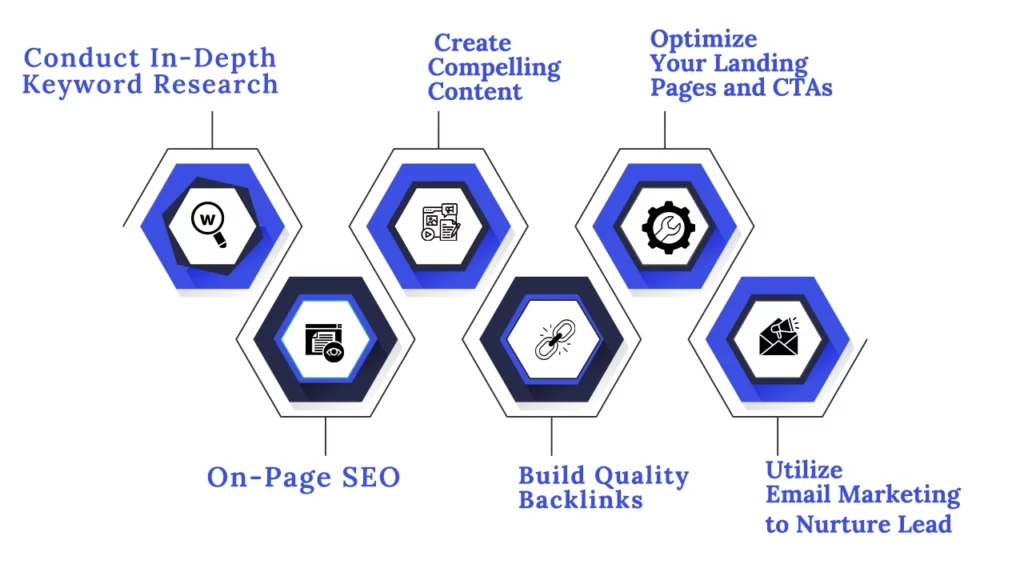
Now that we understand the power of SEO for driving leads, let’s go over some actionable strategies you can use to optimize your SEO efforts and supercharge your lead generation.
1. Conduct In-Depth Keyword Research
The first step in any SEO campaign is keyword research. Identify keywords that your potential leads are searching for, and tailor your content to target these phrases. Use tools like Google Keyword Planner, SEMrush, or Ahrefs to find relevant keywords that are popular within your industry. Additionally, leveraging AI keyword research tools can help you discover hidden opportunities and automate the process for more precise targeting.
Don’t forget to include a mix of short-tail and long-tail keywords to capture leads at various stages of the buyer’s journey.
2. On-Page SEO
Make sure your website is optimized for the keywords you’ve identified. Title tags, meta descriptions, headers, and internal links should all be carefully optimized to include relevant keywords. This ensures that search engines understand your page’s relevance.
For instance, if your target keyword is “best CRM software for small businesses,” include it in your title tag, headers, and throughout your content, while keeping the flow natural.
3. Create Compelling Content
Content marketing is at the heart of any successful SEO strategy. Publish regular blog posts, case studies, guides, and whitepapers that offer value to your audience. This not only helps with SEO but also positions your business as an industry leader.
For B2B lead generation, aim to create content that directly addresses your audience’s problems. For example, “How to Choose the Right CRM Software for Your Business” or “5 Challenges SaaS Companies Face and How to Overcome Them.”
4. Build Quality Backlinks
Backlinks from authoritative websites act as votes of confidence in your content. Implementing off-page SEO strategies, such as securing backlinks in your industry, you boost your domain authority and increase your search rankings.
You can build backlinks by writing guest posts, getting featured in industry publications, or creating shareable content that others want to link to.
5. Optimize Your Landing Pages and CTAs
When users land on your site, make sure your landing pages are optimized to convert visitors into leads. This means clear, concise content, an attractive design, and a strong call-to-action (CTA). Whether it’s downloading a whitepaper, requesting a demo, or scheduling a call, make sure your CTA stands out.
6. Utilize Email Marketing to Nurture Leads
Once you’ve captured leads, don’t let them go cold. Use email marketing to nurture your leads with valuable content, case studies, and product updates. Email campaigns help keep your brand top-of-mind and encourage prospects to move forward in their buying journey.
Wrapping Up
SEO isn’t just about ranking high on search engines; it’s about attracting the right leads—the businesses that are ready to engage with your B2B solutions. By focusing on targeted keywords, high-quality content, and conversion optimization, SEO helps you consistently drive relevant traffic and turn those visitors into quality leads.
If your B2B business isn’t already leveraging SEO for lead generation, now’s the time to start. With the right strategy, SEO can become one of your most valuable tools for driving growth and securing long-term, high-quality business relationships.