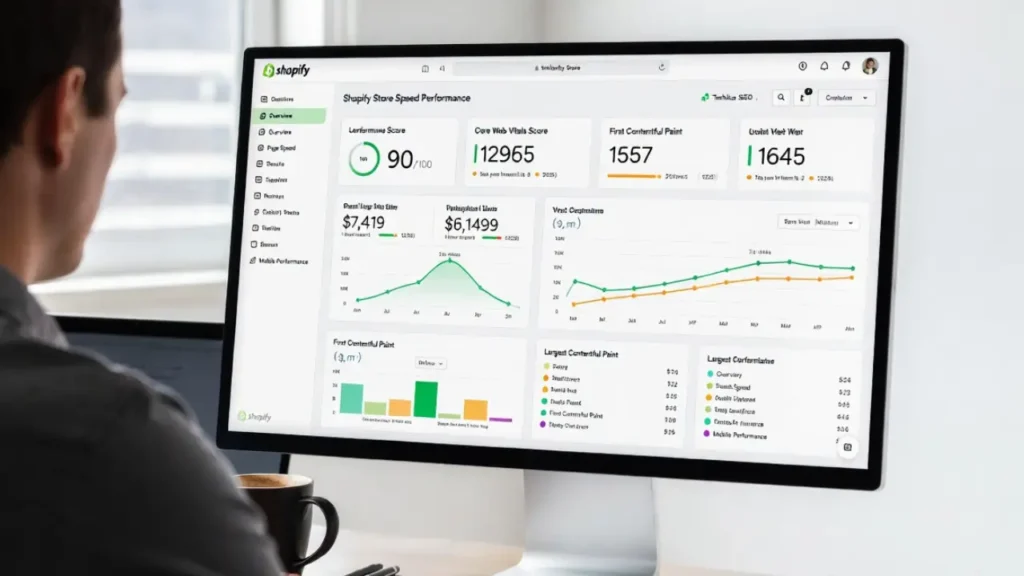
First: What Does “Technical SEO” Actually Cover?
Before you decide whether to hire for it, you need to know what it is. Technical SEO is not keyword research. It’s not writing blog posts. It’s not building links.
Technical SEO is everything that affects how search engines crawl, render, and index your website:
- Can Googlebot access your pages without getting blocked by robots.txt?
- Are your pages rendering correctly, or is your JavaScript hiding content from the crawler?
- Are duplicate URLs eating your crawl budget?
- Are your Core Web Vitals scores causing Google to deprioritize your pages in rankings?
- Is your XML sitemap accurate and free of noindexed or redirected URLs?
- Are your canonical tags pointing the right direction?
- Is your schema markup valid and eligible for rich results?
These are infrastructure problems. They sit beneath your content. And when they’re broken, everything you spend on content and links underperforms — sometimes completely.
The Honest Decision Framework
Ask yourself these five questions. Your answers will tell you where you stand.
Question 1: Is your site ranking at all?
If you publish content consistently and it gets indexed and ranks — even modestly — your technical foundation is at least functional. You probably don’t have a critical blocking issue.
If you publish content and it either doesn’t get indexed, sits in “Discovered – currently not indexed” for weeks, or gets indexed but never ranks despite being genuinely good content — that’s a signal something technical is wrong.
Real example: A SaaS company had been publishing two blog posts per week for 14 months. Organic traffic had barely moved. A technical audit found their React application was serving client-side rendered HTML to Googlebot — meaning the crawler was seeing near-empty pages. Every piece of content they published was essentially invisible to Google. Fourteen months of content investment, wasted. Two weeks after implementing server-side rendering on key templates, indexed pages increased by 340%.
No amount of content or link building would have fixed that. Only technical SEO could.
Question 2: What platform is your site on — and how complex is it?
Some platforms are forgiving. Others have structural issues baked in that require expert intervention.
WordPress (simple site, under 200 pages): A non-technical founder can handle the basics with Rank Math or Yoast — sitemaps, meta tags, basic redirects. You probably don’t need a full-time technical SEO resource yet. You might benefit from a one-time audit.
WooCommerce (large catalog): Category pages, tag archives, filter URLs, paginated pages, product variants — WooCommerce generates hundreds of indexable URL combinations that most store owners don’t know exist. This almost always needs expert attention. We cover the most common issues in our WordPress technical SEO audit checklist.
Shopify: Canonical tag limitations, sitemap restrictions, hreflang requiring Liquid workarounds, collection page duplication — Shopify has well-documented technical SEO constraints that need platform-specific fixes. See our Shopify SEO migration checklist for what this looks like in practice.
Next.js / React / Vue: If your site is built on a JavaScript framework, technical SEO is not optional — it is the most important investment you can make. Googlebot’s ability to render JavaScript is inconsistent and delayed. Without server-side rendering or static generation, large portions of your site may be invisible to search engines. We cover this in detail in our guide to Next.js SEO: server rendering, sitemaps, and meta tags.
Question 3: Have you recently migrated, redesigned, or replatformed?
Site migrations are one of the highest-risk events in SEO. Moving domains, changing URL structures, switching from HTTP to HTTPS, moving from one CMS to another — any of these, done without a proper redirect map and pre/post-migration audit, can cause significant and lasting ranking drops.
If you’ve recently migrated and traffic dropped, that’s not a coincidence. It needs a technical SEO diagnosis immediately — not in six months.
If you’re planning a migration, hire technical SEO help before you migrate, not after. The cost of getting it wrong is far higher than the cost of getting it right the first time. Our guide on how to build a redirect map for a site migration shows exactly what’s involved.
Question 4: How large is your site, and is it growing?
Size changes everything in technical SEO. A 20-page site has almost no crawl budget concerns. A 50,000-URL e-commerce catalog has significant ones.
As sites grow, so do the technical risks:
- Automatically generated URLs from filters, tags, and archives
- Pagination creating thin, near-duplicate pages
- Internal linking becoming diluted across hundreds of categories
- Orphan pages with no internal links that Google struggles to discover
If your site is growing rapidly — through content publishing, product expansion, or international expansion — the technical foundation needs to scale with it. That’s not a one-time fix. It’s ongoing maintenance.
Question 5: What is organic traffic worth to your business?
This is the most important question of all — and the one most business owners skip.
If organic traffic is a secondary channel for your business and you’re primarily acquiring customers through paid ads, referrals, or direct sales, the urgency of technical SEO is lower.
If organic search is a primary acquisition channel — or you want it to be — then every month your technical issues go unfixed is a month of compounding opportunity cost. Traffic you didn’t get. Leads you didn’t convert. Revenue you left on the table.
Real example: A home services company in a competitive local market had a technically broken robots.txt that was accidentally blocking Googlebot from crawling their service area pages. They’d been running Google Ads to compensate for “poor organic performance” for 18 months — spending $6,000/month on paid traffic for keywords they should have been ranking for organically. A $1,500 audit identified and fixed the issue within a week. Within 90 days, organic traffic to service pages increased enough to reduce their ad spend by 40%.
Situations Where You Probably Don’t Need to Hire Yet
Be honest with yourself about these:
Your site is small and simple. A 10–30 page WordPress site for a local service business, built on a well-supported theme, with Rank Math or Yoast installed — the basics are likely handled. Focus on content and local citations first.
You’re pre-traffic and pre-revenue. If you’re a brand-new site with no content and no backlinks, your first constraint is not technical. It’s content authority. Build that first. Technical SEO becomes critical once Google is actually trying to crawl and index your growing site.
You already have a competent in-house developer who understands SEO. Some development teams are genuinely SEO-aware. If your developer can interpret Google Search Console data, implement schema markup correctly, and manage canonical configurations — you may just need occasional consulting rather than a full engagement.
Your GSC is clean. Log into Google Search Console. Check the Coverage (Index) report. If you have fewer than 20 errors, no “Discovered – currently not indexed” backlog, no manual actions, and your Core Web Vitals are passing — your technical health is reasonable. Focus your budget elsewhere.
Situations Where You Almost Certainly Need to Hire
Your JavaScript framework is rendering client-side. React, Angular, Vue, Next.js without SSR/SSG — if this is your site, stop reading and get a technical SEO audit. This is the single most damaging technical SEO issue we see in 2026, and it’s almost impossible to diagnose and fix without expert knowledge.
Traffic dropped after a migration or redesign. This is a recoverable situation — but only with a proper technical diagnosis. Waiting does not help. Every day without a proper redirect map compounds the damage.
GSC shows hundreds of “Crawled – currently not indexed” or “Discovered – currently not indexed” pages. These statuses mean Google found your pages but decided not to index them — usually because of thin content, near-duplicate URLs, poor internal linking, or slow page speed. This is a technical SEO problem that needs a technical SEO diagnosis.
You’re on WooCommerce or Shopify with a large, growing catalog. URL bloat, faceted navigation issues, and canonical misconfigurations are nearly universal on large e-commerce stores. This requires ongoing management, not a one-time fix.
You’re targeting competitive keywords and not ranking. If your content is genuinely strong and your link profile is reasonable, but you’re stuck outside the top 20 — technical issues are often the hidden reason. Page experience signals, Core Web Vitals, and indexation problems can suppress rankings even when content quality is high.
You’re planning international expansion. Hreflang implementation is one of the most technically complex areas of SEO. Incorrect hreflang causes Google to serve the wrong language version to the wrong users, or to treat pages as duplicates. This is expert territory.
DIY vs. Hiring: What You Can Realistically Handle Yourself
Some technical SEO tasks are genuinely DIY-friendly with the right tools and a bit of learning time:
| Task | DIY-Friendly? | Notes |
|---|---|---|
| Installing Rank Math / Yoast | ✅ Yes | Handles sitemaps, meta tags, basic canonicals |
| Fixing individual 404s | ✅ Yes | Redirect Manager plugin in WordPress |
| Adding basic schema (FAQ, Article) | ✅ Yes | Rank Math has a built-in schema builder |
| Submitting sitemap to GSC | ✅ Yes | Simple GSC task |
| Interpreting GSC Coverage report | ⚠️ Partial | Understanding what each status means takes learning |
| Fixing Core Web Vitals | ⚠️ Partial | Basic image optimization and caching yes; deeper LCP/CLS/INP issues, no |
| Canonical tag strategy (large site) | ❌ No | Easy to create worse problems than you started with |
| JavaScript rendering audit | ❌ No | Requires specialist tooling and knowledge |
| Hreflang implementation | ❌ No | High error rate even among developers |
| Crawl budget optimization | ❌ No | Wrong decisions here suppress rankings site-wide |
| Log file analysis | ❌ No | Requires dedicated tooling and SEO interpretation |
| Site migration redirect mapping | ❌ No | Too much at stake to improvise |
What Hiring Actually Gets You (Beyond the Audit PDF)
The value of hiring a good technical SEO agency isn’t the report. It’s the combination of:
Correct diagnosis. Not every indexing problem has the same cause. “Crawled – currently not indexed” can mean thin content, slow speed, poor internal linking, near-duplicate signals, or a render budget issue. The fix is different for each. Misdiagnosing wastes months.
Platform-specific implementation. A fix that works on WordPress doesn’t automatically work on Shopify. Hreflang implementation on a Next.js app is completely different from on a WordPress multisite. Experience with your specific platform matters enormously.
Verification. A fix isn’t done when the developer pushes it to production. It’s done when Google confirms it worked — via GSC, re-crawl validation, and rank movement tracking. Good technical SEO providers close the loop.
Staying ahead of changes. Google changes how it evaluates page experience, structured data eligibility, and crawling behavior on a rolling basis. In 2026, what worked technically in 2023 may now be actively hurting you. Ongoing technical SEO means your foundation stays current.
The Bottom Line
You don’t always need to hire a technical SEO expert. But you do need to honestly evaluate whether technical issues are what’s holding your organic growth back.
If your answers to the five questions above suggest something is technically broken — especially if you’re on a JavaScript framework, have recently migrated, have a large catalog, or have content that isn’t getting indexed — then hiring is not an optional nice-to-have. It’s the prerequisite for everything else you spend on SEO to work.
If your site is small, stable, and your technical foundation is clean, focus your budget on content and links first. Come back to technical SEO when your site grows into problems that require it.
If you want an honest assessment of where your site actually stands, our technical SEO team starts every engagement with a diagnostic — not a proposal.
Frequently Asked Questions
Can I learn technical SEO myself? Yes, to a point. The fundamentals — understanding crawling, indexing, Core Web Vitals, sitemaps, and basic schema — are learnable. The advanced layers (JavaScript rendering, log file analysis, hreflang at scale, crawl budget optimization for large sites) take years of hands-on experience to do correctly. Most business owners are better served focusing on their business and delegating the deep technical work.
How do I know if I have technical SEO problems right now? Open Google Search Console → Pages (Index) report. Look for pages stuck in “Discovered – currently not indexed” or “Crawled – currently not indexed.” Run your homepage URL through Google’s Rich Results Test to see what Googlebot actually renders. Check your Core Web Vitals report. If any of these show significant problems, you likely need technical SEO help.
What’s the minimum I should do even if I don’t hire anyone? Install a reputable SEO plugin (Rank Math or Yoast on WordPress), connect Google Search Console, submit your sitemap, and check the Coverage report monthly. That’s the floor. It won’t fix deep technical issues but it will surface them so you know when to escalate.
Is technical SEO a one-time investment or ongoing? Both. You start with a one-time audit to identify and fix critical issues. Ongoing technical SEO is then about maintaining that foundation as your site grows, your team deploys changes, and Google’s requirements evolve. Most businesses benefit from at least a quarterly technical review once the foundation is clean.
How quickly will I see results after fixing technical SEO issues? It depends on the issue. A robots.txt blocking fix can show results in days once Googlebot recrawls. Recovering from a bad migration can take 3–6 months. Fixing client-side rendering issues typically shows meaningful indexation improvement within 4–8 weeks. Technical SEO is not instant — but it’s often the fastest lever for sites where technical issues are the primary constraint.
Not sure if your site has technical issues worth fixing? Our team offers diagnostic audits — we’ll tell you honestly what we find, what it means, and whether hiring ongoing help makes sense for your situation.